




Caucasian Hall Runner
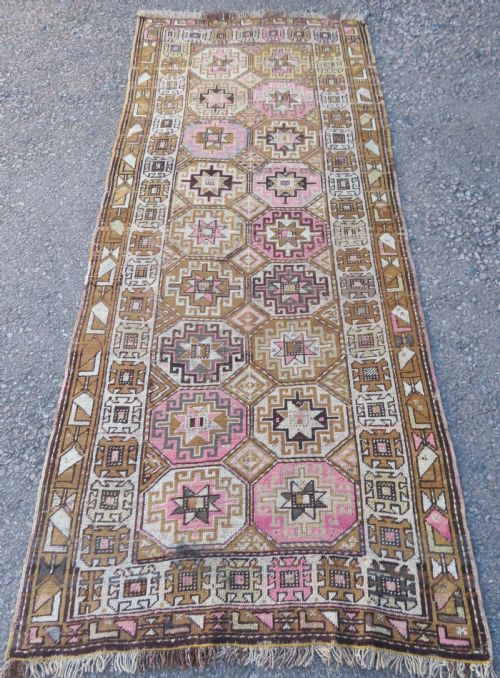
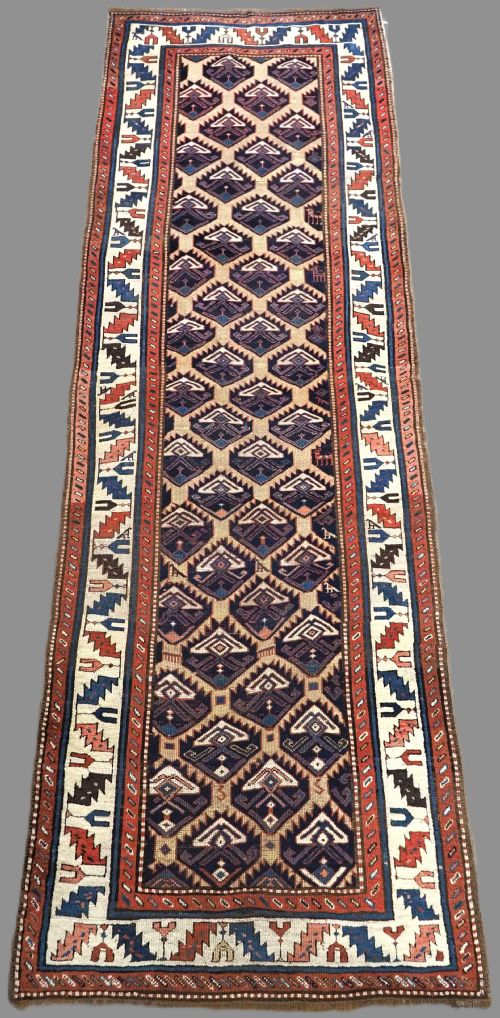
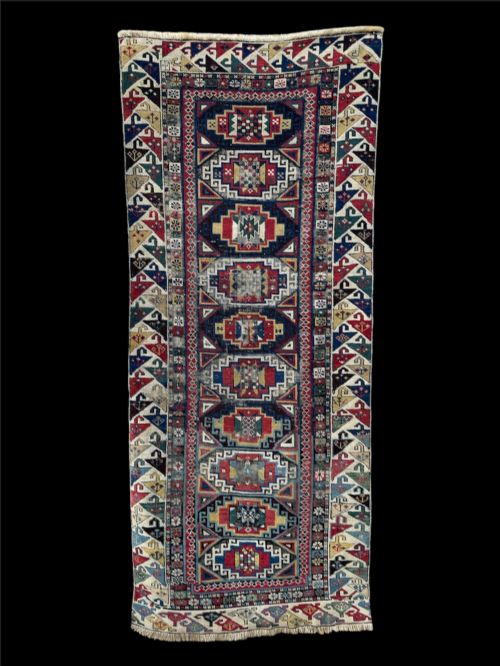
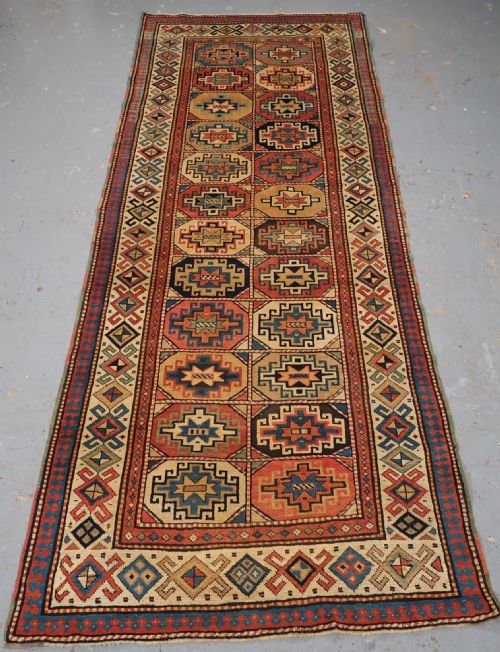
A caucasian hall runner brings striking geometry and deep history to a narrow interior space, offering an authentic tribal floor covering for a corridor.
Caucasian Hall Runner
A caucasian hall runner is a long, narrow floor covering originating from the Caucasus region, designed specifically to fit corridors, hallways, and passage spaces. These pieces span the nineteenth and early twentieth centuries, emerging from traditions that valued geometric precision and bold field patterns.
The format you meet most frequently on this page is an antique tribal runner displaying regional weaving traits from specific Caucasian centres such as Gendje, Shirvan, Karabagh, and Kazak. They combine narrow proportions with resilient structures, making them practical for modern corridors that require distinct decorative presence.
Materials and construction methods
Weavers constructed these runners using hand-spun wool for the pile and foundation yarns, sometimes paired with cotton depending on the specific tribal origin. This organic material yields a resilient surface capable of withstanding heavy foot traffic over generations.
Makers relied on natural dyes to colour the wool, producing deep tones and subtle variations in shade across the field and borders. These natural colourants interact with the hand-spun fibres to create a nuanced patina that chemical dyes cannot replicate.
Caucasian Hall Runner Retail Price Guide 2026
Typical asking prices for caucasian hall runner among the pieces listed under this phrase on Sellingantiques today, from the lower quarter to the upper quarter. They describe what is for sale here now, not the wider market.
Listings span the nineteenth century up to 1920, predominantly featuring hand-spun wool and natural dyes across various tribal regions.
Evaluating quality and execution
The upper tier of these runners is distinguished by the clarity of the drawing, the crispness of the geometric motifs, and the vibrancy of the natural dyes. Superior pieces maintain balanced proportions between the central medallions and the surrounding borders.
Knot density and structural integrity also dictate the calibre of a runner, reflecting the weaver's control over tension and pattern translation. Pieces that retain their original outer edges and end finishes demonstrate superior preservation.
The Caucasian Hall Runner Glossary
- Boteh
- A pear-shaped or almond-shaped motif with a curved upper end, frequently seen in Caucasian and Persian weaving. This ancient symbol represents fertility, cypress trees, or flames.
- Medallion
- A central ornamental design element placed symmetrically within the field of a rug. In Caucasian carpets, these shapes tend to be strongly geometric or hooked.
- Pile
- The vertical or inclined loop of yarn that forms the textured surface of a woven rug. It is created by knotting warp threads during construction.
- Warp
- The stationary longitudinal threads stretched on a loom before weaving begins. The pile knots are tied around these foundational cords.
- Natural dye
- Colourants derived from plant, insect, or mineral sources rather than synthetic chemical laboratories. They produce harmonious, fading tones as they age.
Caucasian Hall Runner: Frequently Asked Questions
Where should I place a runner?
These long carpets suit narrow corridors, staircases, and transition spaces where floor warmth and visual interest are required.
They transform functional passage areas into primary focal points of an interior design scheme.
How do I care for antique wool?
Vacuum the surface gently using suction only, avoiding the rotating brush bars that can pull at aged fibres.
Professional cleaning should happen infrequently and be handled by specialists experienced in antique textiles.
What defines tribal weaving?
Tribal rugs are produced by nomadic or village weavers working from memory and traditional motifs rather than formal factory cartoons.
This approach results in asymmetrical details and spontaneous design variations across the piece.
How do I identify a Kazak?
Kazak rugs typically feature bold, geometric primary medallions, large hooked elements, and a relatively long, lustrous wool pile.
The colour palette leans towards strong primary shades derived from natural dyes.