



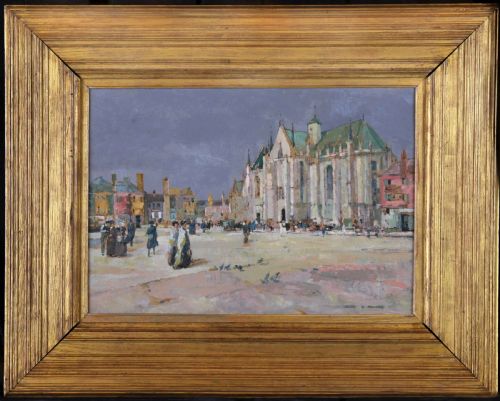


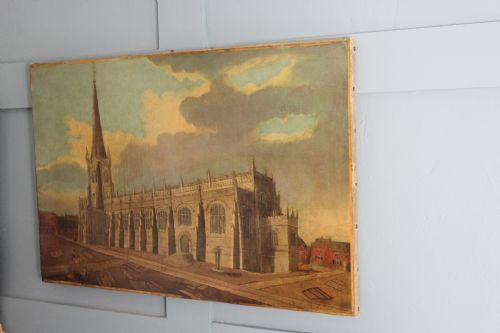
Cathedral Oil Painting
A cathedral oil painting brings grand ecclesiastical architecture and historic townscapes into a room, capturing light and stone through centuries of artistic tradition.
Cathedral Oil Painting
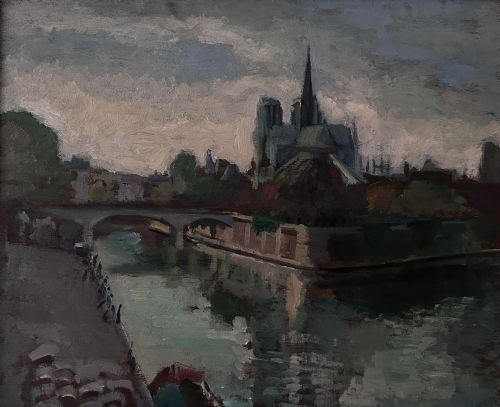
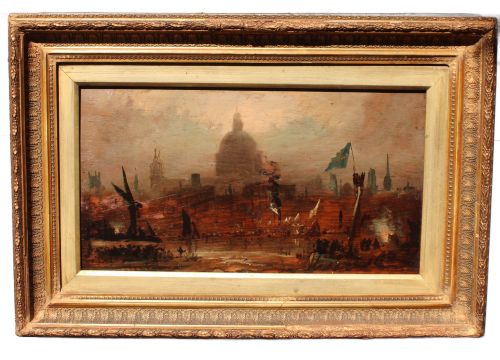
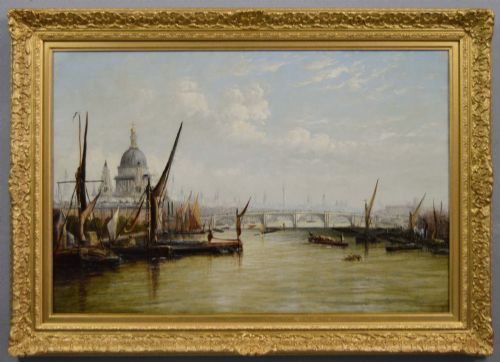
A cathedral oil painting depicts majestic religious buildings, cityscapes, and riversides, often framed by surrounding streets or waterways.
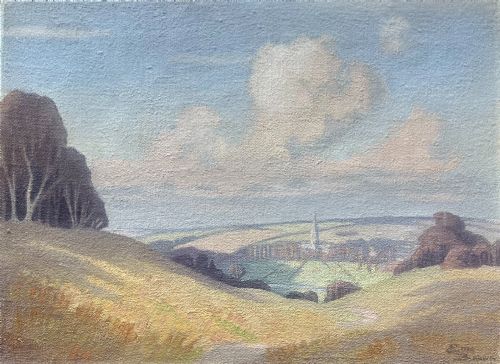
The pieces on this page span from the early nineteenth century through the mid twentieth century, featuring British and French scenes.
Works range from detailed architectural studies to atmospheric post-impressionist morning scenes and wartime townscapes.
Materials and methods
Artists painted primarily with oil paint upon canvas or wooden board, applying pigments to build rich textures and deep tones.
Frames frequently incorporate gesso and gold leaf moulded into decorative profiles to complement the work within.
Brushwork varies from precise topographical recording to loose, impressionistic strokes that capture shifting light on stone facades.
Cathedral Oil Painting Retail Price Guide 2026
Typical asking prices for cathedral oil painting among the pieces listed under this phrase on Sellingantiques today, from the lower quarter to the upper quarter. They describe what is for sale here now, not the wider market.
The styles represented include Romanticism, Victorian marine painting, British Impressionism, and Post-Impressionism.
Judging quality
Quality rests upon the artist's command of perspective, handling of light, and the convincing rendering of massive stone architecture.
Stronger works demonstrate confident brushwork and balanced composition, successfully integrating figures, boats, or landscapes into the townscape.
The integrity of the original canvas, board, and period frame contributes significantly to the standing of each piece.
Francis Moltino·Paul Jean Anderbouhr·Lewis J Wood·Robert Lesley Howey·William Sidney Cooper·Edward Fletcher·Allan Douglass Mainds·Henry Schafer
The Cathedral Oil Painting Glossary
- Canvas
- A heavy woven fabric stretched across a wooden frame to serve as a painting surface. It provides a durable ground for oil pigments.
- Gesso
- A plaster mixture applied to wood or canvas as a base for painting or gilding. It creates a smooth, absorbent foundation.
- Gold leaf
- Gold beaten into extremely thin sheets used for gilding frames and decorative surfaces. It adds a reflective metallic sheen.
- Post-Impressionism
- An art movement extending beyond impressionism that focused on emotional expression and structural form. Artists used bold colours and distinct brushstrokes.
Cathedral Oil Painting: Frequently Asked Questions
How should I hang a cathedral oil painting?
Position the painting at eye level on a wall with stable ambient conditions, away from direct sunlight and strong heat sources. Ensure the hanging fixings match the weight of both the canvas and its period frame.
Allow adequate clearance around the piece so the architectural detail and framing can be appreciated without visual clutter from surrounding items.
What periods do these paintings represent?
The selection covers works created across the nineteenth and twentieth centuries, reflecting changing artistic movements from romanticism to British modernism. Earlier pieces often focus on topographical accuracy, while later works embrace looser impressionist techniques.
Each period brings distinct colour palettes and brushwork styles that help indicate when the canvas was painted.
How do I care for an antique oil painting?
Keep the painting in a room with minimal humidity fluctuations to protect the wooden stretcher, canvas, and gesso frame. Dust the surface gently with a soft, dry, lint-free brush when necessary.
Avoid using water, chemical cleaners, or cloths on the painted surface to prevent damaging the delicate oil layers.
What subjects accompany the cathedrals?
Many cathedral scenes include surrounding townscapes, rivers with shipping vessels, stone masons, and street life that place the grand architecture into a living context. Rivers like the Thames frequently appear alongside bridges and urban activity.
These complementary elements provide a narrative about the city and era surrounding the religious structure.