




Castle Landscape Watercolour
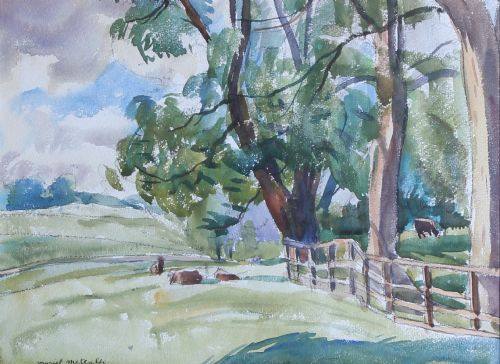
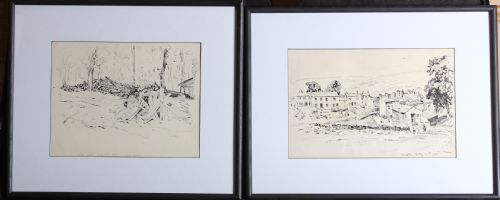
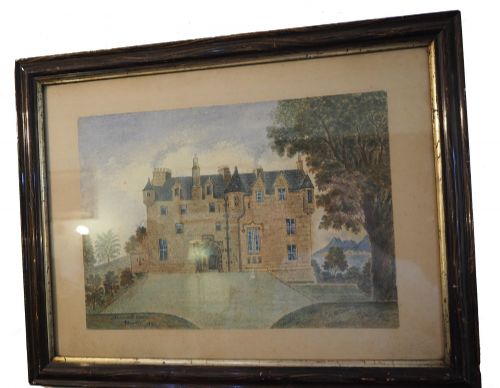
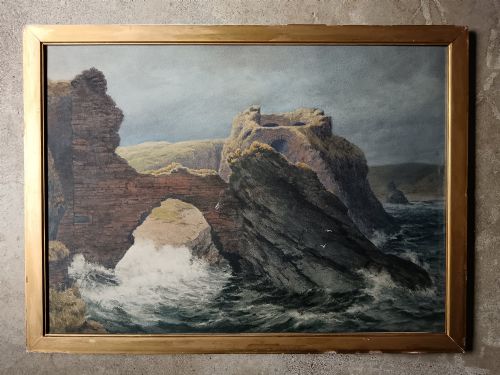
A castle landscape watercolour captures historic fortresses and ruined keeps across Britain on tinted paper.
Castle Landscape Watercolour
A castle landscape watercolour depicts historic British fortresses, coastal strongholds and ruined keeps set against rivers, hillsides and seascapes. These works range from tightly detailed nineteenth-century topographical studies to looser twentieth-century impressions.
The most common examples on this page date from the Victorian era through the mid-twentieth century, featuring identifiable locations such as Bolton Castle, Windsor Castle and Barnard Castle. They combine architectural precision with atmospheric landscape painting.
Collectors encounter these pieces framed under glass, executed on paper using watercolour pigment and ink. They record both the changing Romantic perception of historic ruins and the everyday British landscape surrounding them.
How They Were Made
Artists painted on paper support using water-soluble pigments, often establishing composition and detail with pen and ink underdrawings. Gouache or bodycolour was occasionally added to create opaque highlights on stone and water.
Finished works were mounted behind glass within wooden frames to protect the delicate water-soluble pigments from moisture and fading. Gilt slips or frames were frequently used to enhance the tonal range of the painting.
Castle Landscape Watercolour Retail Price Guide 2026
Typical asking prices for castle landscape watercolour among the pieces listed under this phrase on Sellingantiques today, from the lower quarter to the upper quarter. They describe what is for sale here now, not the wider market.
A solitary peacock occasionally surveys the ramparts beside ancient castle walls.
What Varies in Quality
Quality rests upon the artist's command of perspective, tonal gradation and atmospheric depth. The finest examples render masonry, water reflections and changing weather with confident brushwork rather than rigid mechanical lines.
Condition strongly influences the overall standard, as prolonged exposure to light fades vulnerable watercolour pigments and discolours paper. Works retaining their original vibrancy and strong contrast stand above those washed out by time.
Fred Lawson·George Graham·David Cox Jnr·Thomas Cooper Moore·William Wyld
The Castle Landscape Watercolour Glossary
- Watercolour
- A painting method where fine pigment is suspended in a water-based binder for application on paper. It relies on the white of the paper shining through translucent washes of colour.
- Grisaille
- A painting executed entirely in monochrome shades of grey, neutral grey, or noir de jais. It was frequently employed for preparatory landscape studies or to mimic stone sculpture.
- Topography
- The detailed mapping and pictorial representation of specific geographic locations and man-made structures. In these paintings, it ensures accurate rendering of castle architecture and surrounding terrain.
- Wash
- A thin, fluid layer of diluted watercolour pigment spread evenly across paper. Artists use it to create expansive skies, flat water surfaces or soft atmospheric haze.
Castle Landscape Watercolour: Frequently Asked Questions
How do I care for a watercolour painting?
Keep your artwork away from direct sunlight and damp environments to prevent the pigments from fading and the paper from degrading. Framing with UV-filtering glass offers essential protection for these delicate works.
Ensure the painting is professionally mounted with acid-free materials to avoid long-term discolouration. Proper hanging preserves the integrity of the paper and the original ink lines.
How can I tell the period of a castle painting?
Examine the paper quality, framing style and the artist's handling of pigment, which shifted from tight Victorian precision to expressive twentieth-century modernism. Costume details of any figures present also offer strong chronological clues.
Signatures, dates inscribed on the reverse, and historical records of the artist provide definitive dating. Stylistic traits such as Romanticism indicate earlier nineteenth-century origins.
Why are castle ruins so common in these paintings?
Romanticism and nineteenth-century antiquarian interest inspired artists to travel the British countryside documenting historic fortifications. Castles provided a powerful motif blending architecture, history and untamed nature.
Victorian and Edwardian buyers valued these scenes for their romantic associations with British heritage. Painters responded by recording famous Yorkshire, Scottish and Welsh strongholds.