


Cast Iron Hearth Insert
These cast iron hearth insert options transform an empty chimney opening into the architectural centrepiece of a room.
Cast Iron Hearth Insert
A cast iron hearth insert sits within the fireplace opening to hold solid fuel or support a decorative basket, framing the hearth space. When searching for a cast iron hearth insert, a buyer encounters forms ranging from simple registers to elaborate combination fireplaces and baskets.
The pieces on this page span several historical eras including Georgian, Regency, Victorian, and Edwardian periods. Stylistic expressions cover Adam Style, Neoclassical, Arts and Crafts, and Jacobean Revival designs alongside utilitarian register grates.
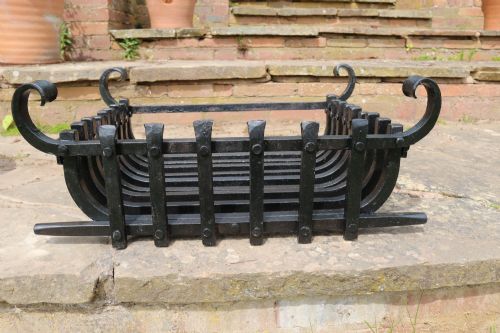
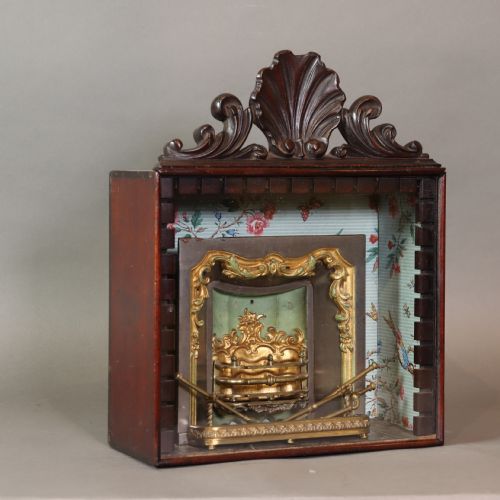
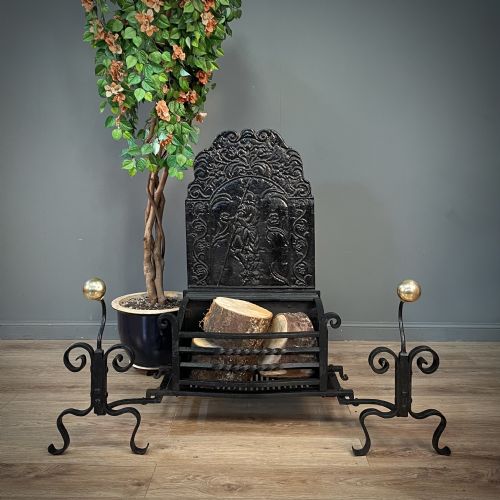
Object types include fire grates, fire baskets, and complete combination fireplaces, sometimes accompanied by matching andirons. Miniature salesman samples also appear among the larger architectural forms.
Materials and construction methods
Foundries utilised cast iron and wrought iron as the primary structural and decorative metals, occasionally combining them with brass components for highlights. Firebricks provided necessary heat resistance within the internal structure of the grates.
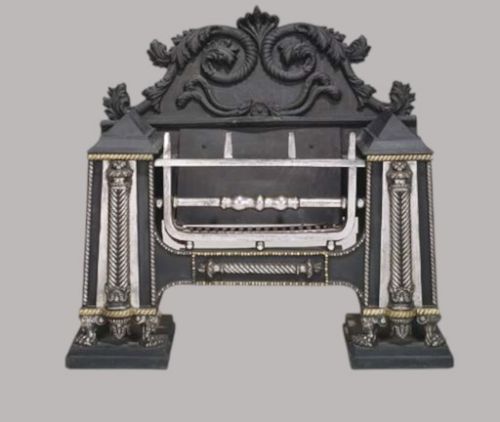
Makers employed traditional casting techniques to produce intricate Neoclassical, Adam Style, and Jacobean Revival motifs directly into the metalwork. Secondary materials such as timber, wood, and paper appear in associated surrounds or packaging elements.
Listings span multiple eras from the Georgian period through the 1930s, featuring cast iron, wrought iron, brass, and firebrick materials.
Distinctions in quality and execution
The sharpness of the cast ornamentation separates standard utilitarian grates from superior examples bearing refined Neoclassical or Adam Style detailing. Crispness in the moulding indicates a higher grade of foundry work and pattern making.
The integration of mixed metals, such as brass fittings paired with heavy cast and wrought iron bodies, distinguishes more ambitious designs. Proportions also influence the character of the piece, ranging from diminutive grates of small proportions to large, imposing hearth assemblies.
Coalbrookdale
The Cast Iron Hearth Insert Glossary
- Cast iron
- An iron-carbon alloy poured into moulds to create rigid, highly detailed architectural and domestic objects. This material forms the primary body of the majority of grates and inserts.
- Register grate
- A fireplace insert featuring a moveable flap or damper plate to control the draught up the chimney. These grates became common during the Georgian and 19th Century periods.
- Hob grate
- An early fireplace design incorporating flat side shelves or hobs for heating water or food. Examples often combine cast and wrought iron construction.
- Andirons
- Horizontal metal bars supported by vertical legs, placed in a hearth to hold logs above the floor for better airflow. They frequently accompany fire baskets in period settings.
- Combination fireplace
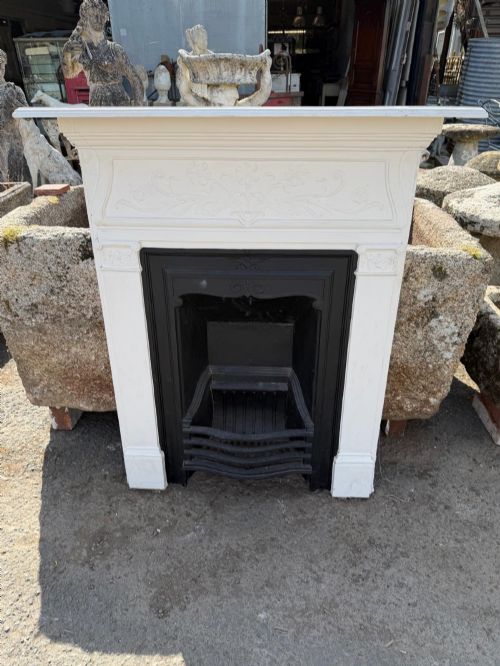
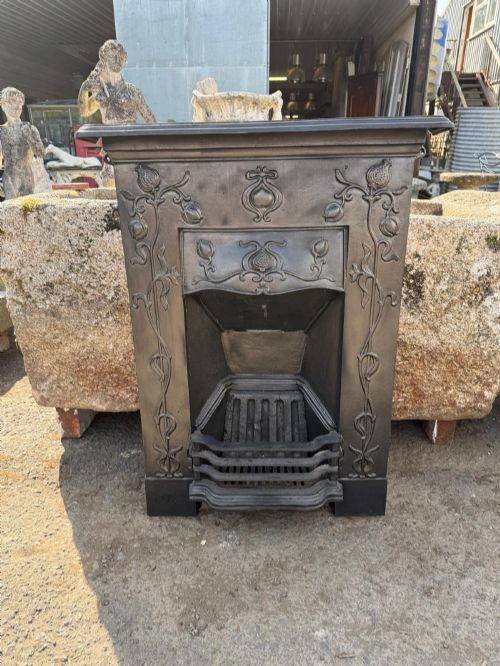
- A complete mantel, insert, and grate manufactured as a single unified unit. These pieces became widespread in Victorian and Edwardian domestic interiors.
Cast Iron Hearth Insert: Frequently Asked Questions
What is a cast iron hearth insert?
A cast iron hearth insert is a metal unit designed to fit inside a fireplace opening to contain a fire or hold a grate. These pieces provide a finished architectural appearance to the chimney breast.
They serve as functional heating appliances or decorative focal points within period rooms, incorporating grates, baskets, or register plates.
How do I identify a Victorian insert?
Victorian inserts often feature combination designs where the surround and grate are cast as one heavy piece. They typically display robust proportions and elaborate surface ornamentation.
Look for characteristics associated with 19th-century manufacturing methods, such as maker marks from prominent foundries like Coalbrookdale and heavier iron casting techniques.
Were these inserts used for coal or wood?
Many period grates and baskets were engineered specifically to burn coal efficiently, utilising narrow vertical bars and firebrick backs. Others accommodate larger logs depending on the depth of the basket.
Fire baskets and hob grates often dictated the type of fuel used based on the size of the hearth aperture and draught control mechanisms.
How do I fit an antique insert?
Fitting an antique cast iron insert requires careful measurement of the existing builder's opening and chimney depth. Professional installation ensures proper clearance from combustible materials and secure anchoring.
Many inserts require specialist hearth placement to support their substantial weight and accommodate flue connections safely.