



Cast Brass Hardware
Cast brass hardware brings structural weight and tactile detail to period doors, pulling together functional ironmongery with ornamental cast metal.
Cast Brass Hardware
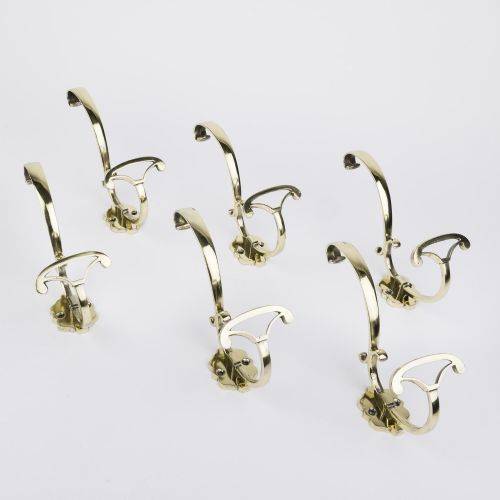
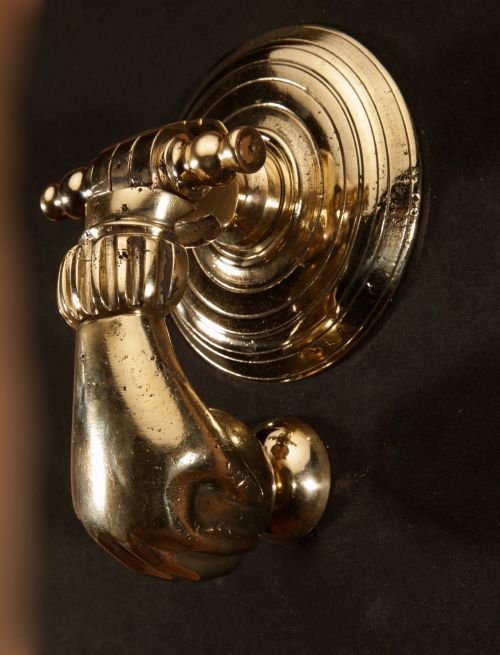
When you search for cast brass hardware, you explore architectural fittings designed for functional domestic and commercial use across the Georgian, Victorian, and Edwardian eras. These objects range from heavy entrance door knockers and letterboxes to interior door knobs, coat hooks, and sash lifts.
The pieces most frequently met on this page date from the nineteenth century, displaying styles from classical Regency to ornate Victorian Gothic Revival and Arts and Crafts. They provide tangible links to period interior schemes through robust metalwork intended for daily interaction.
Materials and casting methods
Makers utilised traditional foundry techniques to pour molten brass, bronze, and occasionally cast iron into sand moulds, capturing intricate relief work in the cooling metal. This process resulted in substantial forms designed to withstand repeated handling.
Surface finishes vary from polished brass to gilt layers and patinated bronze, frequently paired with secondary materials such as oak mounts and lead crystal inserts to enhance their decorative impact.
Current selections span Victorian, Georgian, and Edwardian eras, incorporating functional pieces alongside decorative maritime motifs and figural designs.
Assessing quality in period metalwork
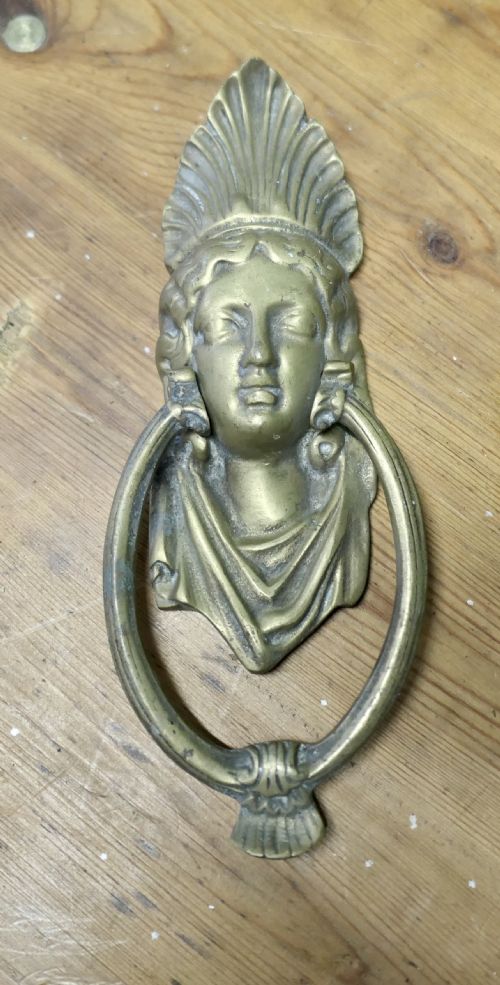
Quality in these fittings rests on the crispness of the cast relief and the weight of the gauge used by the founder. Superior examples retain sharp facial expressions on figurative knockers and deep undercutting in foliate or animal motifs rather than smoothed surfaces from worn moulds.
The integrity of the mechanism and the survival of original matching striking plates or fixing screws further separate standard production items from masterworks of the period.
The Cast Brass Hardware Glossary
- Cast brass
- An alloy of copper and zinc melted and poured into a mould to create solid architectural fittings. This method allows for complex three-dimensional shapes that sheet metal cannot achieve.
- Caryatid
- A sculpted human figure serving as an architectural support, occasionally adapted into the upright handle of a door knocker. Such figurative elements reflect classical revival tastes.
- Gilt brass
- Base brass treated with a thin layer of gold leaf or applied gold wash to simulate solid precious metal. It brings a bright reflective quality to interior pelmets and tie-backs.
- Sash lift
- A small protruding handle attached to the bottom rail of a window sash to aid in raising and lowering the glass frame. These fixtures combine utilitarian strength with compact period design.
Cast Brass Hardware: Frequently Asked Questions
How do I date cast brass hardware?
Dating relies on stylistic clues, fixing methods, and the weight of the alloy relative to the period. Georgian items often display restrained classical symmetry, while Victorian pieces lean towards heavier relief casting and revival motifs.
Examining the screw heads and the backplate construction helps confirm whether a fitting belongs to its presumed nineteenth-century context or a later revival era.
Are these pieces suitable for modern doors?
Most items function well on standard contemporary doors provided the dimensional spacing matches existing fixings. Door knockers and handles retain their robust mechanical properties after more than a century of use.
Careful measurement of spindle sizes and backplate clearances ensures secure installation without damaging the original metalwork.
How should I clean antique brass?
Regular dusting with a dry cloth preserves the existing surface patina accumulated over generations of handling. Harsh chemical polishes should be avoided because they strip away the dark oxidation that defines historical depth.
Applying a microcrystalline wax offers protective sealing against moisture without altering the natural colour of the metal.
What is the difference between brass and bronze fittings?
Brass primarily consists of an alloy of copper and zinc, yielding a brighter golden tone when polished. Bronze contains copper combined with tin, resulting in a darker, denser material with high corrosion resistance.
Both metals were cast using similar foundry traditions but weather differently depending on their alloy composition and exposure.