



Cased Taxidermy Specimen
A cased taxidermy specimen brings preserved birds, mammals, and fish into domestic interiors under protective glass.
Cased Taxidermy Specimen
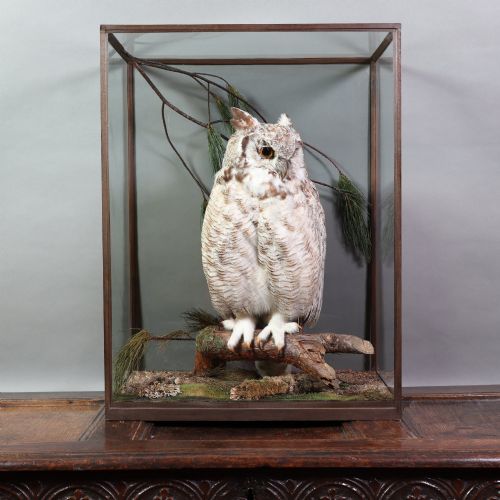
A cased taxidermy specimen comprises mounted animals, birds, fish, or insects arranged within glass display cases, frames, or domes. These pieces originate predominantly from the Victorian, Edwardian, and early twentieth-century periods.
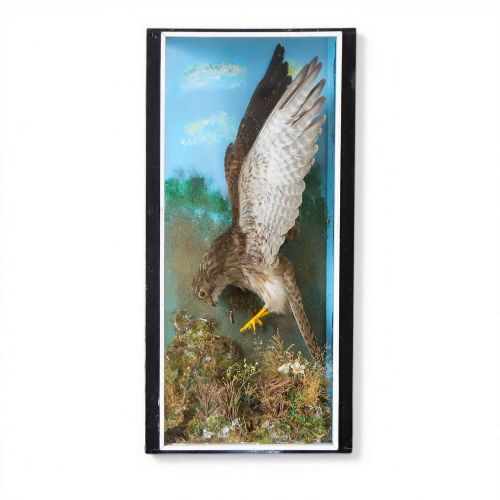
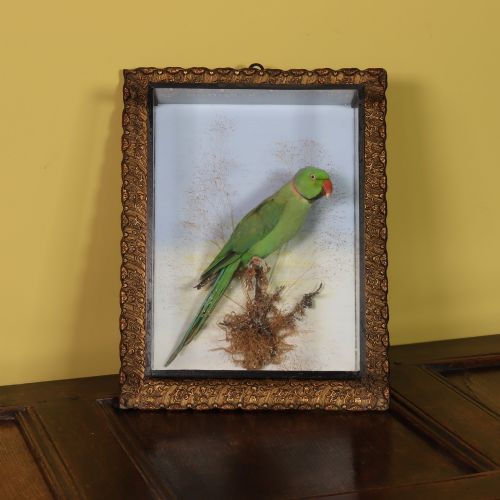
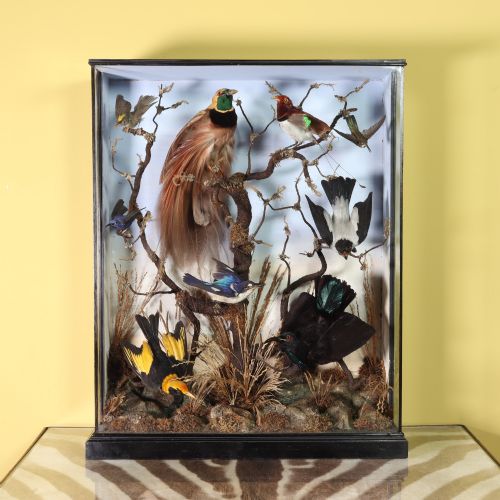
The most common form on this page is the avian diorama, containing single birds or grouped compositions set against painted backgrounds. Mammals such as badgers and foxes, alongside fish like pike and tench, appear less frequently but follow similar enclosed formats.
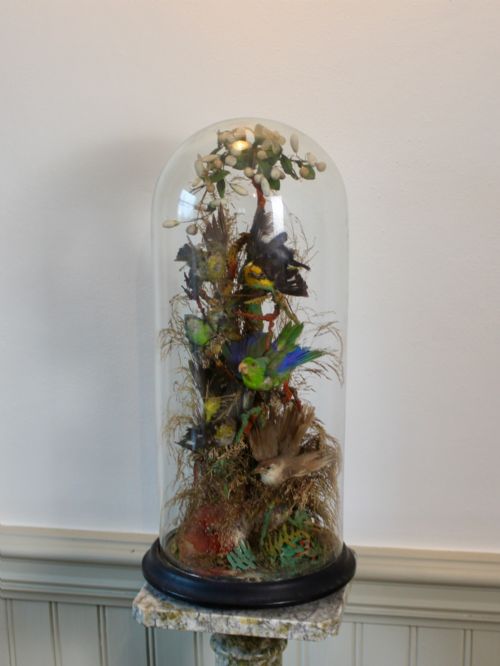
Display formats vary from ebonised wood and oak wall cases to glass domes and cloches resting on wooden bases. Each enclosure protects fragile specimens from dust and handling while creating a self-contained natural history display.
Materials and construction
Taxidermists utilised preserved skins mounted over armature frameworks, positioning specimens within custom wooden or glazed enclosures. Interiors frequently incorporated natural elements such as moss, paper backgrounds, and painted scenery to simulate natural habitats.
Enclosures relied on blown or sheet glass fitted into timber frames, sometimes with ebonised finishes. Glass domes required turned wooden bases and occasionally included internal wire stands to support suspended birds.
A cautious badger peers out from behind nineteenth-century glass alongside flamboyant parakeets and unexpected crocodiles.
What distinguishes finer examples
Quality rests in the anatomical accuracy of the mounting and the artistry of the interior arrangement. Skilled taxidermists maintained natural postures and proportions, avoiding rigid or distorted poses.
The craftsmanship of the case itself influences the overall standard, with well-joined timber, sound glazing, and detailed painted backgrounds elevating the composition. Named practitioners often achieved greater consistency in both taxidermy technique and case design.
J Griffiths of Burford·Rowland Ward Ltd·William Bazeley & Sons·J Cooper & Sons·James Gardner·W.F. Homer London·J Dobson
The Cased Taxidermy Specimen Glossary
- Diorama
- A three-dimensional scene depicting animals within a simulated natural habitat. These settings often include painted backdrops and dried moss.
- Ebonised wood
- Timber treated to imitate ebony through staining or painting. This dark finish appears frequently on Victorian display cases.
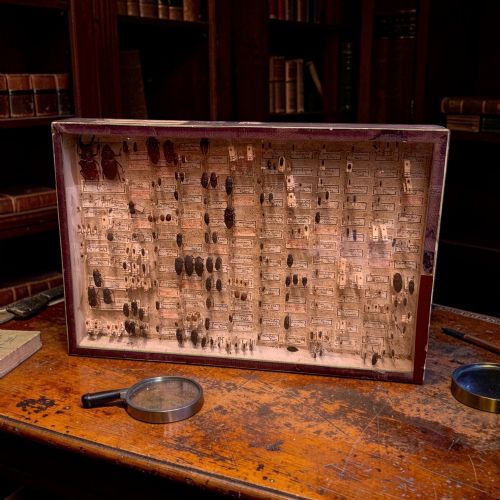
- Entomology case
- A shallow glazed box designed specifically for displaying insect collections. Specimens are pinned in orderly arrangements inside.
- Dome
- A rounded glass cover placed over a specimen on a wooden base. These protect fragile botanical or zoological displays.
- Cloche
- A bell-shaped glass cover used similarly to a dome. It provides clear all-round visibility for enclosed specimens.
Cased Taxidermy Specimen: Frequently Asked Questions
Where should I place a glass dome in a room?
Position domes and cased specimens away from direct sunlight to prevent the fading of feathers, fur, and painted backgrounds. Stable room temperatures protect the historic adhesives and timber used in construction.
Keep pieces clear of high-moisture areas such as kitchens and bathrooms to protect organic taxidermy materials from dampness.
How can I identify a Victorian specimen from a later one?
Victorian pieces frequently feature heavy ebonised wood frames, complex moss-lined groundwork, and hand-written specimen labels inside the glass. Earlier taxidermy often emphasises naturalistic grouping of multiple species.
Later Edwardian and 1930s examples tend toward simpler oak frames, lighter woodwork, and more minimalist interior compositions.
What is the difference between a dome and a wall case?
Domes are freestanding circular or oval glass covers resting on wooden bases, designed to be viewed from all sides. They typically house single birds, pairs, or botanical specimens.
Wall cases are rectangular wooden boxes with a glass front, meant to be hung or placed on flat surfaces. They house complex dioramas with painted backdrop scenery.