






Cased Silver Service
A cased silver service brings together matched tableware or grooming sets within fitted protective housing from periods spanning the Victorian era to the mid-twentieth century.
Cased Silver Service
A cased silver service encompasses coordinated sets of cutlery, condiment pieces, and dressing equipment housed in fitted boxes lined with materials like velvet. When you search for a cased silver service, you encounter diverse configurations ranging from Edwardian fish cutlery to complete tea and coffee sets.
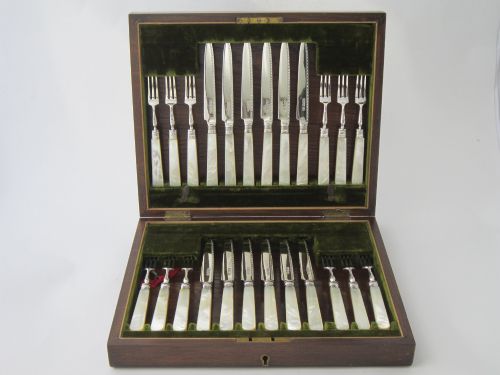
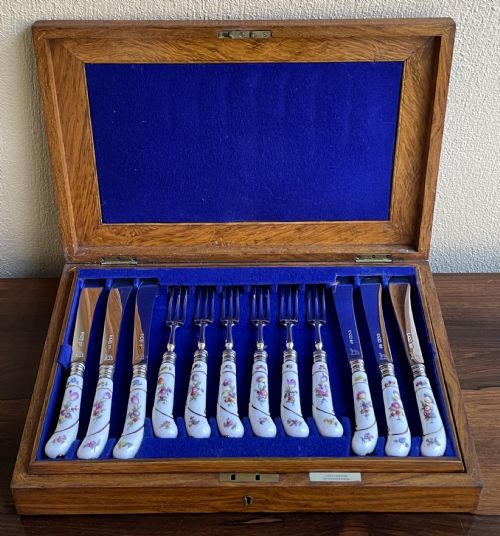
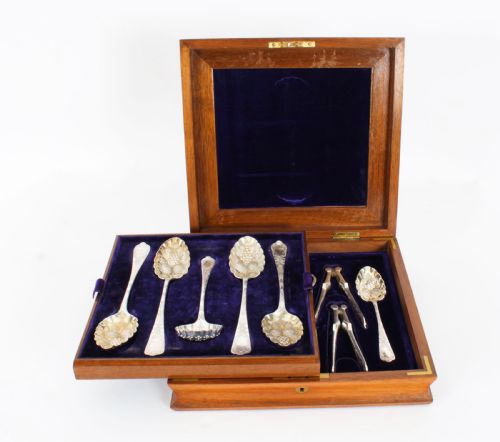
The objects take many forms, including dessert sets with mother-of-pearl handles, silver-plated flatware, and travelling vanity sets. Pieces originate from periods such as the Victorian era, Edwardian years, and the 1930s, reflecting the dining and grooming habits of past decades.
The most frequent examples on this page are Edwardian and Art Deco dining sets or cruet collections. These items combine utility with presentation, designed to be stored securely and displayed when entertaining.
Materials and construction
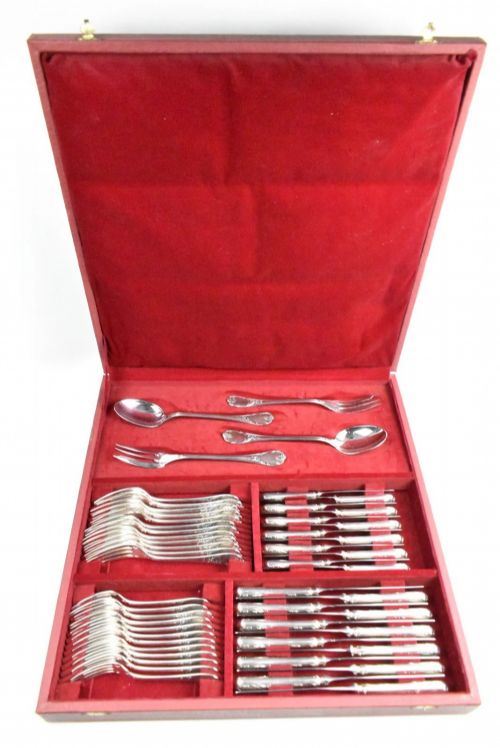
The sets combine solid sterling silver or silver plate with protective outer casings built from wood and covered in leather. Interiors frequently feature fitted velvet linings designed to hold individual spoons, forks, or bottles securely in place.
Metal components undergo traditional silversmithing techniques, including casting, hammering, and detailed hallmarking to denote origin and metal purity. Handles on dessert and fruit sets frequently incorporate organic materials such as mother of pearl alongside the metal shafts.
Cased Silver Service Retail Price Guide 2026
Typical asking prices for cased silver service among the pieces listed under this phrase on Sellingantiques today, from the lower quarter to the upper quarter. They describe what is for sale here now, not the wider market.
One dapper travelling valet set stands ready for a gentleman's grooming routine, complete with miniature bottles and brushes.
Factors of quality
Quality rests upon the completeness of the set and the integrity of the original fitted case. A service that retains every matching spoon, fork, or condiment bottle holds greater distinction than a collection with replacement components.
The craftsmanship of the housing matches the standard of the metalwork, with sturdy wooden boxes, sound hinges, and well-preserved velvet linings distinguishing finer examples from ordinary utility sets.
Christofle·Carrington·Wilmot Manufacturing Co·Waring & Gillows·Hukin & Heath·Harry Atkin
The Cased Silver Service Glossary
- Sterling silver
- A silver alloy containing 92.5 percent pure silver by mass, frequently used for high-grade tableware and cutlery sets.
- Silver plate
- A layer of silver applied to a base metal core, common in large flatware services produced during the nineteenth and twentieth centuries.
- Cruet set
- A collection of small glass bottles or jars for holding condiments, fitted into a metal frame or dedicated presentation box.
- Hallmark
- An official stamp applied to precious metals indicating the maker, assay office, and year of testing.
- Fitted case
- A storage box custom-lined with velvet or fabric slots to secure specific pieces of silver during transport or storage.
Cased Silver Service: Frequently Asked Questions
What is included in a silver service?
A silver service typically comprises a matched group of items designed for dining, tea service, or personal grooming. These collections range from cutlery sets and condiment cruets to full tea and coffee services.
The pieces are organised together in a dedicated container to ensure the entire service remains unified for dining or display.
How do I care for cased silver?
Cased silver requires gentle handling and storage in dry conditions to protect both the metal and the velvet-lined wooden cases. Regular, careful cleaning with appropriate silver polishes helps maintain the finish without wearing down fine details.
Keeping the pieces inside their original fitted cases shields them from atmospheric tarnish and physical knocks.
Are these sets safe to use for dining?
Many silver and silver-plated dining sets remain entirely functional for modern meals, particularly dessert sets and flatware collections. Proper washing by hand without harsh abrasives preserves the silver surface during regular use.
Checking that all handles and joints remain secure ensures the pieces withstand practical dining applications.
How do I identify the period of a set?
Periods can be determined by examining hallmarked stamps, manufacturing styles, and the construction of the protective cases. Stylistic markers such as Edwardian ornamentation or Art Deco geometry provide clear visual dates.
Assay office marks and maker stamps offer precise chronological reference points for English silver pieces.