



Cased Ship in Sail
A cased ship in sail brings the artistry of maritime folk art into the room, capturing rigged vessels frozen mid-ocean inside protective glazed wooden boxes.
Cased Ship in Sail
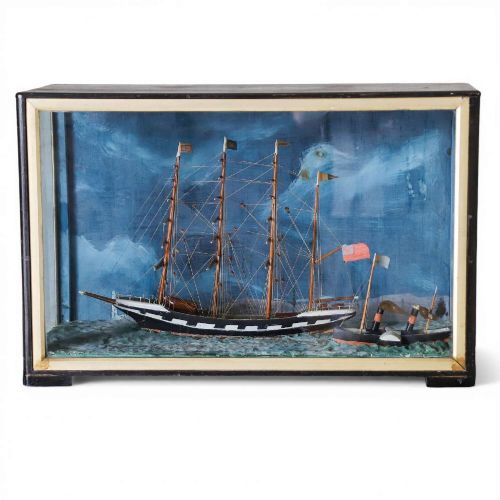
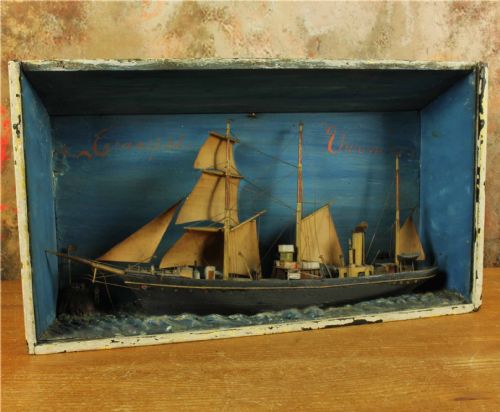
A cased ship in sail represents a distinct branch of maritime folk art, taking the form of shadow box dioramas and wall-hung display cases. These objects present sailing vessels, ranging from named ships like the Glynllifon to racing vessels and ketch models, rendered in three dimensions against painted seascapes.
The pieces appearing on this page most frequently date from the nineteenth century through the Edwardian period up to nineteen thirty. Buyers encounter English and French handmade examples, including scratch-built models and straw work constructions.
The dominant format is the shadow box diorama, where hulls sit upon sculpted plaster or painted canvas waves beneath glazed wooden frames. These constructions preserve detailed rigging and canvas sails inside a protective enclosure, maintaining the condition of delicate maritime models.
How they were made
Maker construction relies on mixed media assembled inside wooden framing, combining wood, fabric, and canvas for hulls and sails. Plaster and paint form the textured background seascapes, creating depth behind the three-dimensional waterlines of the vessels.
Makers utilised brass fittings and gilt details alongside painted surfaces to finish the display cases and interior scenes. The structural framing protects the fragile rigging and paper or fabric components from dust and damage.
Cased Ship in Sail Retail Price Guide 2026
Typical asking prices for cased ship in sail among the pieces listed under this phrase on Sellingantiques today, from the lower quarter to the upper quarter. They describe what is for sale here now, not the wider market.
Some nineteenth-century makers used actual straw work to decorate the interior borders of the diorama frames.
What varies in quality
The level of detail in the rigging and the execution of the painted backdrop separate standard examples from finer work. Skill in rendering the movement of waves using plaster and paint determines the visual depth of the diorama.
The complexity of the vessel architecture, such as multi-masted configurations or named historic ships, distinguishes the ambition of the maker. The construction quality of the outer wooden case and the clarity of the glass also influence the overall presentation.
The Cased Ship in Sail Glossary
- Shadow Box Diorama
- A shallow glazed box containing a three-dimensional scene built up from a flat background. This format protects intricate ship models from the elements while offering a framed view.
- Waterline Model
- A model of a ship constructed to show only the hull down to the water line. These models sit flush against the painted backing board of the diorama.
- Maritime Folk Art
- Decorative objects and models created by self-taught makers, often sailors or coastal craftsmen. These pieces reflect vernacular traditions rather than formal naval architecture.
- Scratch Built
- A model built entirely from raw materials rather than from a commercial kit. Makers construct the hull, masts, and rigging by hand from individual components.
- Barque
- A sailing vessel with three or more masts having the fore and main masts square-rigged and the mizzen mast fore-and-aft rigged. This specific rig appears frequently in period model work.
Cased Ship in Sail: Frequently Asked Questions
How were these ship dioramas displayed?
These pieces were typically hung on walls or placed on mantels and tabletops in homes and maritime offices. The glazed wooden cases protected the delicate rigging from sea air and domestic dust.
Today, collectors place them in studies, hallways, or living spaces where the shallow depth of the box frame allows for easy mounting or surface display.
Who made these cased ship models?
Many of these pieces originated from sailors passing time at sea, coastal folk artists, or specialised maritime craftsmen working in nineteenth-century ports. French and English makers produced notable examples featuring local vessels and racing scenes.
Few makers signed their work, leaving the focus on the craftsmanship of the rigging, hull construction, and painted seascapes rather than individual maker attributions.
How do I date a ship diorama?
Dating relies on the style of the wooden case, the materials used in the background construction, and the specific type of vessel depicted. Nineteenth-century examples often feature folk art plaster waves and detailed straw work or canvas sails.
Later pieces from the Edwardian era or the nineteen thirties show shifts in framing techniques and the types of vessels popular among model makers.
Are the sails made of fabric or paper?
Makers used a variety of materials for sails, including canvas, fine fabric, and treated paper, depending on the scale and style of the model. These materials were stiffened and shaped to simulate the effect of wind catching the rigging.
Examining the texture of the sails helps reveal the traditional techniques employed by the maker during construction.