





Cased Glass Perfume Bottle
These cased glass perfume bottle selections bring together portable vanity pieces and fitted travel containers spanning the Georgian, Victorian, and Edwardian eras.
Cased Glass Perfume Bottle
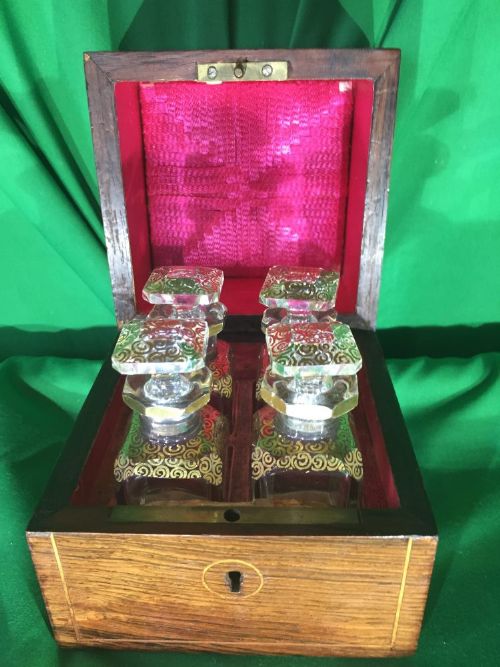
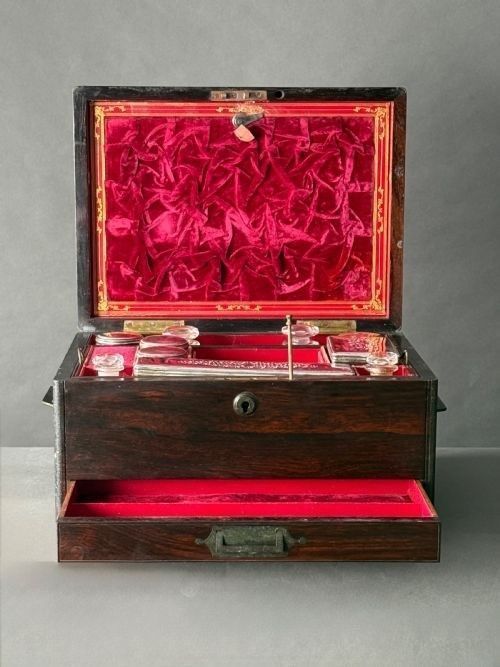
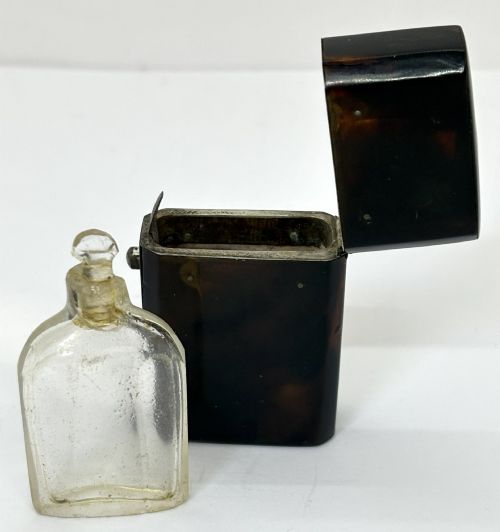
A cased glass perfume bottle search brings up fitted travelling sets, scent bottle caskets, and combination vanity boxes housing glass vessels within protective outer housings. These objects range from Georgian tortoiseshell holders and 19th-century rosewood boxes to Edwardian silver travelling cologne bottle trios and French overlay glass pieces.
The most common formats on this page are multi-bottle boxes and caskets lined in velvet or silk, alongside single bottles mounted in silver, brass, or leather outer cases. Many incorporate compartments for tools, jewellery, or additional glass scent flasks alongside the primary perfume container.
Materials and construction methods
The outer cases utilise dense timbers such as rosewood and coromandel, alongside tortoiseshell, embossed leather, and sterling silver. These housings often feature fitted brass hardware, velvet linings, and specialised internal partitions designed to secure delicate glass vessels during travel.
Internal glass components include cut glass, opaline glass, and blue overlay glass, frequently paired with silver-gilt, vermeil, or silver mounts. Dieppe carved bone and ivory elements also appear on select French pieces within the broader range.
Cased Glass Perfume Bottle Retail Price Guide 2026
Typical asking prices for cased glass perfume bottle among the pieces listed under this phrase on Sellingantiques today, from the lower quarter to the upper quarter. They describe what is for sale here now, not the wider market.
Materials span glass, velvet, brass, silver, leather, rosewood, cut glass, and tortoiseshell across Georgian to Edwardian periods.
Distinctions in execution and survival
Quality rests in the precision of the internal fitting, where timbers, velvet linings, and metal mounts align closely to secure the glass vessels without movement. Superior examples retain their original matching sets of bottles and comprehensive internal tools rather than assembled replacements.
The refinement of the exterior case work - whether intricate tortoiseshell work, fine rosewood grain, or detailed silver embossing - distinguishes standard travel boxes from more ambitious luxury dressing pieces.
The Cased Glass Perfume Bottle Glossary
- Casket
- A decorative box designed to hold valuables, often fitted with velvet linings and internal compartments for scent bottles or dressing instruments. These containers protect fragile glass while remaining portable.
- Opaline glass
- An opaque or translucent art glass popular during the 19th century, known for its pale pastel or vibrant colours. It provides a smooth ground for hand-painted or gilt decoration.
- Vermeil
- Sterling silver plated with a layer of gold, combining precious metal durability with a rich warm finish. It appears frequently on French and English scent bottle mounts.
- Necessaire
- A small fitted case containing essential personal grooming and sewing tools, often integrated into dressing boxes and vanity sets alongside perfume bottles.
- Coromandel
- A dense, heavily figured tropical hardwood native to Asia, prized for its dark brown grain and contrasting stripes. Cabinetmakers utilised it for luxury 19th-century boxes and caskets.
Cased Glass Perfume Bottle: Frequently Asked Questions
What periods do these pieces date from?
The pieces span the Georgian, Regency, Victorian, and Edwardian eras, covering the late 18th century through the early 20th century. Most items reflect 19th-century manufacturing styles and travelling conventions.
Specific dates within listings range from approximately 1800 to around 1900, capturing shifts in domestic vanity storage and personal travel equipment.
How were these bottles used?
These bottles were carried in travelling luggage or kept on dressing tables to hold concentrated perfumes, colognes, and smelling salts. Fitted boxes kept multiple scents and grooming tools organised during transit.
Many examples function as combination pieces, uniting perfume storage with jewellery compartments or etui tool sets for bodily care away from home.
Are the glass bottles usually original to the box?
Survival rates vary, with some boxes retaining their matching original set of glass bottles and stoppers while others house assembled or replacement vessels. Original sets typically share identical cutting patterns, glass colours, and stopper numbers.
Inspecting the internal partitions reveals whether the housing was built specifically for the exact number and shape of the bottles currently residing inside.
What materials make up the outer cases?
Outer cases incorporate hardwoods like rosewood and coromandel, organic materials such as tortoiseshell and carved bone, and metals including sterling silver, brass, and embossed leather. These materials reflect the status and period of the owner.
Interiors generally feature silk or velvet linings tailored to cushion the glass and metal components during movement.