





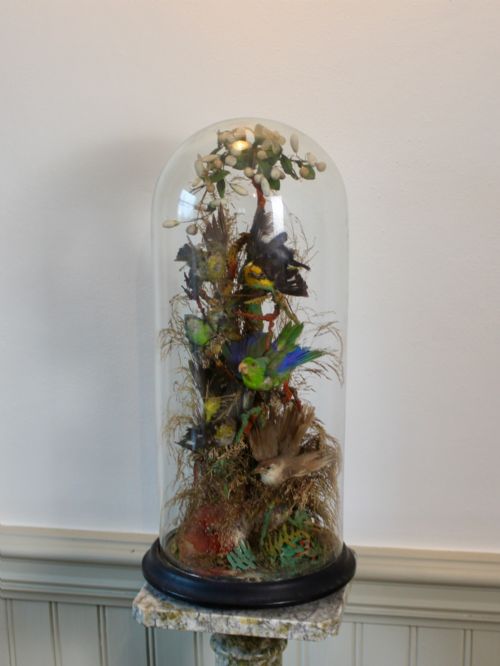



Cased Bird Taxidermy Mount
A cased bird taxidermy mount captures the natural world behind glass, offering a preserved glimpse into nineteenth and early twentieth-century domestic interiors.
Cased Bird Taxidermy Mount
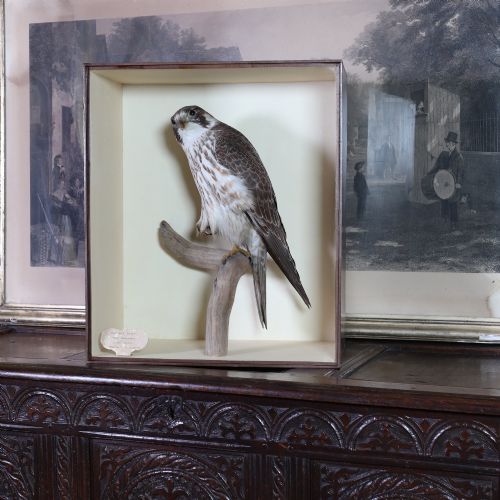
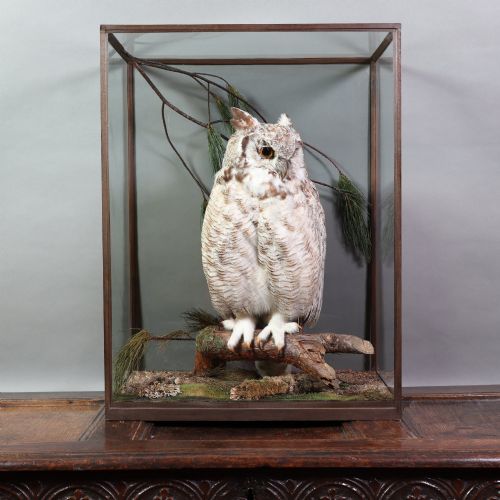
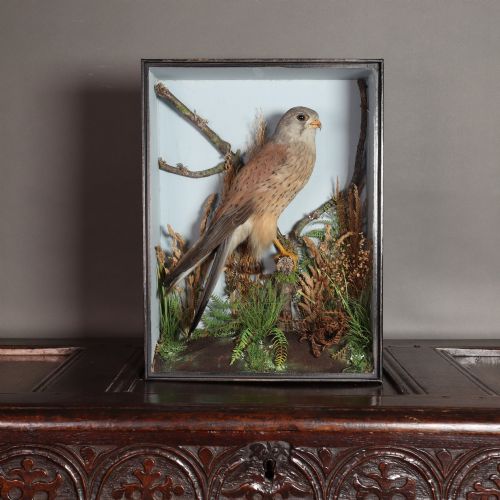
A cased bird taxidermy mount presents preserved specimens within protective glass containers, such as wooden display cases, picture frame cases, and glass domes. These arrangements often feature single specimens like owls and kingfishers, pairs of birds, or complex multi-bird compositions.
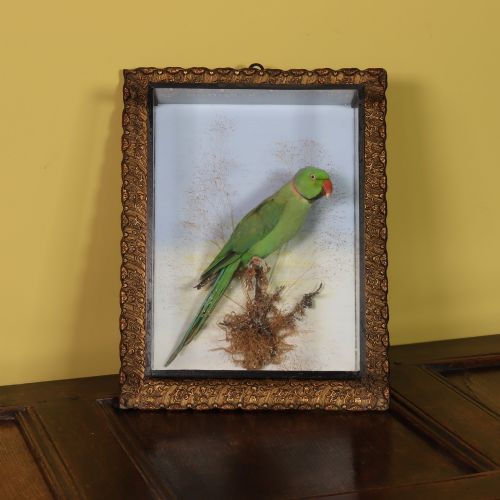
The pieces appearing on this page date primarily from the Victorian and Edwardian eras, extending into the early twentieth century. Common species represented include native British birds alongside exotic specimens originating from South America, Australia, and New Guinea.
Makers ranged from local practitioners to prominent urban firms, enclosing their work in oak or painted timber frames. Buyers encounter both simple table cabinets and elaborate snow scene dioramas designed for interior display.
Materials and construction techniques
Taxidermists utilised preserved specimens mounted over internal wire and body armatures to hold natural postures. These birds were positioned within artificial habitats constructed from dried vegetation, moss, and painted paper backgrounds.
Enclosure construction relied on timber frames, such as oak or painted wood, fitted with clear glass panels or blown glass domes to seal the interior. This combination protected delicate feathers from dust, moisture, and handling.
Cased Bird Taxidermy Mount Retail Price Guide 2026
Typical asking prices for cased bird taxidermy mount among the pieces listed under this phrase on Sellingantiques today, from the lower quarter to the upper quarter. They describe what is for sale here now, not the wider market.
Waxwing pairs were frequently posed against artificial snow scenes, letting Victorian households enjoy a permanent winter wonderland indoors.
Factors influencing quality and execution
Quality rests upon the naturalism of the taxidermy work and the artistic arrangement of the composition. Skilled practitioners maintained anatomical accuracy and lively postures, whereas lesser examples appeared stiff or disproportionate.
The integrity of the surrounding woodwork and clarity of the original glass heavily influence the piece. Well-constructed cases by established practitioners retain tighter seals and superior internal groundwork compared to basic utilitarian boxes.
J Griffiths of Burford·Rowland Ward Ltd·T. E. Gunn·William Bazeley & Sons·James Gardner·W.F. Homer London
The Cased Bird Taxidermy Mount Glossary
- Taxidermy case
- A wooden or glazed box designed to house and display preserved animal specimens. These enclosures protected delicate feathers while allowing clear visibility from the front or sides.
- Taxidermy dome
- A blown glass cover mounted on a circular wooden base to protect a preserved bird specimen. They offer a curved, panoramic view of the internal arrangement.
- Diorama
- A three-dimensional scene depicting preserved specimens within a simulated natural habitat. Painted backgrounds and dried vegetation create an illusion of a living environment.
- Preserved specimen
- An animal skin prepared and mounted over an armature by a taxidermist. Careful preparation ensures the plumage retains its natural coloration and form.
Cased Bird Taxidermy Mount: Frequently Asked Questions
Where should I place a bird mount at home?
Position cases away from direct sunlight to prevent the fading of delicate plumage and painted paper backgrounds. Stable indoor humidity protects both the wood and the internal organic materials.
Keep pieces out of damp rooms and away from direct heat sources such as radiators to preserve the structural integrity of the timber and mounts.
How can I tell a Victorian case from a later one?
Victorian examples often feature heavy timber frames, hand-written specimen labels, and specific framing techniques typical of nineteenth-century cabinet makers. Materials like moss and dried vegetation reflect the natural history interests of that period.
Later pieces from the twentieth century frequently utilise simpler painted softwood cases and cleaner internal lines without the elaborate rockwork or plaster groundwork of earlier decades.
Are exotic birds common in these mounts?
Nineteenth-century trade networks brought many non-native species into Britain, resulting in cases containing parrots, hummingbirds, and birds from South America, Australia, and New Guinea. These were often displayed alongside British woodland birds.
Such compositions highlight the Victorian fascination with global exploration and natural history collecting, where specimens from distant regions entered domestic interior decoration.