



Cased Thimble
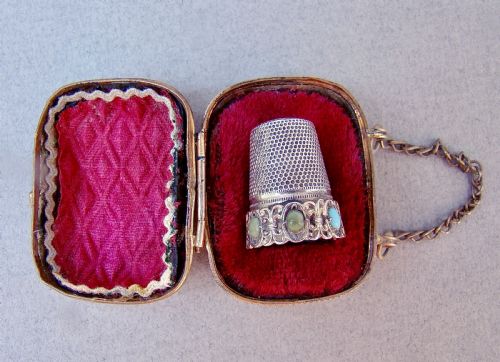
A cased antique thimble offers a neat pocket-sized sewing implement preserved in its own fitted velvet or leather lodging.
Cased Thimble
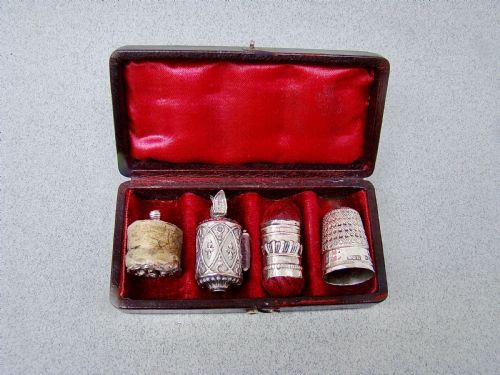
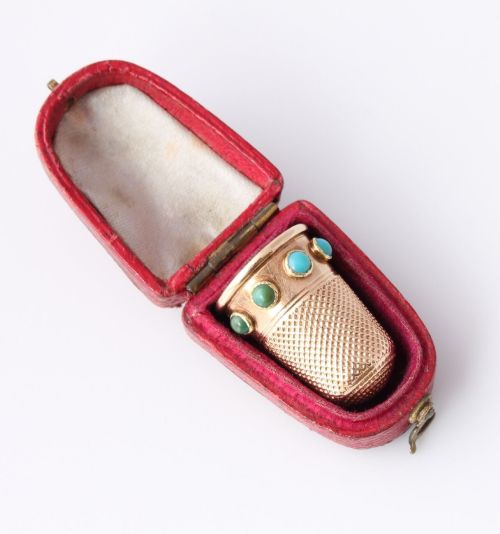
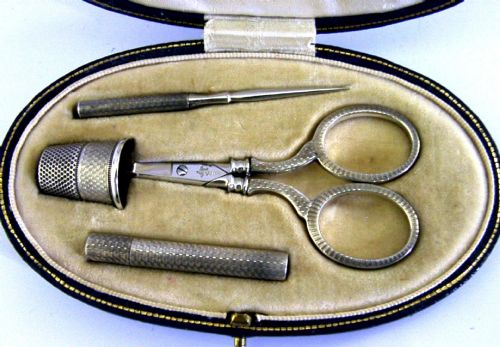
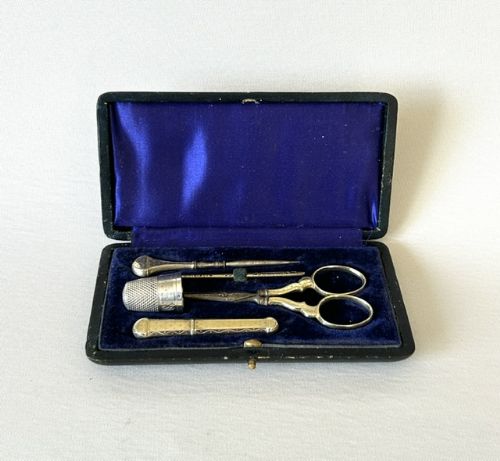
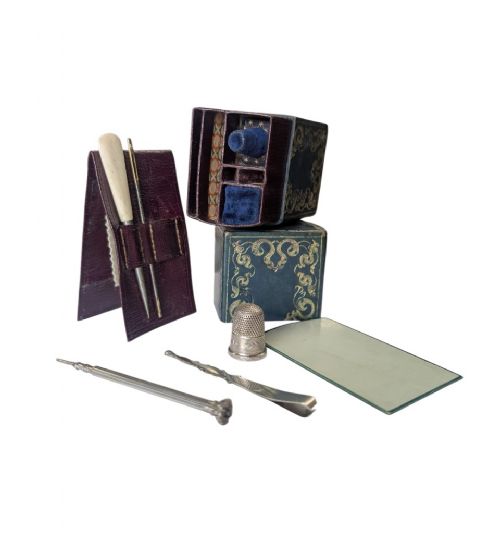
A cased antique thimble is a domestic sewing implement protected within a bespoke holder, designed for storage and carriage. The pieces gathered under this phrase include individual thimbles paired with protective containers, alongside broader sewing sets and novelty silver vessels.
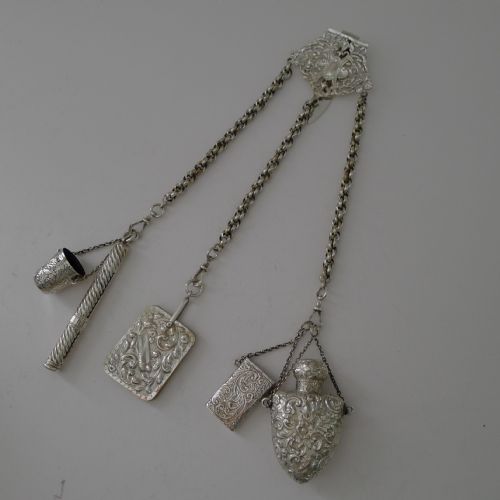
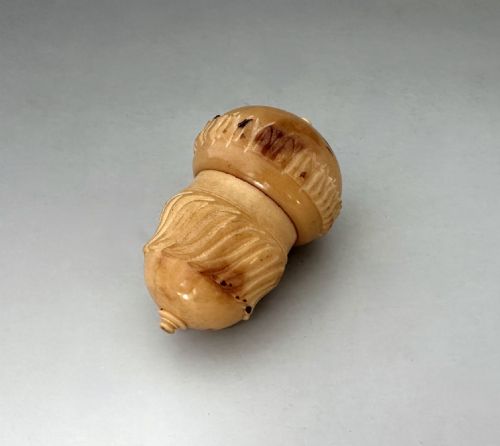
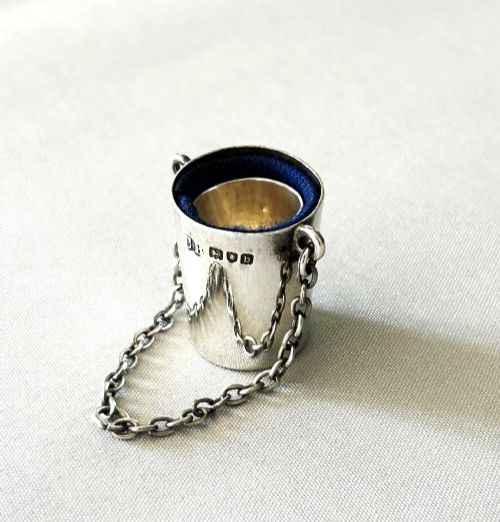
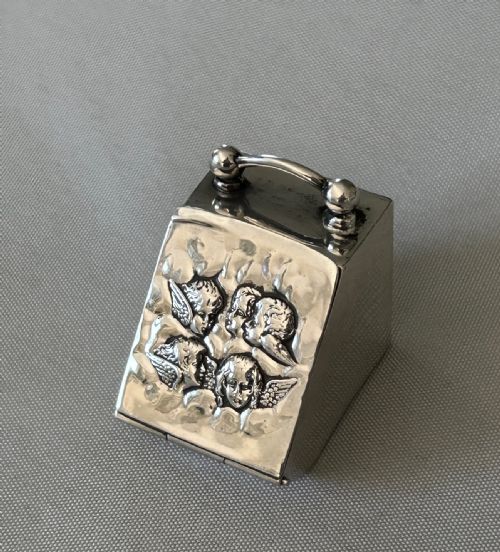
Most examples hail from the Victorian and Edwardian periods, stretching from the late nineteenth century into the early twentieth. Buyers meet standard fitted cases alongside fanciful novelty forms shaped like buckets, coal scuttles, eggs, and chatelaine holders.
How they were made
Metalsmiths formed sterling silver and silver gilt thimbles and novelty cases through pressing, stamping, and detailed hand engraving. Makers added gilt washes and stone settings to elevate decorative appeal.
Carvers shaped organic materials such as bone and Corozo nut into protective housings for the implements. Woodworkers utilised Black Forest carving techniques to shape fruit wood sewing cases.
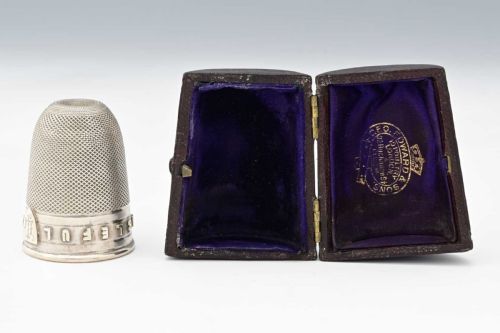
Upholsterers lined fitted compartments with velvet, silk, and leather to cradle the delicate thimbles securely. Hinged metal mounts and clasps held the protective containers shut.
Cased Thimble Retail Price Guide 2026
Typical asking prices for cased thimble among the pieces listed under this phrase on Sellingantiques today, from the lower quarter to the upper quarter. They describe what is for sale here now, not the wider market.
Some Victorian silversmiths fashioned tiny silver buckets and coal scuttles just large enough to hold a single sewing thimble.
What varies in quality
The distinction between standard items and superior pieces rests on the complexity of the housing and the reputation of the silversmith. Stamped maker marks and assay office hallmarks from Chester or Birmingham provide clear proof of origin and standard.
Novelty forms demonstrate greater ingenuity when the container mimics everyday objects with convincing detail, such as small buckets or coal scuttles. The preservation of original internal silk and velvet linings also influences the character of each piece.
Walter and George Myers·Charles Horner·Laurence Emanuel
The Cased Thimble Glossary
- Chatelaine holder
- A decorative hook or belt clip worn at the waist from which small household tools hung. These holders kept essential sewing implements close to hand.
- Silver gilt
- Sterling silver that has been coated with a thin layer of gold. This treatment provided a rich golden appearance while retaining a silver base.
- Corozo nut
- The hard white seed of the ivory palm, often carved into small containers. It served as a durable organic alternative to animal ivory.
- Ormolu
- Gilded bronze applied to ornamental mounts and small cases. The technique imparted a bright metallic sheen to decorative items.
Cased Thimble: Frequently Asked Questions
What is a cased antique thimble?
A cased antique thimble is a sewing tool housed inside a protective container made of leather, velvet, metal, or carved wood. These pieces kept the needlework implement safe during storage or travel.
Most items date from the Victorian and Edwardian eras. They range from simple fitted boxes to elaborate novelty silver containers.
How were cased thimbles used?
These sewing implements served to push needles through heavy fabrics during hand-sewing tasks. The protective cases ensured the small silver or bone thimbles did not get lost among other sewing tools.
Wealthy owners often carried them on chatelaines attached to their waistbands. This allowed quick access to sewing gear throughout the day.
How should I display them?
Cased thimbles work well displayed on small shelves or inside glass cabinets where the protective housing can remain open or closed. Placing them near other sewing collectables creates a focused display.
Keep them away from direct sunlight to protect delicate silk and velvet linings. Natural oils from hands can tarnish silver over time.