


Cased Dress Accessories
Cased antique dress accessories are fitted travelling companions and matched adornments, bringing portable luxury to your dressing routine.
Cased Dress Accessories
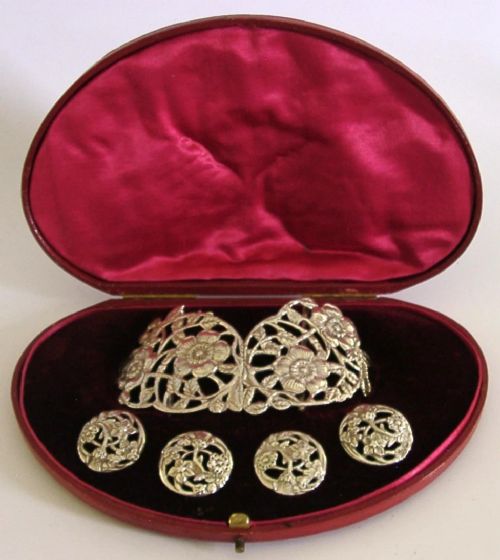
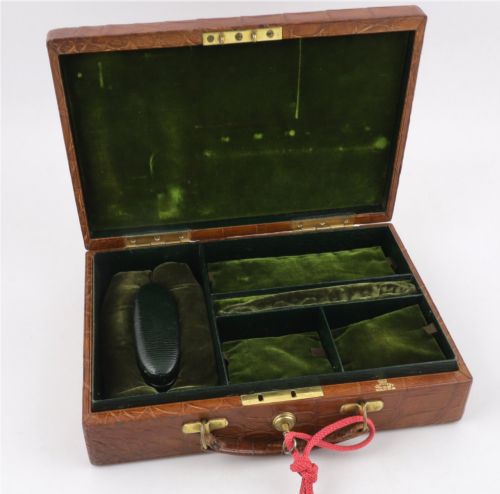
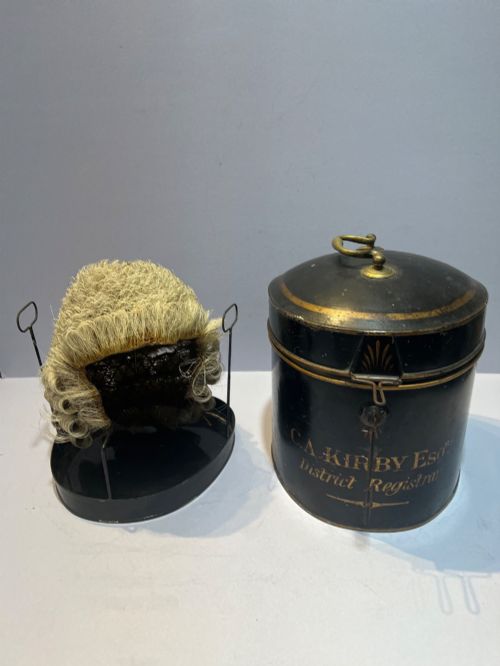
When you search for cased antique dress accessories, you encounter fitted sets and portable containers designed to house personal items during travel or daily use. These objects range from matching button and buckle sets to elaborate grooming, shaving, and vanity cases housed in their original fitted compartments.
The versions most likely to meet you on this page belong to the Victorian and Edwardian periods, alongside a few Art Deco examples. They encompass travel boxes, jewellery cases, and individual dressing pieces that retain their original protective housing.
Makers and retailers of the era, such as J C Vickery or Eade & Son, supplied these luxury goods to discerning clients who required orderly transport for their personal paraphernalia. The survival of the outer case often dictates the completeness and appeal of the set within.
How cased antique dress accessories were made
The exterior housings utilise sturdy substrates such as brass, steel, and wood covered in leather, crocodile leather, leatherette, or velvet to protect the delicate contents during transit. Inside, custom fitted interiors line the compartments to cradle glass, metal, and fabric components securely.
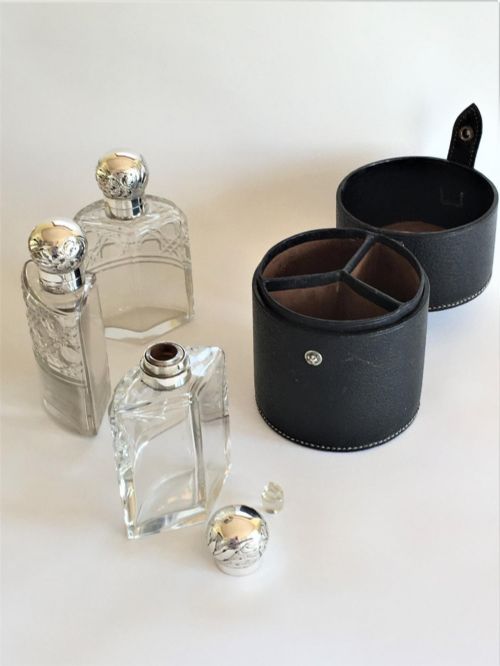
Metal elements including sterling silver and silver employ traditional silversmithing techniques like casting, engraving, and enamelling, as seen on buttons, belt buckles, and scent bottle trios. Makers marked their creations with hallmarks and signatures to denote quality and origin.
Materials represented include sterling silver, brass, steel, velvet, leather, and crocodile leather.
What varies in quality
Quality rests in the integrity of the original fitted case and the completeness of its contents. A set retaining all its original silver or glass components without replacement scores higher than a partial collection in a mismatched housing.
The execution of the individual pieces, from the crispness of a silversmith's engraving to the fine grain of the crocodile leather exterior, separates standard utilitarian items from luxury commissions produced by notable makers.
J C Vickery·Eade and Son·Jane Brownett·Alexander Jones
The Cased Dress Accessories Glossary
- Sterling silver
- A silver alloy containing 92.5 percent pure silver and 7.5 percent other metals, typically copper, used widely for dress accessories and travel boxes.
- Leatherette
- A simulated leather material made from a cloth base coated with a plastic or rubber compound, utilised for protective outer cases.
- Edwardian
- Pertaining to the period of the reign of King Edward VII from 1901 to 1910, characterised by elegant and refined design styles.
- Art Deco
- A design style of the 1920s and 1930s marked by sleek geometric shapes, streamlined forms, and modern manufacturing aesthetics.
- Trinket box
- A small decorative container used for storing jewellery or small personal valuables, often lined with velvet or silk.
Cased Dress Accessories: Frequently Asked Questions
What items belong in these sets?
These sets contain personal adornments and grooming tools such as buttons, belt buckles, shaving brushes, manicure instruments, and travelling cologne bottles.
Each item fits snugly into a dedicated compartment inside a protective outer box designed for transport.
How do I identify the period?
Dating relies on hallmarks, maker stamps, and stylistic cues characteristic of the Victorian, Edwardian, or Art Deco eras.
The materials used for the outer cases, such as crocodile leather or velvet, also offer strong clues to the decade of manufacture.
Were these items meant for travel?
Many of these pieces served as travelling companions for gentlemen and ladies on the move, protecting delicate glass and silver from damage.
Sturdy outer housings made from leather and brass ensured the contents survived long journeys by carriage or train.
How should I care for the case?
Leather and velvet exteriors require gentle dusting and protection from direct sunlight and excessive moisture to prevent degradation.
Silver components benefit from occasional light polishing with a suitable cloth to maintain their lustre without harming engraved details.