
Carved Writing Desk
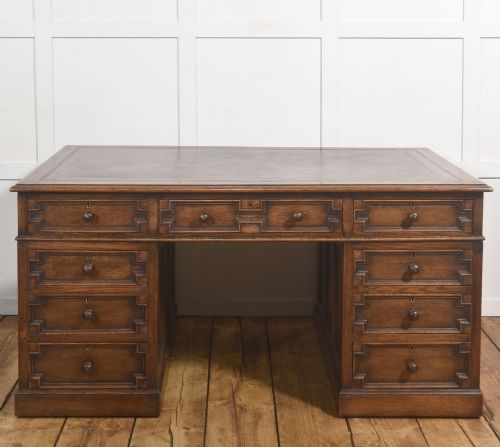
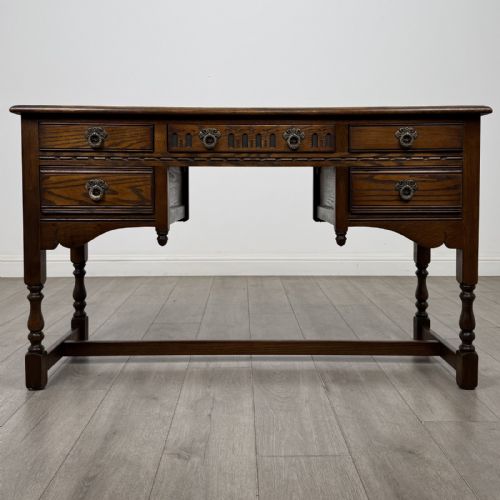
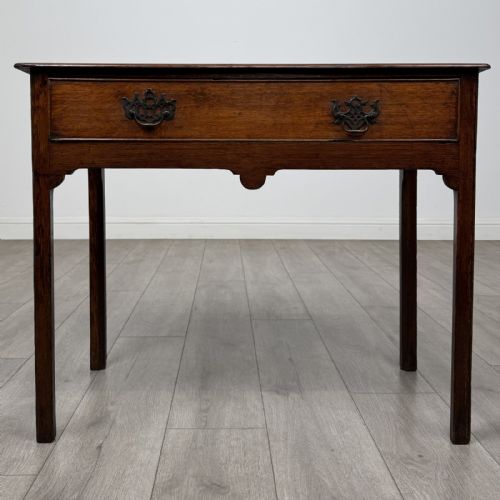
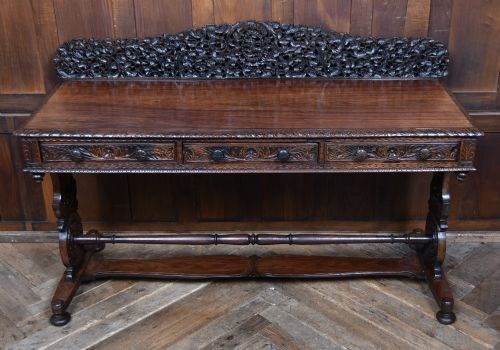
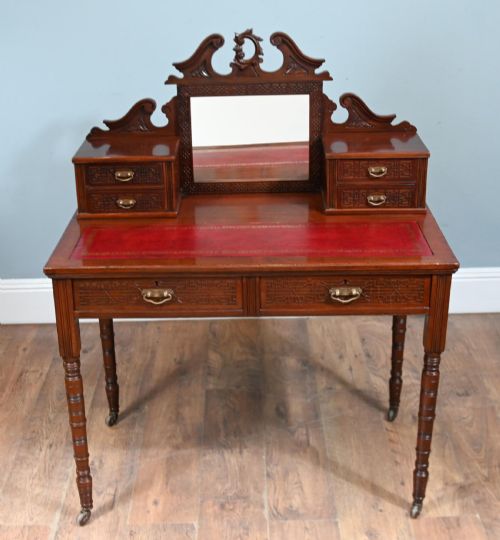
When you search for a carved writing desk, you discover sturdy oak and walnut writing tables bearing deep relief panels, linenfold motifs, and stylized foliage from the eighteenth to the twentieth centuries.
Carved Writing Desk
A carved writing desk encompasses heavy oak pedestal desks, walnut writing tables, and fall-front bureaux produced across the Victorian, Edwardian, and earlier periods.
You will most frequently encounter nineteenth-century oak examples featuring relief carving such as Green Man faces, scroll leaves, and linenfold panels.
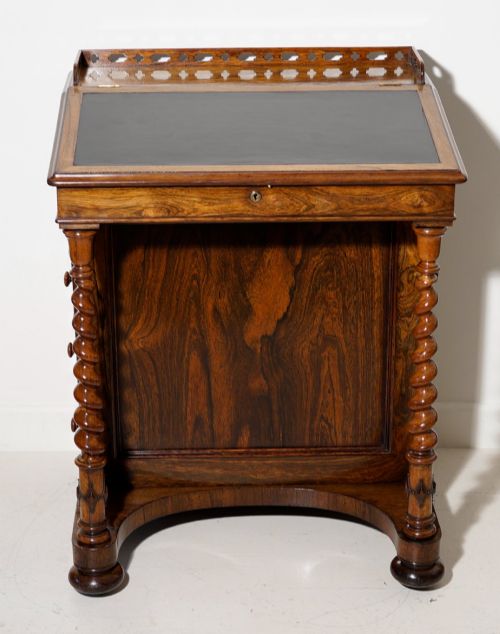
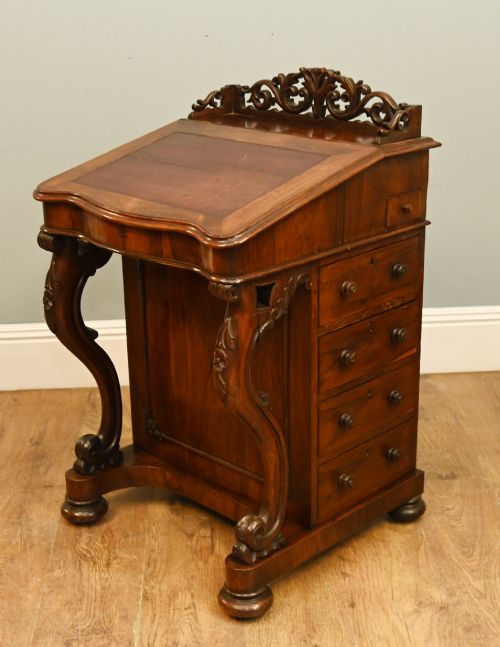
The selection ranges from compact writing slopes and Davenport desks to large double-sided partners desks designed for libraries and studies.
What varies in quality
The depth, crispness, and continuity of the hand-carved relief work distinguish standard production from exceptional individual pieces.
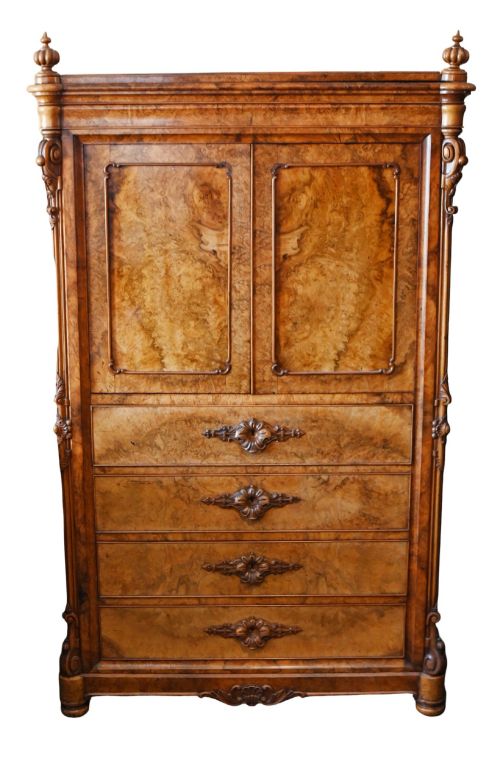
Timber selection dictates the overall presence, with figured burr walnut veneers and dense, quarter-sawn oak representing higher standards of material choice.
Internal construction, including secondary wood quality, hand-cut dovetails on drawer boxes, and original brass or cast-iron fittings, reveals the underlying standard of the maker's workshop.
Formations range from small document boxes and folding writing slopes to double-sided partners desks and Davenport writing cabinets.
Gillows Oxford Street Workshop·Maple and Co·Sigmund Jaray Wien
The Carved Writing Desk Glossary
- Bureau
- A desk featuring a hinged sloping flap that opens to reveal a fitted interior of small drawers and pigeonholes.
- Green Man
- A sculptural architectural ornament depicting a human face disgorging or entwined with foliage and vines, frequently seen on Victorian oak desks.
- Linenfold
- A style of relief carving used on panels to imitate the appearance of folded vertical folds of fabric or linen.
- Partners desk
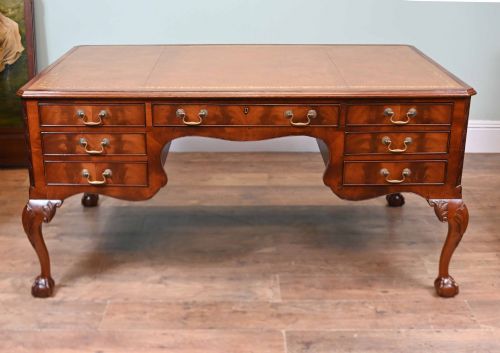
- A large freestanding double-sided pedestal desk designed with drawers and cupboards facing both directions so two people can work opposite each other.
- Davenport
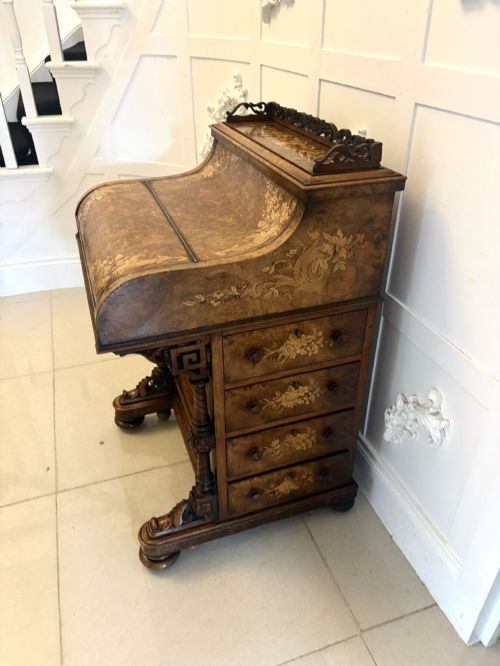
- A compact small desk featuring a sloping top for writing and a set of drawers accessed from the side.
- Marquetry
- Decorative veneer work created by fitting small pieces of differently coloured wood or materials into a patterned design.
Carved Writing Desk: Frequently Asked Questions
What is a partners desk?
A partners desk is a large freestanding writing table constructed with drawers, cupboards, or kneeholes on both sides. This symmetrical layout allowed two people to sit opposite each other in a shared study or library.
These pieces typically appear in substantial timbers like oak or mahogany and served administrative or professional functions in large period homes.
What timber was used for most carved desks?
Oak is the primary timber found on carved writing desks, particularly those from the Victorian and Edwardian eras displaying linenfold or Gothic revival details. Walnut and mahogany also appear frequently, especially on pieces incorporating marquetry or fine veneers.
Secondary woods like beech or pine were routinely used for drawer linings and internal framing beneath the primary hardwood exteriors.
Where were Davenport desks placed?
Davenport desks were designed as compact, moveable writing stations placed in the corner of a drawing room or boudoir. Their small footprint made them suitable for domestic spaces where a full-sized library table would prove too large.
The sloping top provided a writing surface while the side-opening drawers held correspondence and writing materials.