
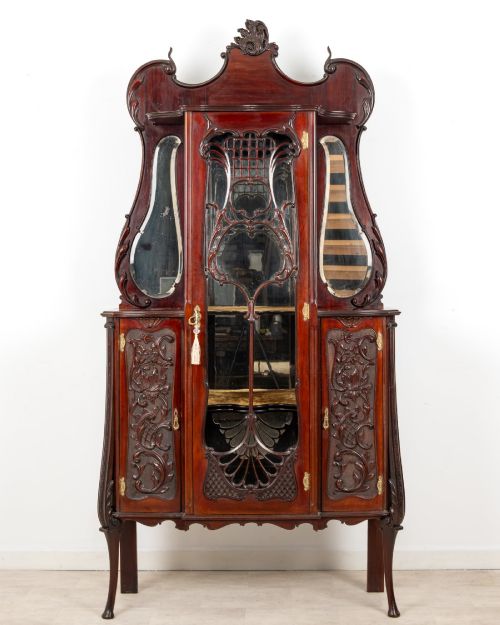


Carved Wooden Vitrine Cabinet
These carved wooden vitrine cabinet pieces display cherished collections behind glass, bringing nineteenth-century craftsmanship directly into your home.
Carved Wooden Vitrine Cabinet
A carved wooden vitrine cabinet brings nineteenth-century display furniture into modern spaces, serving as a glazed enclosure for precious objects and books. When you search for this phrase, you encounter upright display cabinets and standing bookcases designed to protect and exhibit items.
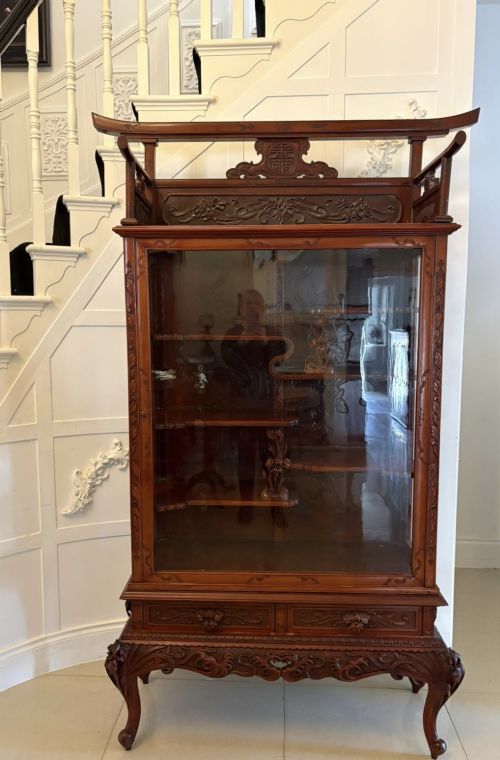
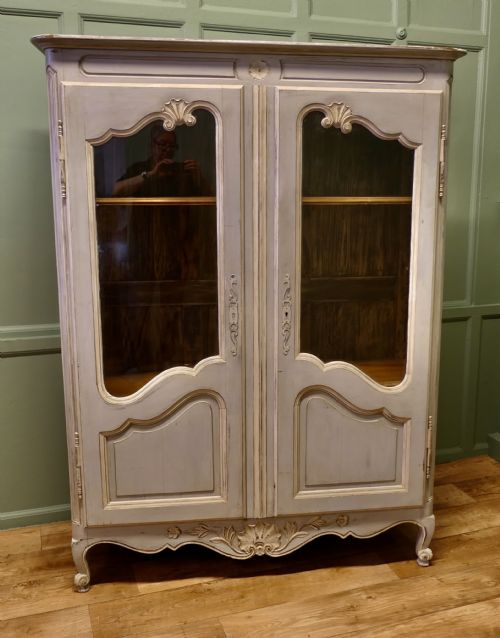
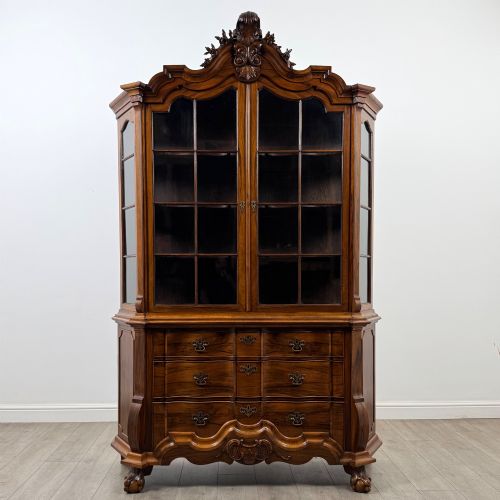
The pieces appearing on this page span the Victorian and Edwardian eras, alongside pieces from the 1800s, 1860, 1880, 1900, 1910, and 1920. Styles range from French Rococo and Dutch Rococo Style to Chippendale Revival, Georgian Revival, and Meiji or Japanese Revival.
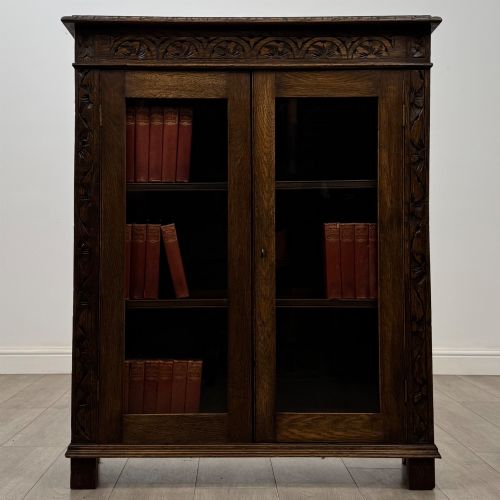
Most examples function primarily as display cabinets or bookcases with glass doors. They offer visible storage for porcelain, curiosities, and bound volumes within homes that value traditional woodwork.
How they were made
Cabinetmakers utilised hardwoods including mahogany, walnut, oak, and satinwood to construct the primary carcase and shelving. These timbers were selected for stability and grain pattern before receiving carved ornamentation.
Glazing panels form the front and sides of the vitrines, held within timber frames that often feature marquetry details or painted surfaces. Brass hardware secures the doors and drawers while red lacquer appears on specific revived Japanese forms.
Red lacquer hardwood cabinets bring a touch of Meiji Japan directly into Victorian parlours.
What varies in quality
The distinction between standard commercial pieces and finer cabinetmaking lies in the crispness of the timber carving and the selection of veneer figures. Walnut and satinwood surfaces with integrated marquetry require greater skill than plain boarded oak or mahogany.
Construction methods also dictate longevity, particularly the joinery of the door frames and the weight of the glass panes. Cabinets originating from established workshops show tighter tolerances in the drawers and door seals.
Warings
The Carved Wooden Vitrine Cabinet Glossary
- Vitrine
- A glass-fronted display cabinet designed specifically for showing porcelain and small curiosities. These pieces rely on clear glazing to maximise visibility from multiple angles.
- Marquetry
- The art of applying decorative veneer pieces to a structure to form geometric or pictorial designs. This technique frequently employs contrasting timbers like satinwood.
- Rococo Revival
- A nineteenth-century design movement drawing inspiration from eighteenth-century French and Dutch asymmetry, scrolls, and organic curves. Carved woodwork in this style emphasises flowing lines.
- Hardwood
- Timber derived from broad-leaved deciduous trees, encompassing the mahogany, walnut, and oak used across these cabinets. It provides the density required for intricate carving.
Carved Wooden Vitrine Cabinet: Frequently Asked Questions
What is a carved wooden vitrine cabinet?
A carved wooden vitrine cabinet is a glazed display piece originating mainly from the nineteenth and early twentieth centuries. It combines timber framing with glass panels to exhibit books and decorative objects.
These cabinets protect collections from dust while allowing full visibility. They appear in styles ranging from plain oak to elaborate marquetry and lacquer.
How were these cabinets used historically?
Historically, these cabinets stood in drawing rooms and libraries to showcase family collections, fine china, and leather-bound books. The glass doors kept valuable items secure while presenting them to visitors.
They served as functional status symbols for middle and upper-class households. Books and ornaments remained ordered and visible within the main living spaces.
Where should I place a vitrine cabinet?
A vitrine cabinet suits reception rooms, hallways, or studies where natural light illuminates the glass panels without causing fading to fragile contents. Ensure the floor is level so the doors hang true.
Keep the cabinet away from direct heat sources to prevent the timber and veneer from drying out or warping. Allow adequate clearance for the doors to swing open fully.
How do I identify the period of a cabinet?
Period identification relies on observing the timber choice, construction techniques, and stylistic revival cues. Victorian pieces often use heavy mahogany or carved oak, while Edwardian examples favour lighter satinwood.
Revival styles give clues through their interpretation of earlier Dutch and French Rococo motifs. Drawer linings and backboards also provide evidence of manufacturing dates.