



Carved Wooden Sword
These carved wooden sword pieces span the Victorian and Edwardian eras, offering a fascinating mix of concealed blades in walking sticks and traditional training weapons.
Carved Wooden Sword
When you search for a carved wooden sword, you encounter a specialised range of items spanning the Victorian, Edwardian, and early twentieth century periods. The selection includes gentleman's walking stick sword sticks alongside Japanese traditional practice weapons.
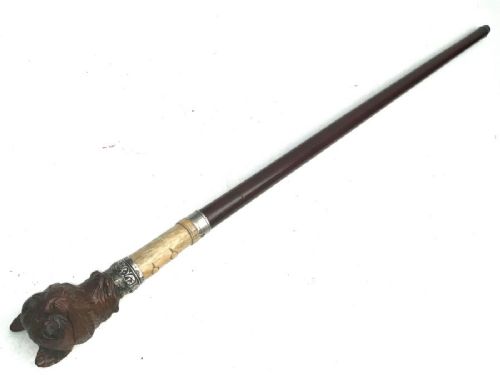
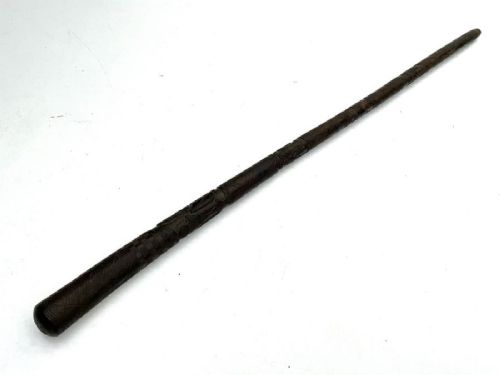
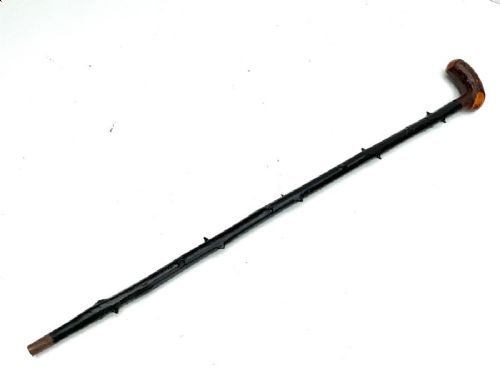
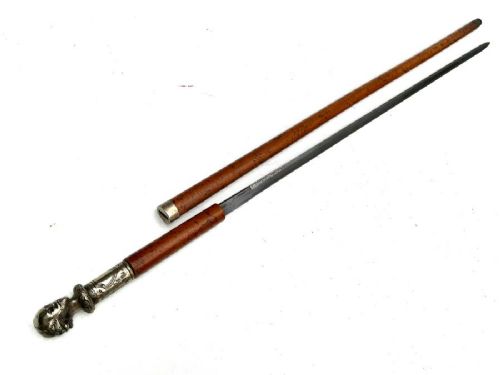
Most pieces on this page take the form of walking sticks and canes with hidden blades, featuring novel, root ended, or masonic handles. Alongside these are sculptural forms, Japanese master bokken sticks in Kashi oak, and traditional Irish blackthorn variations.
The objects serve multiple functions, ranging from functional self-defence accessories of the nineteenth century to ceremonial objects and traditional martial arts training pieces. Their origins cross British, Japanese, Irish, and Imperial German styles.
How they were made
Makers utilised resilient timbers such as Kashi oak and Irish blackthorn alongside general wood, shaping the shafts and handles through traditional carving techniques. These organic materials were frequently paired with metal, steel, and brass components.
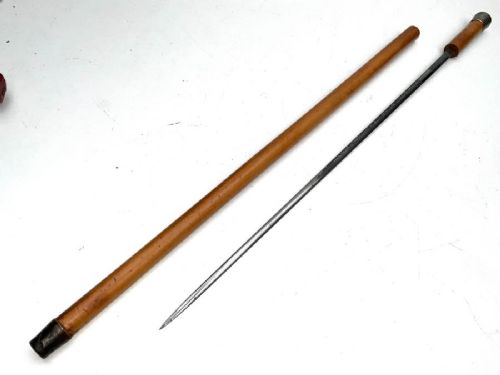
Details on specific pieces incorporate silver, bone, and horn elements, particularly for mounts, handles, and decorative figures. Blades hidden within walking sticks rely on forged steel construction, fitting flush into wooden scabbards.
Carved Wooden Sword Retail Price Guide 2026
Typical asking prices for carved wooden sword among the pieces listed under this phrase on Sellingantiques today, from the lower quarter to the upper quarter. They describe what is for sale here now, not the wider market.
Listings span the Victorian and Edwardian eras, incorporating materials such as wood, steel, brass, silver, bone, horn, and Kashi oak.
What varies in quality
Quality in these items rests upon the precision of the woodwork and the integrity of the hidden joinery between the stick and the handle. Superior examples demonstrate seamless alignment when the blade is sheathed within the wooden housing.
The refinement of carved details, such as root ended handles or figural studies, distinguishes standard production from finer workmanship. Furthermore, the inclusion of robust metals like brass and steel for internal mechanisms indicates higher standards of construction.
The Carved Wooden Sword Glossary
- Bokken
- A traditional Japanese wooden sword used for training, typically fashioned from dense Kashi oak.
- Blackthorn
- A dense, tough wood traditionally used for Irish walking sticks and shillelaghs, often featuring distinct thorn knobs.
- Sword stick
- A walking cane with a concealed steel blade housed securely within the wooden shaft.
- Gothic Revival
- An architectural and decorative style from the nineteenth century that influenced ornamentation on various wooden objects.
- Root ended handle
- A walking stick handle fashioned from the natural root formation of the timber, prized for its organic texture.
Carved Wooden Sword: Frequently Asked Questions
What is a sword stick?
A sword stick is a walking cane that conceals a metal blade inside its wooden shaft. The design allowed gentlemen of the Victorian and Edwardian periods to carry discreet protection.
These pieces combine everyday utility with hidden craftsmanship, featuring various handle styles from root ends to masonic designs.
How do I date these items?
Dating relies on stylistic markers from periods such as the Victorian and Edwardian eras, alongside specific manufacturing years recorded in the evidence from eighteen-ninety to nineteen-twenty.
Materials like bone, horn, and steel blade construction also help place an object within its nineteenth or early twentieth century context.
Where did Irish blackthorn swords originate?
Irish blackthorn walking sticks originate from traditional Irish craftsmanship, utilising the dense wood of the blackthorn bush. Some historical examples incorporated hidden blades for protection.
These pieces reflect distinct regional styles, such as the Listowel special variants recorded in nineteenth-century evidence.