


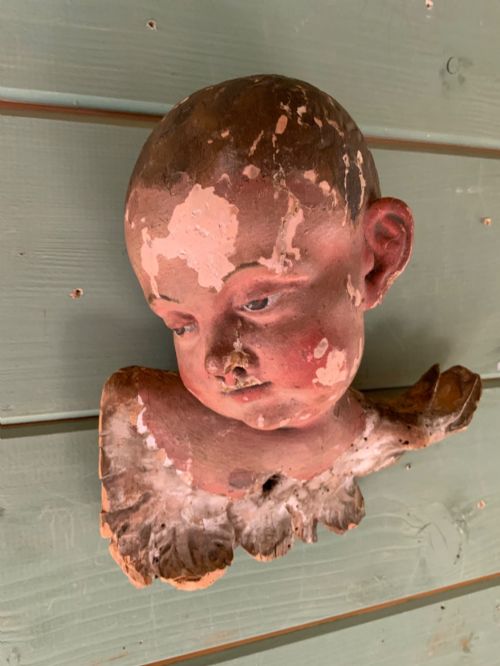
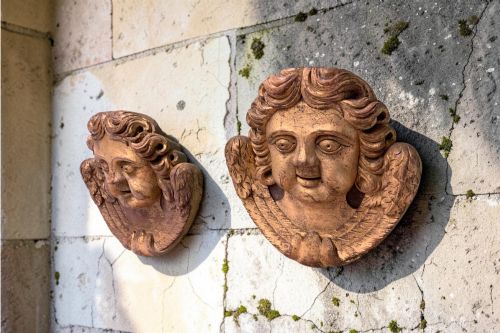
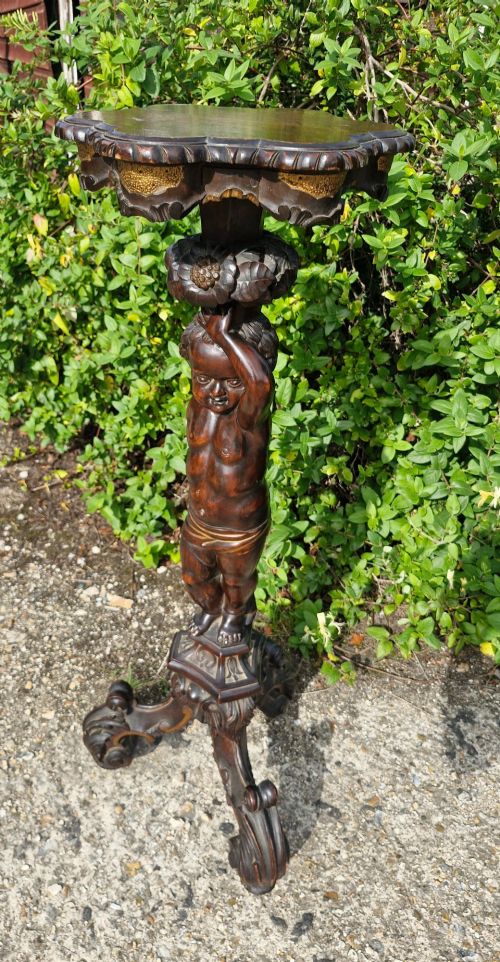
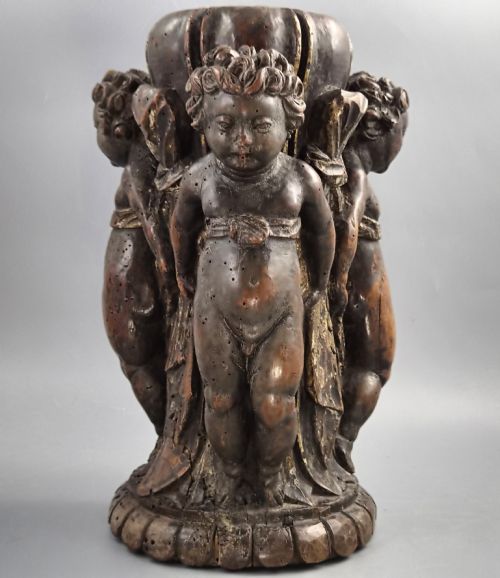
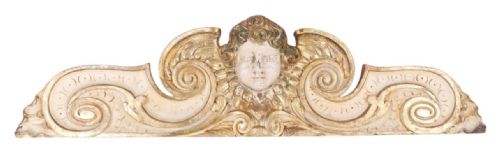
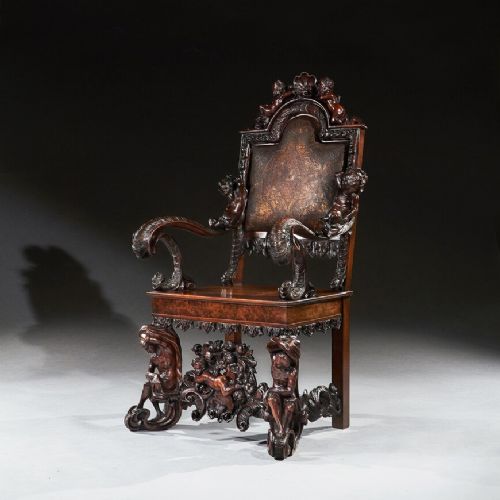
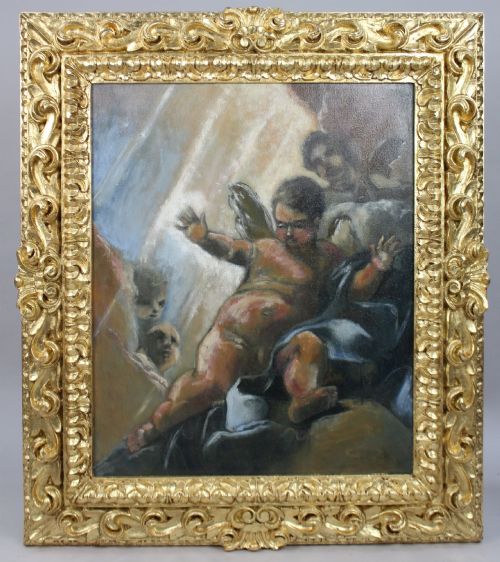
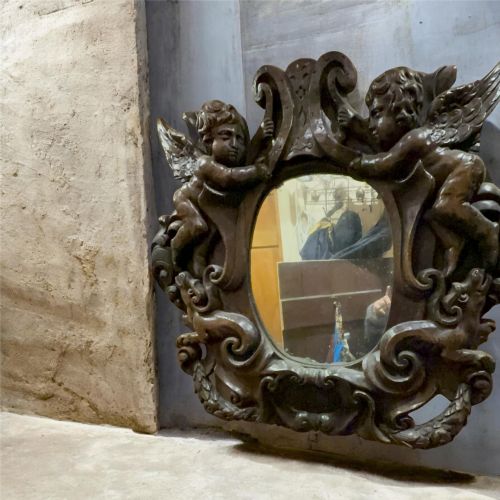


Carved Wooden Putti
These carved wooden putti bring spirited Italian and French Baroque movement and ecclesiastical warmth into a room.
Carved Wooden Putti
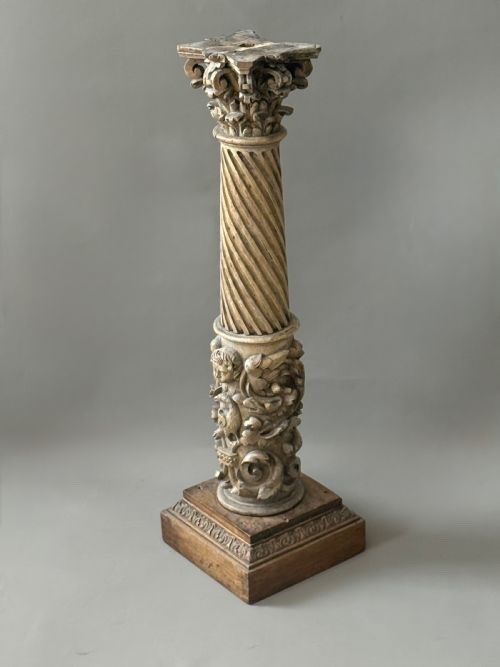
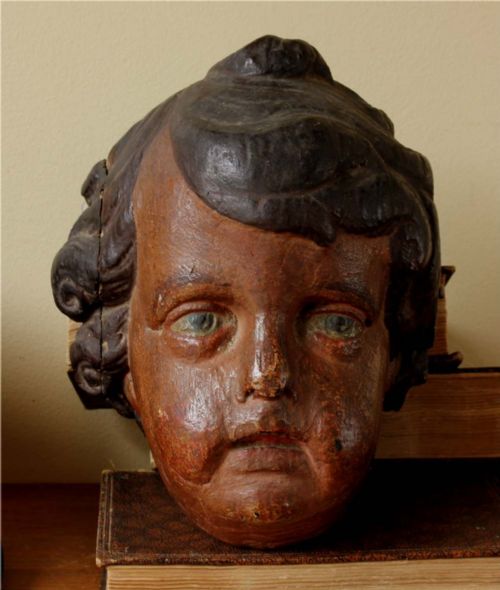
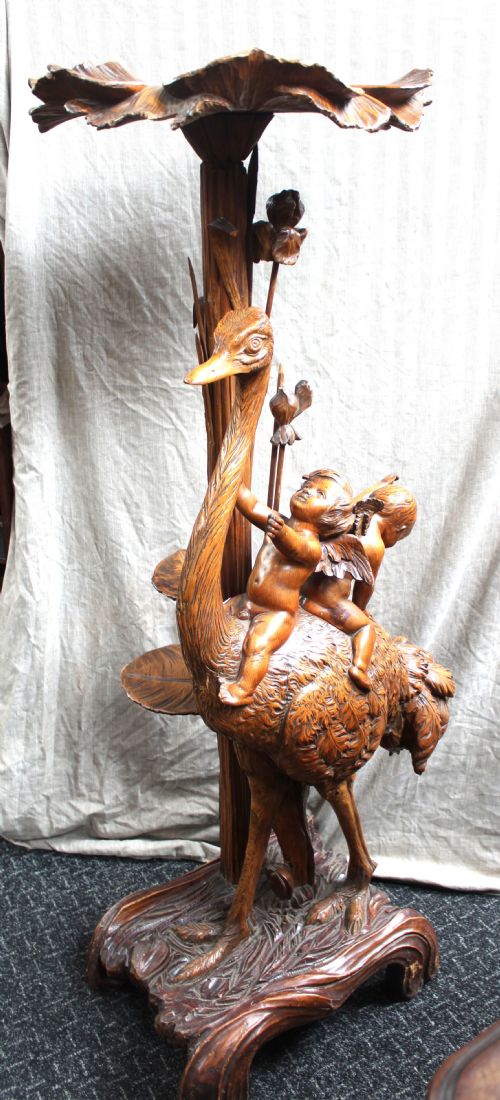
Carved wooden putti encompass sculptural figures, architectural salvage, wall brackets, and church carvings originating predominantly from the seventeenth, eighteenth, and nineteenth centuries. Buyers searching for carved wooden putti encounter standalone statues, cherub heads mounted on panels, and figures integrated into torchiere bases or mirror frames. Italian and French workshops produced the majority of these pieces, drawing heavily on Baroque and Renaissance revival styles.
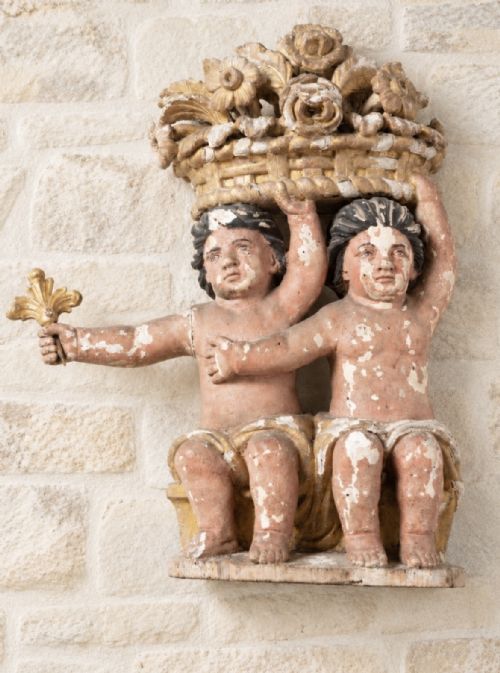
The selection ranges from small boxwood brooches and single limewood cherubs to monumental Continental pillars and architectural overdoors. Many examples utilise walnut, oak, or lime wood, frequently finished with polychrome paint, gesso, or gold leaf. Pairs of angels or cherubs mounted on clouds appear alongside single architectural fragments carved with wings and curls.
Materials and construction
Makers constructed larger architectural elements and mirror frames from joined sections of timber, while independent figures were often carved from a single block of wood. Surface patination developed through centuries of handling and exposure to candle smoke in ecclesiastical or domestic settings.
Carved Wooden Putti Retail Price Guide 2026
Typical asking prices for carved wooden putti among the pieces listed under this phrase on Sellingantiques today, from the lower quarter to the upper quarter. They describe what is for sale here now, not the wider market.
The listings span from the seventeenth century through to the twentieth century, with a strong representation of nineteenth-century Italian and French craftsmanship.
Assessing the carving
Quality rests entirely upon the anatomical confidence of the carving, the crispness of the feather and hair detail, and the retention of original surface treatments. Superior pieces display lively facial expressions and dynamic movement through the limbs, whereas weaker examples appear static and heavy-handed in the chisel work.
The integrity of the original gesso and gilding or polychrome paint dictates desirability. Pieces retaining their untouched early surface finishes hold greater artistic weight than those stripped down or heavily repainted in later centuries.
Andrea Brustolon·Steiner
The Carved Wooden Putti Glossary
- Putto
- A plump, naked male child figure found in classical and religious art, often winged and referred to as a cherub. These motifs dominate Italian and French ecclesiastical woodcarvings.
- Polychrome
- Decoration consisting of several colours applied to wood, gesso, or stone. Painters used pigments to render lifelike flesh tones and coloured garments on wooden sculptures.
- Torchiere
- A tall stand or candlestick base designed to support a light source. Carved wooden examples frequently incorporate putti or acanthus leaves wrapping the central pillar.
- Gesso
- A plaster mixture spread over wood to provide a smooth surface for gilding or painting. It allows carvers to achieve crisp edges before applying gold leaf.
- Acanthus
- A Mediterranean plant motif carved into furniture, panels, and mirror frames. It forms leafy scrolls that frame cherubs and architectural elements.
Carved Wooden Putti: Frequently Asked Questions
How were carved wooden putti originally used?
These carvings served as architectural ornaments on church altars, overdoors, and wall panels, or as supports for torchiere lamp bases and mirrors. Workshops integrated them into sacred and domestic spaces to add drama and devotional atmosphere.
Over time, many architectural elements were removed from their original settings and adapted into standalone decorative objects or wall brackets for collectors.
How do I distinguish seventeenth-century pieces from nineteenth-century revivals?
Seventeenth-century carvings display deeper tool marks, denser timber shrinkage, and accumulated patination from centuries of exposure. Revival pieces from the nineteenth century often exhibit a more uniform finish and precise machine-assisted preparation.
Examining the reverse of the panel or figure reveals construction methods and fastener types characteristic of different periods.
Should I clean polychrome paint on antique putti?
Original polychrome and gilt surfaces require minimal intervention to preserve underlying pigment and gesso layers. Dusting gently with a dry, soft brush is usually sufficient for maintenance.
Water and chemical solvents strip historic finishes and should be avoided entirely to protect the integrity of the carving.
Where should I place wall brackets in a room?
Wall brackets and cherub heads suit positions where light catches the relief carving, such as above doorways or flanking a fireplace. Ensuring secure wall fixings is essential given the weight of dense hardwoods.
Pairing matching angels or placing a single figure against a plain wall allows the depth of the limewood or walnut to stand out.