

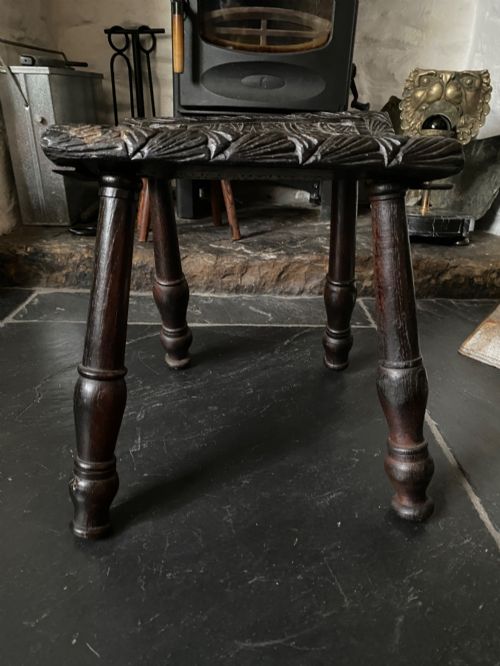
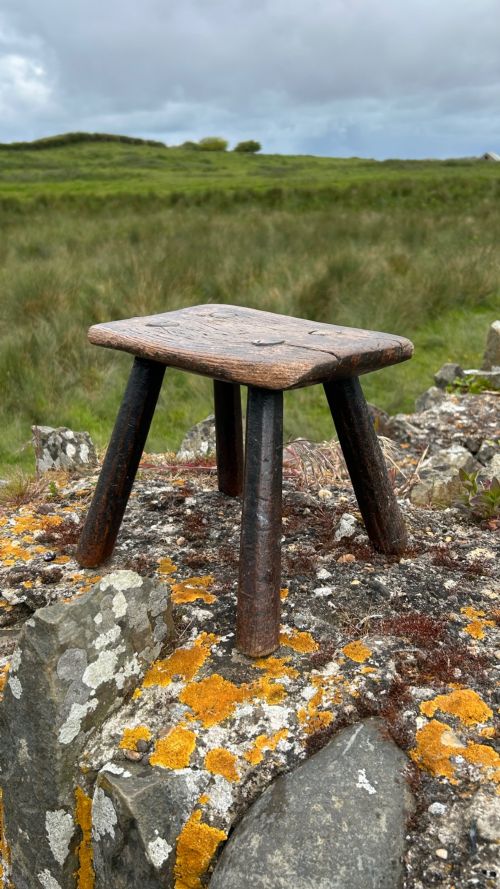
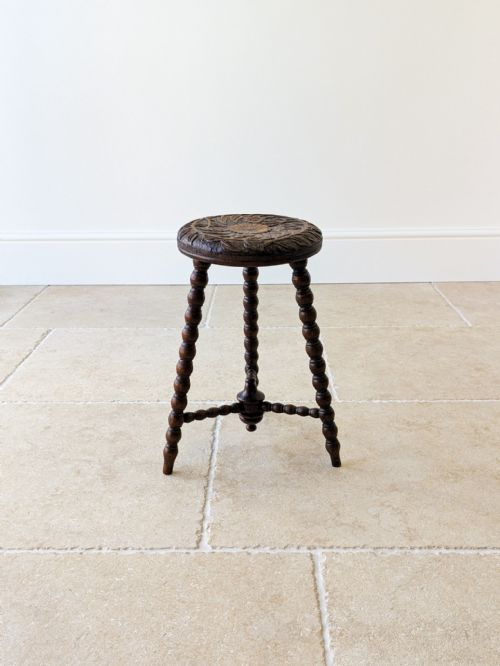
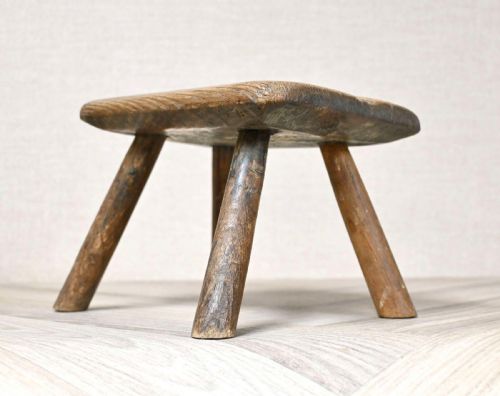
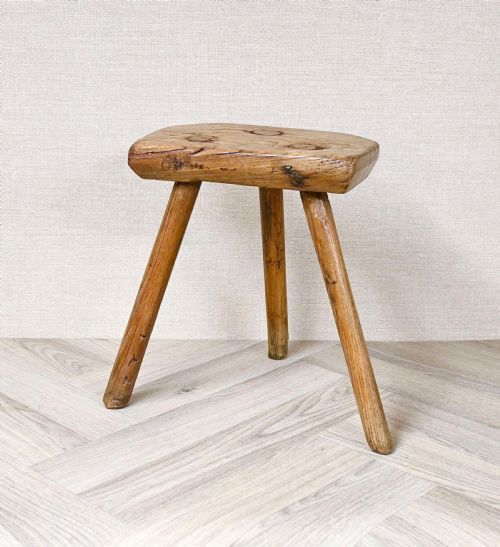

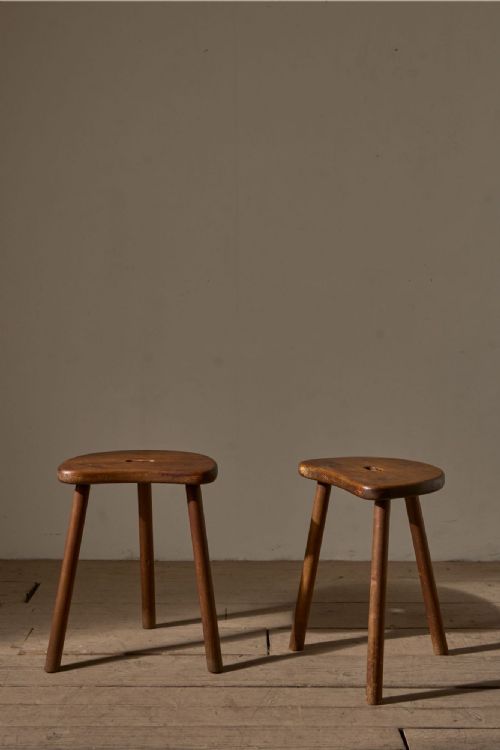
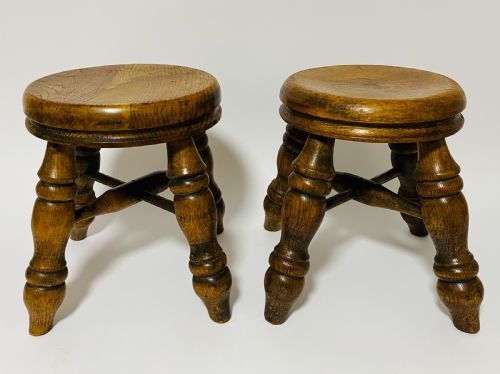
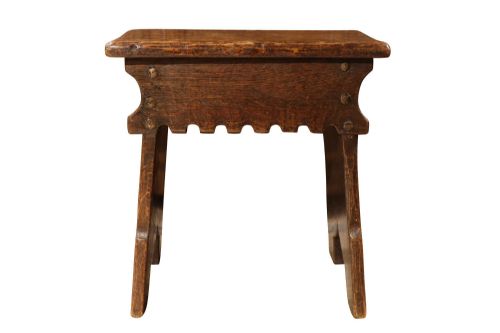


Carved Wooden Milking Stool
These carved wooden milking stool examples are honest rural seats built for utility, offering buyers a touch of genuine folk history.
Carved Wooden Milking Stool
A carved wooden milking stool represents a utilitarian category of country seating designed for agricultural and domestic tasks. These pieces range from early examples originating in the eighteenth century through to Victorian and later twentieth-century interpretations.
The selection here includes specific regional forms such as one-leg milking stools, Windsor oval seat variations, primitive vernacular designs, and natural form child stools. Buyers encounter low country seats and saddle stools alongside related small tables and hearth seating.
Originating primarily within rural environments, these items reflect the practical needs of farm life and cottage living. The forms emphasise function over ornamentation, yielding sturdy and unpretentious objects that fit easily into modern interiors as side tables or occasional seats.
How they were made
The construction of these pieces relies predominantly on solid native timbers such as oak, elm, pine, and mixed hardwoods. Craftsmen selected these local woods for their durability and availability, often employing pegged construction methods to join seats and legs securely.
Techniques range from simple three-leg or one-leg arrangements suited to uneven floors to bobbin-turned legs and Windsor framing. Surface decoration appears occasionally through pokerwork inscriptions, carved circular tops, and sculpted rounded seats.
Carved Wooden Milking Stool Retail Price Guide 2026
Typical asking prices for carved wooden milking stool among the pieces listed under this phrase on Sellingantiques today, from the lower quarter to the upper quarter. They describe what is for sale here now, not the wider market.
Object forms span standard milking seats, Windsor variations, five-plank construction, and children's furniture.
What varies in quality
The character of a piece depends heavily on the honesty of its timber and the integrity of its original construction. Unaltered pegged joints and genuine surface patination distinguish pieces that retain their original working life from those with replaced components.
Proportion and sculptural presence also separate standard utilitarian items from more unusual survivals. Natural form elements and distinct regional traits elevate the visual appeal without diminishing the fundamental simplicity of the design.
J. Shoolbred
The Carved Wooden Milking Stool Glossary
- Vernacular
- Everyday objects built by local craftspeople using regional traditions rather than high-style academic designs. This approach ensures each piece responds directly to practical needs.
- Pegged construction
- A method of joining wooden elements using wooden pins or dowels instead of metal nails or modern glues. It allows the timber to expand and contract naturally with seasonal humidity changes.
- Windsor
- A style of seating where legs and backs are wedged directly into a solid sculpted wooden seat. This construction provides exceptional strength through simple mechanical locking.
- Pokerwork
- The technique of decorating wood by burning designs into the surface with heated metal tools. It appears on nineteenth-century pieces to display folk art motifs or inscriptions.
- Saddle stool
- A seat shaped with a hollowed upper surface resembling an equestrian saddle for comfort. This form distributes weight evenly during prolonged tasks.
Carved Wooden Milking Stool: Frequently Asked Questions
What is a carved wooden milking stool used for?
Originally built for agricultural workers to sit close to dairy animals during milking, these low seats provided stability on uneven farm floors. Their compact size also made them useful for various hearthside and domestic tasks.
Today, collectors place them around the home as low side tables, plant stands, or occasional seats. Their modest scale allows them to fit easily into small spaces.
How do I date an antique milking stool?
Dating relies on observing tool marks, timber selection, and construction methods such as pegged joints or turned legs. Eighteenth-century examples often display greater wear and simpler, adzed surfaces, while nineteenth-century versions incorporate more varied regional turning.
Changes in style from plain primitive forms to Victorian country or Arts and Crafts interpretations help narrow the period further. Comparing the wood species and patination provides additional context for age.
Are these stools stable to sit on?
Most pieces retain their structural integrity, though three-leg or one-leg designs are specifically engineered to remain steady on uneven flagstone or earth floors. Buyers should examine the leg joints where they meet the underside of the seat.
While robustly built from hardwoods like oak and elm, their primary value today often lies in display and light use. Proper placement on even modern flooring ensures safe everyday enjoyment.
What woods were used for these country stools?
Country makers utilised whatever accessible local timber grew near the workshop, predominantly oak, elm, pine, and general hardwood. Elm was frequently chosen for seats because its interlocking grain resisted splitting under heavy use.
Other components like legs and spindles might feature contrasting woods turned on a pole lathe. This mixture of materials reflects the resourceful nature of rural vernacular woodworking.