


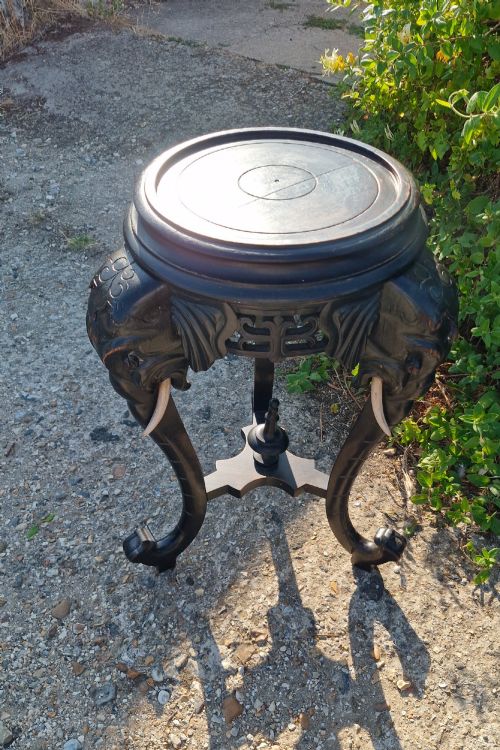
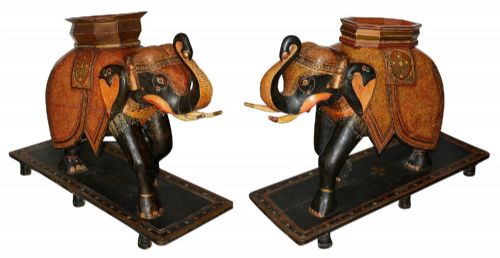


Carved Wooden Elephant Stand
A carved wooden elephant stand brings distinct colonial character into a room, combining practical display space with ornate animal sculpture.
Carved Wooden Elephant Stand
A carved wooden elephant stand functions primarily as a small occasional table, side table, or plant pedestal supported by sculpted elephant figures. These items emerge from various periods spanning the late nineteenth century through to the early twentieth century, encompassing Victorian, Edwardian, and specific colonial eras. Buyers encounter forms ranging from octagonal and hexagonal top tables to sculptural pairs and tripod designs.
The regional origins shape the appearance of these stands significantly, with pieces reflecting Anglo-Indian, Kashmiri, Chinese, and Burmese traditions. Anglo-Indian examples from the Bombay Presidency often feature dense foliage and geometric patterns alongside the animal forms. Other variations include painted wooden tusks, lacquer finishes, and intricate inlaid decoration upon the wooden surfaces.
How they were made
Artisans utilised dense timbers such as teak, rosewood, and general hardwoods to carve both the structural surfaces and the detailed elephant supports. These woods provided the necessary durability and weight-bearing capacity for occasional tables and plant stands while permitting deep, intricate relief carving.
Secondary materials such as bone and painted highlights enhanced the visual depth of the woodwork. Certain workshops employed bone inlay techniques or applied gesso and lacquer to create contrasting textures against the dark grain of the carved hardwood.
Carved Wooden Elephant Stand Retail Price Guide 2026
Typical asking prices for carved wooden elephant stand among the pieces listed under this phrase on Sellingantiques today, from the lower quarter to the upper quarter. They describe what is for sale here now, not the wider market.
Materials recorded across the inventory include solid teak, rosewood, bone inlay, gesso, and painted wood.
What varies in quality
The choice and preparation of the timber also influence the overall standard. Solid rosewood and heavy teak components demonstrate a higher grade of material selection compared to softer painted woods, ensuring greater longevity for the table top and supporting legs.
The Carved Wooden Elephant Stand Glossary
- Anglo-Indian
- Describing decorative arts produced during the British rule in India, often blending British furniture forms with traditional Indian craftsmanship. These pieces frequently incorporate dense surface carving and exotic hardwoods.
- Hoshiarpur
- A region in Punjab renowned for intricate woodwork involving delicate inlay techniques. Artisans from this area commonly used bone or metal wire inset into dark wood surfaces.
- Gesso
- A plaster-like mixture applied to wooden surfaces to prepare them for painting or gilding. This material allows for smooth decorative finishes and moulded relief details.
- Tripod Table
- A small freestanding table supported by three legs rather than four. In this context, the three legs often take the form of carved elephant figures.
- Lacquer
- A durable resin finish applied in multiple coats to wood objects. It provides a glossy protective surface while adding rich colour and depth.
Carved Wooden Elephant Stand: Frequently Asked Questions
Where should I place a carved wooden elephant stand?
These compact tables suit corners, hallways, or living spaces as lamp tables or plant pedestals. Their decorative nature allows them to function as standalone sculptural accents.
Ensure the placement protects the polished hardwood and inlaid details from direct sunlight and excessive temperature fluctuations.
How do I date an antique elephant stand?
Dating relies on examining the timber type, carving style, and construction methods used in the frame. Nineteenth-century examples often exhibit heavier solid rosewood or teak construction with hand-cut joints.
Later Edwardian or 1920s pieces may show lighter wood selections and slightly simplified decorative motifs compared to Victorian predecessors.
Are these stands sturdy enough for daily use?
Most pieces are built from dense hardwoods like teak or rosewood, providing solid structural integrity for holding lamps, books, or plants. The weight distribution relies on the carved elephant legs and central column.
Care should be taken not to overload the edges of multi-sided tabletops to maintain overall balance.
What is the difference between an occasional table and a plant stand?
Occasional tables generally feature wider tops designed for surface items like drinks or small lamps. Plant stands or pedestals often have smaller, narrower tops intended primarily to elevate botanical specimens.
Both variants utilise the same sculptural elephant support motifs across different regional traditions.