
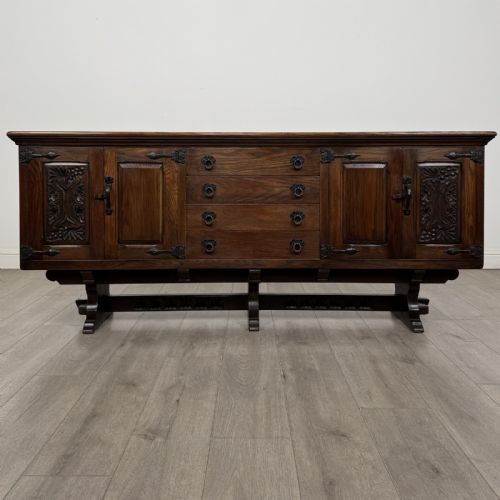
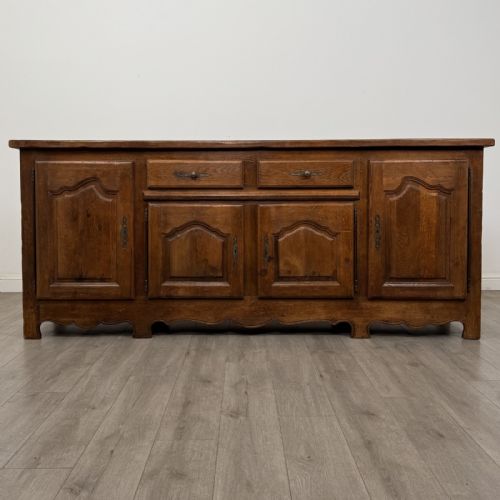
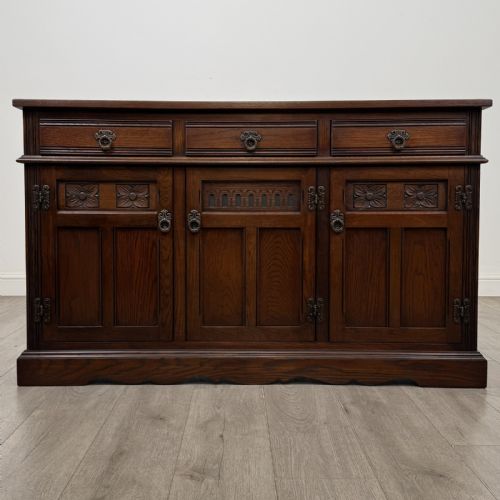
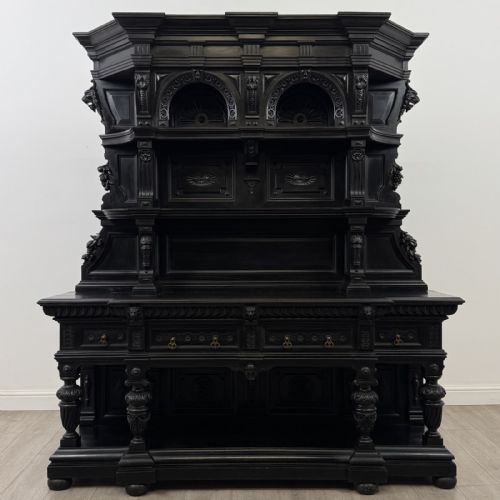
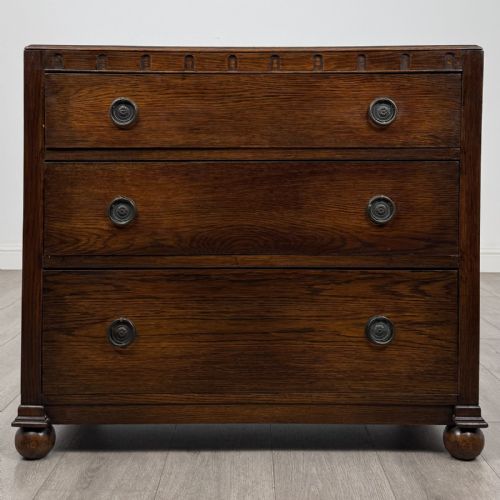
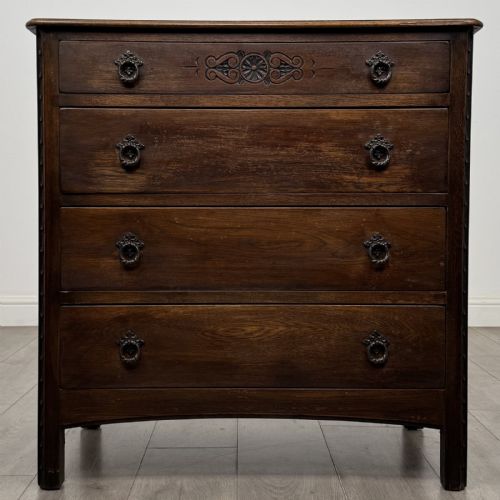
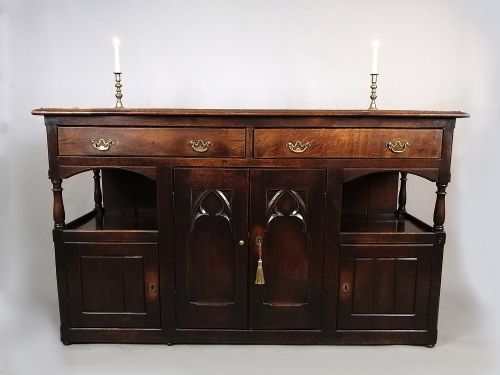
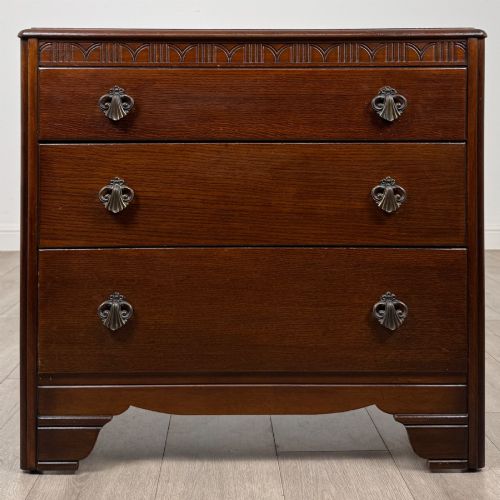
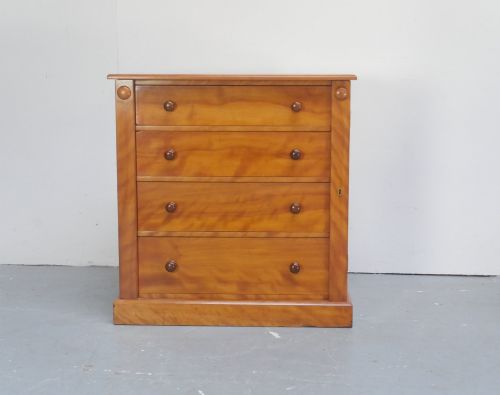
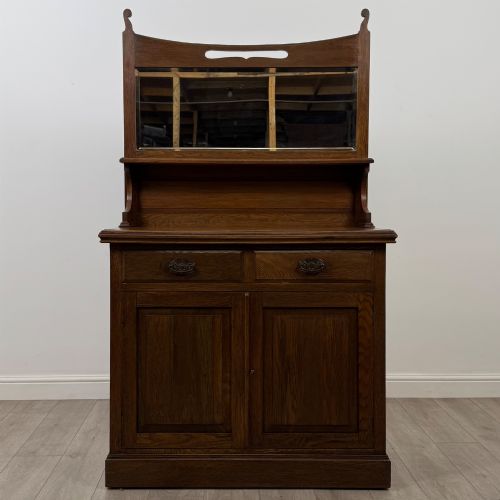
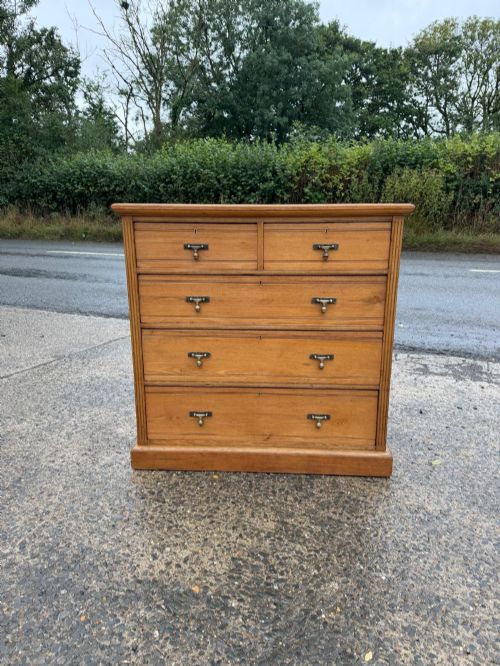
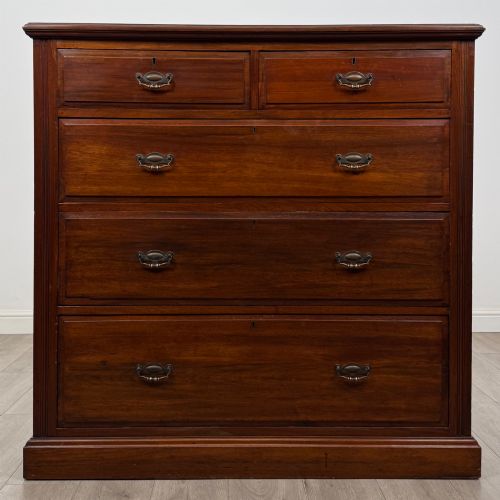
Carved Wooden Dresser
These carved wooden dresser examples unite centuries of joinery and domestic storage, offering substantial timber forms shaped by regional workshops and revival tastes.
Carved Wooden Dresser
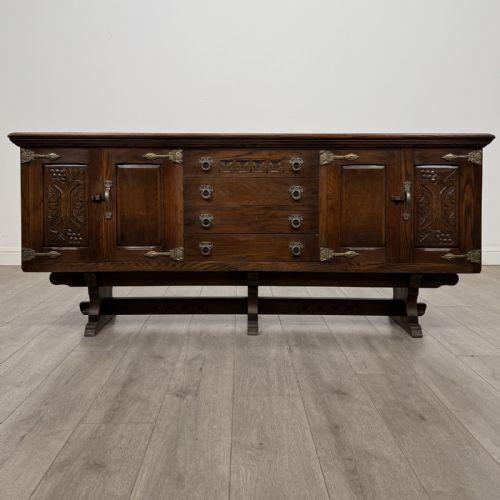
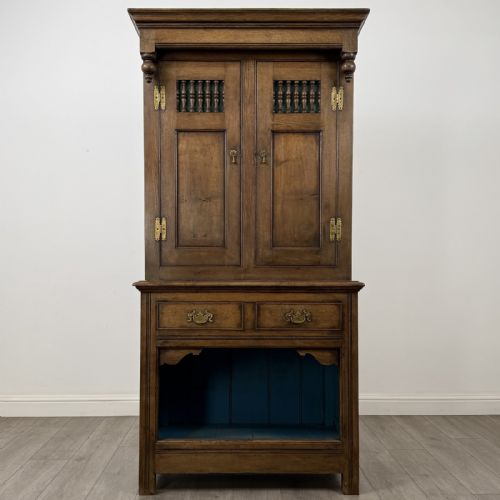
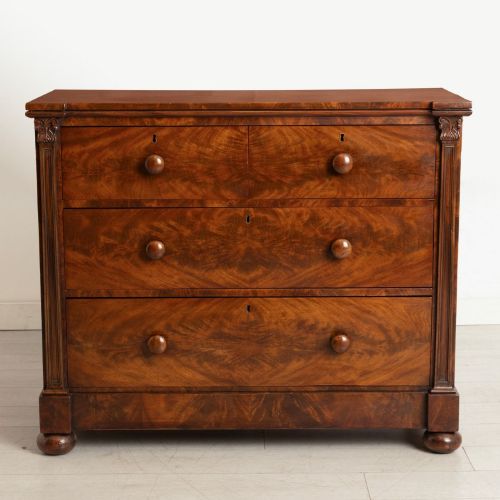
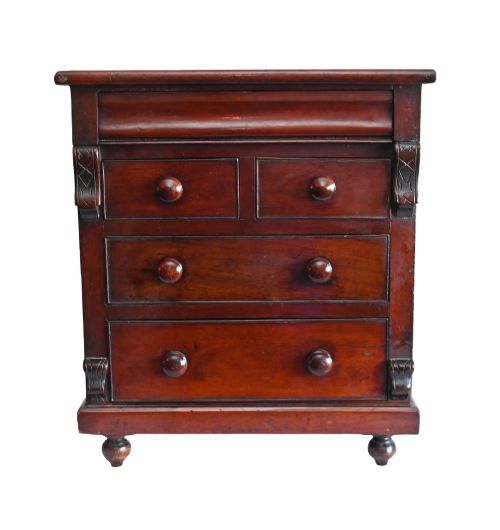
A carved wooden dresser combines storage utility with relief decoration, spanning periods from the eighteenth century through the Edwardian era. The pieces listed here incorporate sideboards, cupboards, and chests alongside traditional dining room dressers.
Oak and mahogany form the primary timber framework for these designs, often styled in Jacobean Revival, Gothic Revival, or French Provincial patterns. Buyers frequently encounter Edwardian and Victorian interpretations featuring panelled doors and carved drawer fronts.
Materials and construction methods
Carpenters utilised solid oak, mahogany, and walnut, selecting timber for grain pattern and structural strength. Hand tools shaped mouldings, bun feet, and stretcher bases directly into the primary wood.
Relief decoration relied on chisels and gouges to cut linenfold panels, pillar details, and lion masks into the structural frame. Brass hardware, including handles and drop pulls, fastened to drawer fronts using traditional fixings.
Design influences range from Jacobean Revival and Gothic Revival to French Provincial and Arts and Crafts styles.
Markers of construction quality
Superior examples display crisp hand-carved detailing with clean depth in the timber relief, whereas lesser pieces show softer edges and mechanical uniformity. The integration of original brass hardware and well-fitted drawer joints elevates a piece above standard utility items.
Proportion and timber selection dictate the standing of individual items, with quarter-sawn oak and figured mahogany commanding attention. Secondary woods inside drawers and the precision of dovetail joinery reveal the cabinetmaker's competence.
The Carved Wooden Dresser Glossary
- Linenfold
- A style of wood carving that imitates folded parchment or linen, commonly found on Tudor and revival panels. This technique creates rhythmic vertical folds across cabinet doors.
- Stretcher base
- Horizontal wooden bracing connecting the lower legs of a sideboard or table for added stability. These supports often feature turned details in revival pieces.
- Bun foot
- A rounded, flattened spherical foot supporting the corners of a chest or cabinet. They lift the main body slightly off the floor.
- Commode
- A low cabinet or chest of drawers originating in France, typically possessing decorative mounts or prominent carved panels. They served primarily in reception rooms.
- Dovetail
- A joint formed by interlocking wedge-shaped fingers, securing drawer corners without metal fasteners. Hand-cut versions indicate earlier craftsmanship periods.
Carved Wooden Dresser: Frequently Asked Questions
What periods do these dressers cover?
The available selection spans from the late seventeenth century through the Edwardian and early twentieth-century revival periods. Pieces include Georgian, Victorian, and Arts and Crafts examples.
Craftsmen across these eras utilised traditional timbers like oak and mahogany, applying stylistic revivals ranging from Gothic to French Provincial.
How do I care for antique timber?
Maintain stable indoor humidity levels and keep wooden furniture away from direct heat sources to prevent timber splitting. Regular dusting with a soft cloth preserves the original polish.
Apply occasional traditional wax polish to nourish dry surfaces without building up synthetic residues that dull the grain.
How were these items used originally?
Sideboards, cupboards, and dressers provided essential storage for dining utensils, linens, and provisions in domestic households. Larger formats displayed serving platters and household silver.
Drawers and cabinets organised daily domestic goods while decorative carvings reflected the social status and taste of the household.
Are brass handles original to the pieces?
Many items retain period brass drop handles or acorn pulls fitted during initial manufacture. Replacements occur due to standard wear over centuries of daily domestic use.
Examining fixing holes and surrounding timber patina helps determine whether handles date from the original construction period.