



Carved Wooden Desk Organiser
These carved wooden desk organiser pieces bring order and character to a workspace through period craftsmanship and practical tabletop forms.
Carved Wooden Desk Organiser
A carved wooden desk organiser encompasses various tabletop accessories designed to keep correspondence, writing implements and small desk items tidy. When you search for a carved wooden desk organiser, you encounter pieces intended for practical daily use in study spaces and offices.
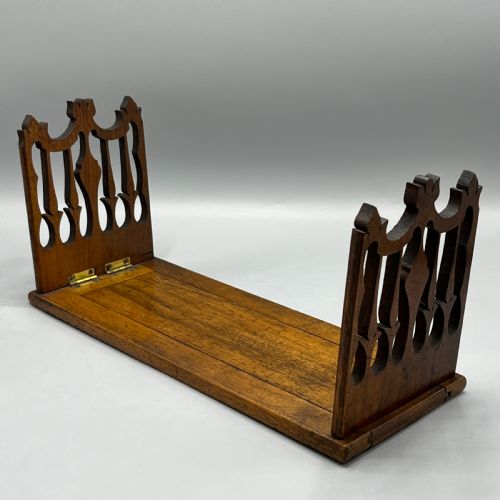
The selections span the Victorian, Edwardian and early twentieth century eras. Common forms appearing in this category include stationary boxes, inkstands, extending book slides and desktop cabinets.
Makers utilised regional styles ranging from British Gothic Revival to continental Black Forest carvings and Anglo-Indian traditions. These objects transform a utilitarian workspace into a display of period carving and functional joinery.
How they were made
Craftsmen shaped these organisers from solid timbers such as oak, mahogany, maple and various hardwoods. Surface decoration relied heavily on hand carving, creating dimensional motifs, animal figures and architectural tracery.
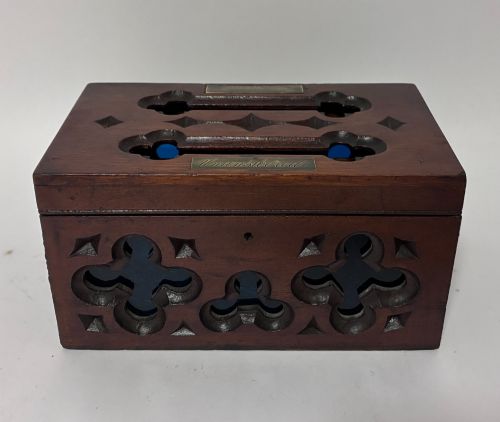
Many examples incorporate functional secondary materials including brass hinges, glass inkwells and fabric linings. Joinery techniques varied from dovetail construction on boxes to extending mechanisms on book slides.
Carved Wooden Desk Organiser Retail Price Guide 2026
Typical asking prices for carved wooden desk organiser among the pieces listed under this phrase on Sellingantiques today, from the lower quarter to the upper quarter. They describe what is for sale here now, not the wider market.
Several Victorian desk items take the charming form of carved bears holding logs or serving as functional inkwells.
What varies in quality
Quality rests primarily on the depth and crispness of the hand carving, which separates ambitious sculptural work from simpler surface decoration. Reliefs showing confident undercut details and expressive animal forms demonstrate superior artisan skill.
Material selection and structural integrity also define the range, with dense hardwoods and well-fitted internal compartments holding up better over decades of use. Original hardware such as fitted glass inserts and brass mountings contributes to a cohesive standard of production.
Amberg filing cabinet
The Carved Wooden Desk Organiser Glossary
- Book slide
- An extending tabletop rack designed to hold a selection of volumes upright between two ends. These often feature carved wooden bookends that slide along a wooden base.
- Inkstand
- A desk tray fitted to hold one or more inkwells, often including pen rests and small compartments for stamps or wafers.
- Stationary box
- A desk box with internal dividers designed to hold writing paper and envelopes upright. They frequently feature sloping lids or fall fronts.
- Black Forest
- A style of wood carving originating from the mountain region of central Europe, known for realistic representations of wildlife, particularly bears and botanical elements.
- Gothic Revival
- An architectural and decorative style drawing inspiration from medieval forms, characterised by pointed arches, trefoils and heavy structural detailing.
Carved Wooden Desk Organiser: Frequently Asked Questions
What is a desk tidy?
A desk tidy is a small tabletop container or stand designed to hold everyday writing supplies in one organised place. These pieces often feature compartments for pens, stamps and paper.
Historical examples range from simple wooden trays to elaborate multi-tier stands with drawers and integrated inkwells.
How do I date a wooden desk organiser?
Dating relies on identifying the prevailing stylistic influences, such as Victorian Gothic Revival or Arts and Crafts simplicity. Wood types and construction methods also offer clues to the period of origin.
Examine the hardware, joinery and any maker marks to narrow down the decade of manufacture.
Where were Black Forest carvings made?
Black Forest carvings originated in the forested mountain regions of central Europe, particularly Switzerland and Germany. Artisans there specialised in realistic animal sculptures and rustic wooden furnishings.
These pieces were frequently exported to Britain and America as souvenirs or decorative accessories for home libraries.
How do I care for antique desk wood?
Maintain antique wood by keeping it away from direct sunlight and sudden temperature changes to prevent drying and cracking. Occasional dusting with a soft, dry cloth preserves the finish.
Avoid using modern silicone sprays or heavy polishes that can build up a sticky residue on carved surfaces.