


Carved Wooden Chess
These carved wooden chess sets and tables bring history and strategy to your room.
Carved Wooden Chess
When you search for carved wooden chess, you encounter complete sets, folding boards, and games tables from the nineteenth and early twentieth centuries. These pieces encompass miniature sets, weighted library sets, and comprehensive games compendiums housing various pastimes.
The objects span periods from the Victorian era through the Edwardian years, reflecting diverse craftsmanship across English, Anglo-Indian, and Kashmiri origins. You will frequently find classic Staunton patterns alongside St George and Calvert pattern sets.
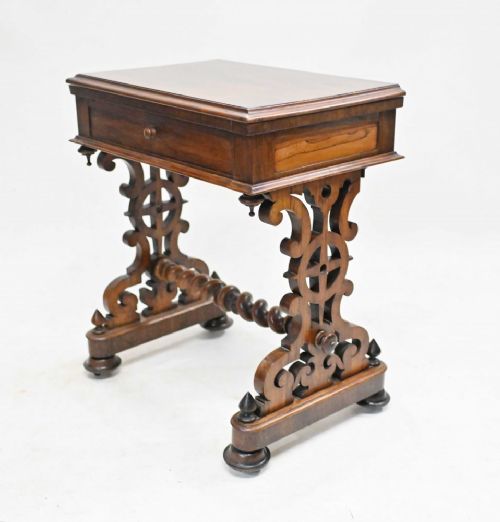
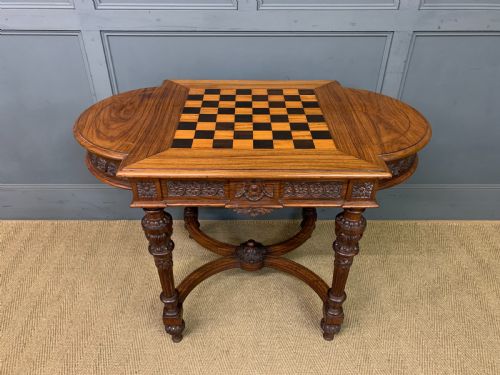
Tables serve a dual purpose as functional furniture and playing surfaces, incorporating rosewood, mahogany, and inlaid marble tops. Folding boards provide practical storage for pieces while maintaining traditional wooden construction.
Materials and construction methods
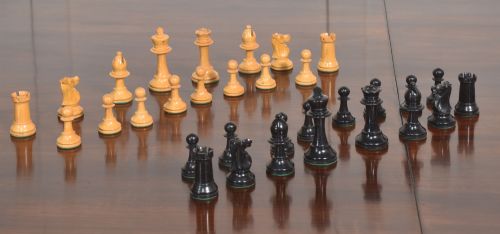
Boxwood and ebony form the primary material combination for traditional chess sets, often paired with ebonised wood for darker pieces. Rosewood and mahogany appear extensively in the construction of games tables and boards.
Makers utilised bone, felt, and marble as supplementary materials, adding weight and textural contrast to the playing pieces. Inlaid work and detailed carving define the ornamentation of tables and boxes from the Victorian and Edwardian periods.
Nineteenth century knights were hand-carved individually, meaning no two horses in a vintage set possess the exact same expression.
Factors that distinguish quality
The precision and depth of the carving on knights and king pieces distinguish standard sets from finer examples. Weighted bases and the presence of makers' marks or stamps elevate the standing of a chess set.
The condition of original wooden surfaces, hinges, and inlaid details dictates the overall integrity of games tables and folding boards. Superior pieces retain their matching components and balanced proportions across the entire set.
Jaques·Whitty·British Chess Company·F. H. Ayres·Calvert
The Carved Wooden Chess Glossary
- Staunton pattern
- The standard design for chess pieces established in the mid-nineteenth century, characterised by realistic piece architecture and mathematical proportions. This style remains the tournament standard today.
- Ebonised wood
- Ordinary timber treated to resemble ebony through staining or finishing processes. It provides a dark contrast to untreated boxwood pieces.
- Games compendium
- A boxed collection containing multiple board games and pastimes within a single fitted case. These sets often include chess, checkers, and backgammon.
- Calvert pattern
- A distinct nineteenth century style of carved chess pieces associated with the London maker Calvert. These sets feature characteristic knights with detailed manes and distinct rook coronets.
Carved Wooden Chess: Frequently Asked Questions
How do I identify a Staunton chess set?
Staunton chess sets feature standardised, highly recognisable piece designs where the king wears a cross-topped coronet and rooks resemble castle turrets. This style was introduced during the Victorian period to unify tournament play.
The proportions are carefully balanced to ensure stability, distinguishing them from older ornamental patterns like St George. Most quality nineteenth century examples bear this distinct architectural form.
What is a games compendium?
A games compendium is a multi-game box housing equipment for pastimes such as chess, backgammon, draughts, and cribbage. These fitted wooden cases fold or open to reveal tiered compartments for each set.
They offer a comprehensive solution for nineteenth century parlour entertainment, combining storage and playing boards in one cabinet.
Are antique chess sets weighted?
Many nineteenth century chess sets feature weighted bases to improve stability during play, often incorporating lead inserts beneath felt pads. Catalogues from makers like the British Chess Company explicitly advertised weighted sets.
Unweighted pieces feel noticeably lighter and lack the green or red felt undersides typical of library sets.