
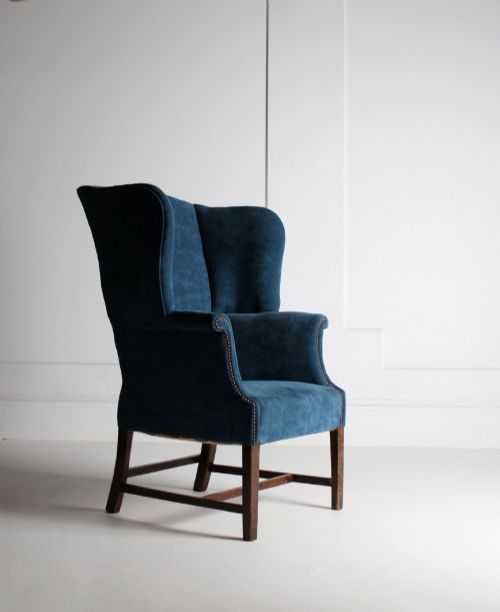


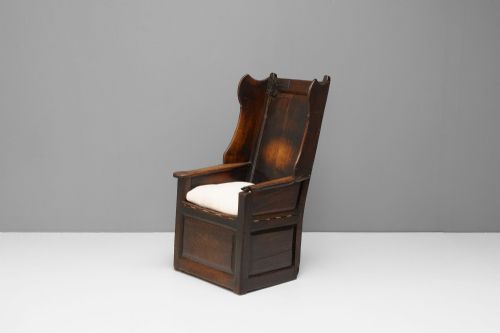
Carved Wood Wingback Chair
A carved wood wingback chair brings draught-excluding comfort and period presence to a room, offering deep seats and sheltering sides.
Carved Wood Wingback Chair
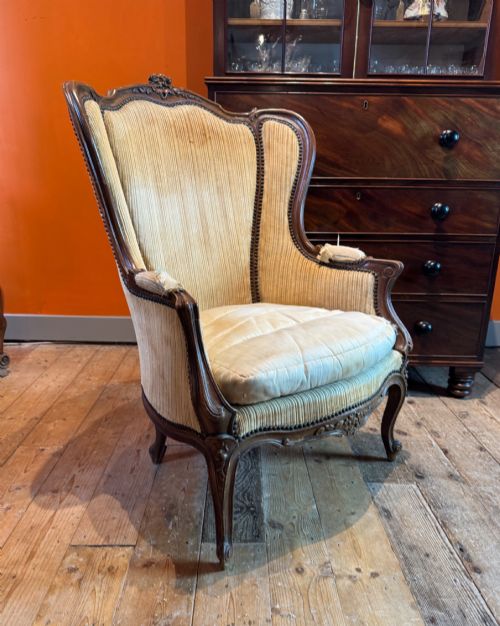
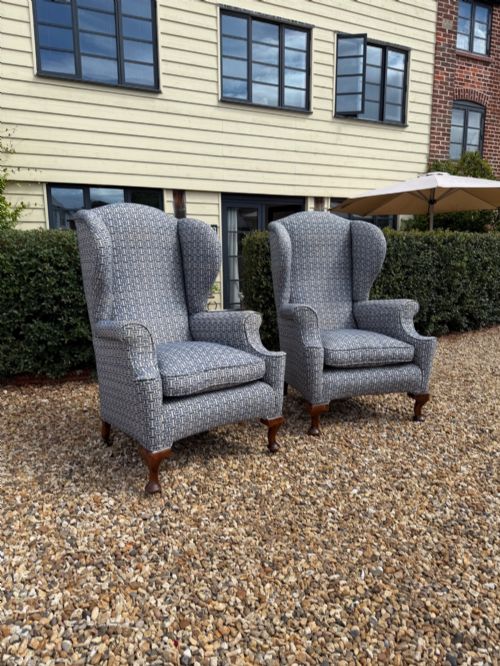
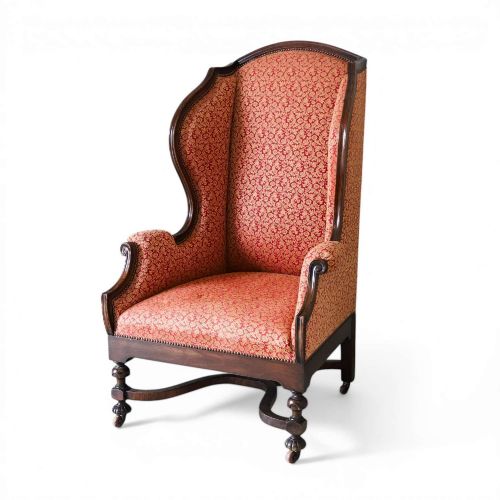
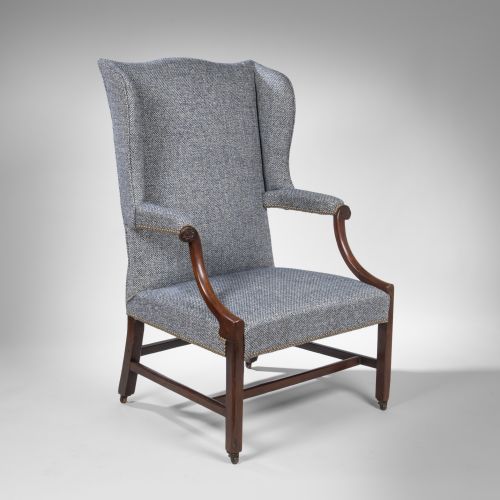
A carved wood wingback chair combines exposed wooden frames with fully or partially upholstered seating designed to protect against draughts. The pieces on this page span the eighteenth century, the nineteenth century, and the early twentieth century, incorporating regional forms like the Lakeland lambing chair alongside formal revival styles.
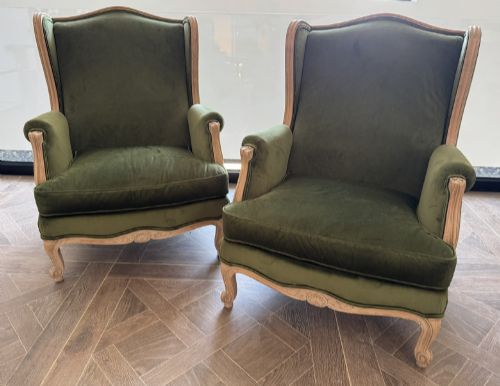
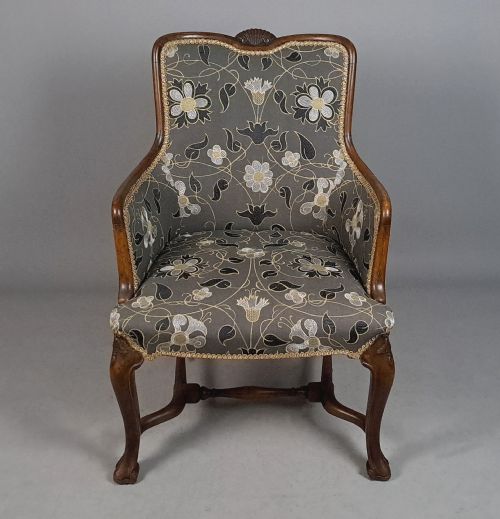
Makers drew on historic vocabularies, producing examples in Chippendale style, Queen Anne revival, Carolean style, and Victorian rococo revival. Continental and French Chateau influences also appear, alongside English country house and Georgian vernacular pieces that prioritise robust comfort over strict formal ornamentation.
Most items on this page function as armchairs, while associated seating includes settees and sofas. Buyers will encounter walnut and mahogany frames, alongside gilded finishes and decorated surfaces paired with upholstery in fabric, velvet, textile, calico, or leather.
Materials and construction
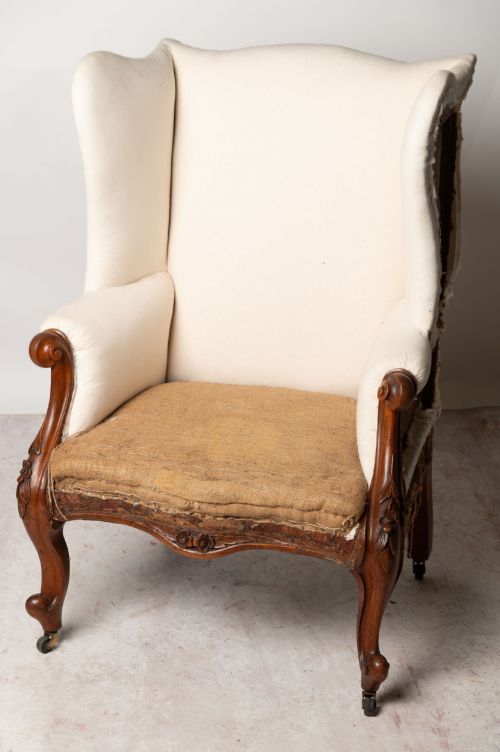
Carpenters and cabinetmakers utilised solid timbers such as mahogany and walnut for the structural frames, carving scrolls, cabriole legs, and mouldings directly into the wood. Brass accents sometimes appear on castors or hardware, complementing the warm tones of the timber.
Upholstery techniques involved stuffing hair, wool, or natural fibres into fabric, velvet, textile, calico, or leather coverings held in place with tacks. Frames were constructed using traditional joinery, ensuring stability for the high backs and projecting wings characteristic of the form.
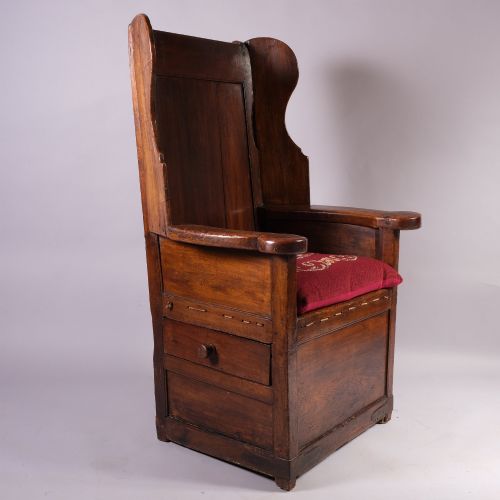
Lambing chairs included under-seat compartments originally intended for keeping newborn lambs warm beside the cottage fire.
Judging quality and execution
The distinction between ordinary and superior examples lies in the crispness of the timber carving and the architectural balance of the wings and arms. Master carvers produced deeply undercut details and smooth, flowing lines on mahogany and walnut frames.
Proportion and timber selection dictate the standing of a piece, with figured grain and substantial framing setting finer examples apart. The integration of the upholstered elements with the wooden structure also reveals the hand of a skilled workshop.
The Carved Wood Wingback Chair Glossary
- Wingback
- An armchair featuring projecting sides attached to the arms and back to shield the sitter from draughts. These upholstered wings became prominent in domestic seating during the late seventeenth and eighteenth centuries.
- Carolean Style
- A British furniture style spanning the mid to late seventeenth century, revived in later periods with rich carvings, scrollwork, and turned supports. It draws inspiration from the reign of King Charles II.
- Cabriole Leg
- A furniture leg that curves out in a convex arc at the knee and tapers inward in a concave arc to the foot, commonly ending in a pad or claw. This form frequently appears on eighteenth-century seating.
- Lambing Chair
- A vernacular wooden armchair, often featuring a high back and solid or partially enclosed sides designed for use near farm hearths. These regional pieces usually incorporate a storage compartment beneath the seat.
- Giltwood
- Timber treated with a thin layer of gold leaf applied over a prepared gesso base. This decorative finish appears on formal French-influenced armchairs.
Carved Wood Wingback Chair: Frequently Asked Questions
What is a carved wood wingback chair?
A carved wood wingback chair is a traditional upholstered seat featuring projecting side wings designed to retain heat and block draughts. The exposed wooden frame typically displays hand-carved details along the legs, arms, and crest.
Such seating developed in domestic interiors to provide comfort near fireplaces. Surviving examples range from vernacular country pieces to formal revival designs from the eighteenth to early twentieth centuries.
How do I date a wingback chair?
Dating relies on examining the timber species, the style of the carved wood, and the methods used in the frame construction. Characteristics like mahogany or walnut usage often point towards specific centuries of production.
Revival pieces from the nineteenth and early twentieth centuries often copy earlier Georgian or Carolean forms. Comparing the joinery and upholstery foundation helps distinguish period originals from later interpretations.
Where were wingback chairs used?
These chairs traditionally stood in libraries, drawing rooms, and beside hearths where draughts posed a problem in large historic houses. The high back and wings cocooned the occupant in warmth.
Today, they function as reading chairs or statement seating in living spaces. Their traditional proportions allow them to sit comfortably in both period and contemporary interiors.
What is the difference between styles?
Styles vary from the restrained elegance of Georgian vernacular to the ornate flourishes of French Chateau and Victorian rococo revival. Chippendale and Queen Anne revival pieces display specific leg forms and carved motifs.
Regional variants like lambing chairs offer a simpler, timber-focused aesthetic without extensive upholstery. Each style reflects the design preferences and cabinetmaking techniques of its period of origin.