

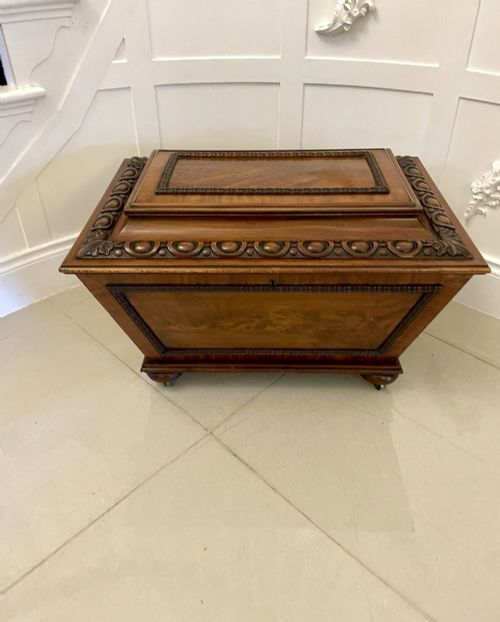


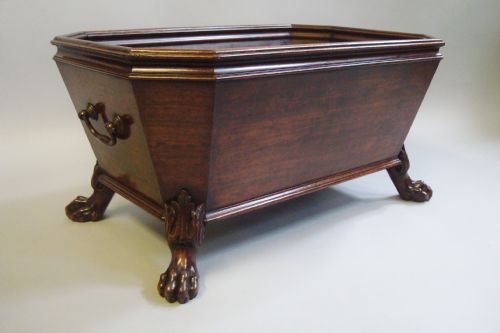


Carved Wood Wine Cooler
These carved wood wine cooler examples are substantial dining room pieces built to chill bottles, combining utility with stately presence.
Carved Wood Wine Cooler
A carved wood wine cooler functions as a traditional dining room accessory designed to hold wine bottles in ice or water. Buyers encountering this search phrase find substantial containers and tables spanning the eighteenth, nineteenth, and early twentieth centuries.
The pieces appearing on this page take forms such as freestanding cellarettes, sarcophagus shapes, and wine cooler tables. Origins range from English Georgian and Regency workshops to Anglo-Indian cabinets and Scottish designs.
Mahogany predominates among the surviving items, alongside burr elm, walnut, and padouk. These containers often rest on paw feet or feature brass mounts and timber linings appropriate for their original domestic function.
How they were made
Cabinet makers utilised dense hardwoods like mahogany, walnut, and padouk to construct these durable bodies. Timber sections were shaped into sarcophagus and box forms, often incorporating wood veneer and burr elm for decorative effect.
Carving and inlay work define the surface enrichment, accompanied by cast brass fittings and handles. Softwood served as secondary framing timber inside these heavy enclosures.
Carved Wood Wine Cooler Retail Price Guide 2026
Typical asking prices for carved wood wine cooler among the pieces listed under this phrase on Sellingantiques today, from the lower quarter to the upper quarter. They describe what is for sale here now, not the wider market.
The listings on this page span the eighteenth, nineteenth, and early twentieth centuries, featuring mahogany, burr elm, walnut, and padouk materials.
What varies in quality
The selection of timber grain largely determines the visual merit of each piece, with figured mahogany and burr elm commanding attention. Superior examples exhibit crisp carving on paw feet and mouldings rather than mechanical uniformity.
Construction methods distinguish standard cabinet work from exceptional workshop production. Well-joined framing and integrated brass hardware indicate higher standards of period manufacture.
Freemans of Norwich·Maples and Co
The Carved Wood Wine Cooler Glossary
- Cellarette
- A lockable cabinet or box designed to hold bottles of wine near the dining table. They often feature lead linings or internal dividers.
- Sarcophagus
- A monumental container shape resembling a stone coffin, popular for Regency wine coolers. This form usually tapers towards the base and rests on substantial feet.
- Padouk
- A heavy tropical hardwood valued for its rich reddish colour and durability. It appears frequently in Anglo-Indian furniture.
- Giltwood
- Timber treated with gold leaf or gold paint to create a lustrous decorative surface. It provides contrast against dark mahogany and walnut.
- Veneer
- A thin layer of decorative wood applied to a secondary timber base. This technique highlights figured grains on box and cellarette surfaces.
Carved Wood Wine Cooler: Frequently Asked Questions
What is a cellarette?
A cellarette is a traditional container built to hold wine bottles inside the dining room. These pieces often feature fitted interiors to keep bottles secure during meals.
Historically, they sat beneath sideboards or stood freely on their own legs or paw feet.
How do I date a wine cooler?
Dating relies on observing stylistic markers such as Regency sarcophagus shapes, Victorian proportions, or Georgian carving details. Timber selection and construction methods also provide clues to the period of manufacture.
Cabinet hardware and foot designs further help narrow down the decade of production.
Where were these coolers placed?
These pieces stood within formal dining rooms, usually positioned near the dining table or beneath a sideboard. Their substantial weight kept them stable on dining room floors.
Servants used them to chill wine close to hand during large dinner parties.
What wood types are used?
Mahogany forms the primary material for the majority of surviving examples on this page. Other utilised woods include burr elm, walnut, padouk, and softwood framing.
Timber choice often reflects the geographic origin and period fashion of the workshop.