



Carved Wood Tea Caddy
These carved wood tea caddy examples range from Georgian sarcophagus boxes to Victorian rosewood pieces designed to store fine leaf tea securely.
Carved Wood Tea Caddy
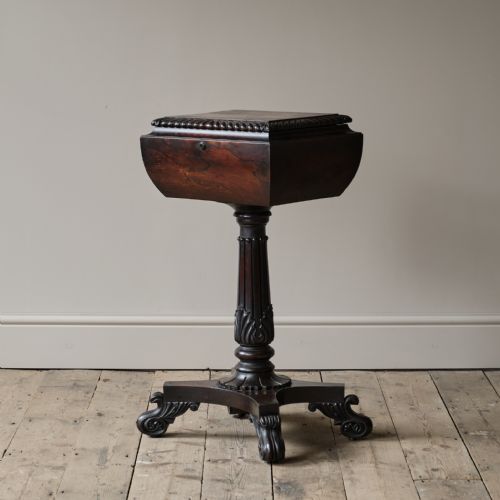
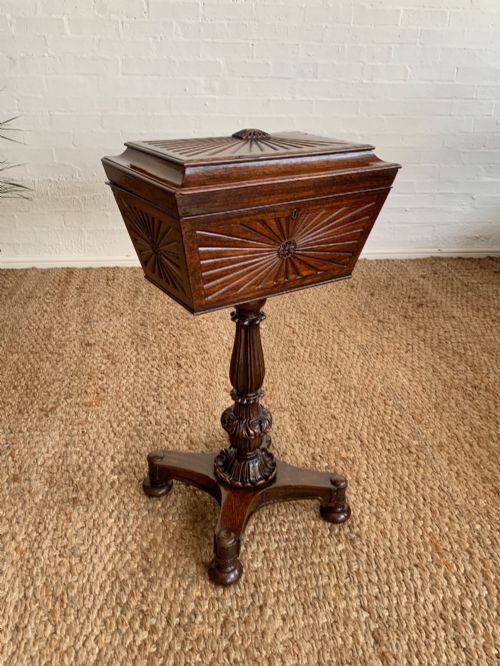
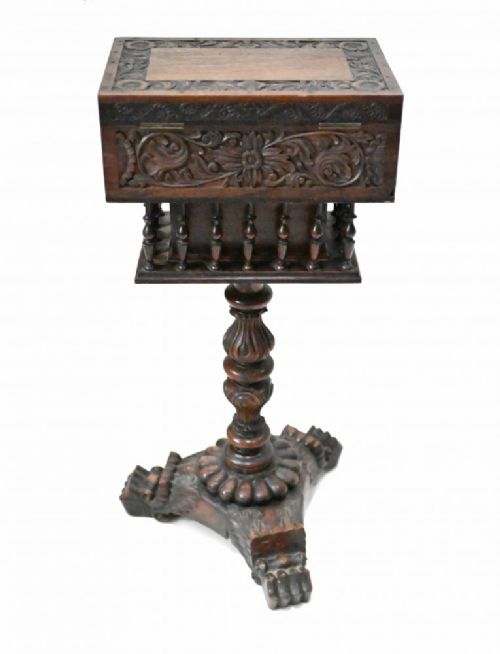
A carved wood tea caddy is a specialised storage box designed to keep precious tea leaves dry and secure during eras when tea was a costly import. Buyers searching this phrase encounter everything from compact tabletop boxes to substantial standing teapoys.
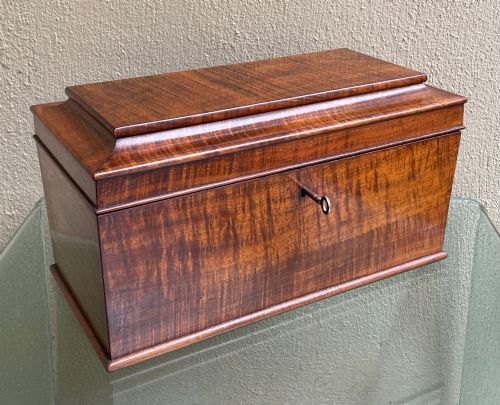
The pieces appearing on this page span the eighteenth and nineteenth centuries, including Georgian, Regency, William IV, and Victorian periods. Sarcophagus-shaped boxes and standing tea tables dominate the selection alongside occasional related items like jewellery boxes.
Many examples utilise dense tropical timbers such as rosewood, mahogany, and padouk, often enhanced with brass fittings, bone inlay, or intricate surface carving. Anglo-Indian Colonial and East Asian styles also appear, bringing diverse regional ornamentation to the category.
Distinguishing quality across periods
Quality rests in the crispness of the timber carving and the selection of figured veneers such as burr maple or rich rosewood. Superior examples display harmonious proportions and seamless integration of decorative brass work.
Internal arrangements dictate desirability, with fine boxes retaining original fitted compartments, mixing bowls, and functioning locks with matching keys. The stability of the wooden carcass and the precision of the mitre joints further separate standard production from master craftsmanship.
Carved Wood Tea Caddy Retail Price Guide 2026
Typical asking prices for carved wood tea caddy among the pieces listed under this phrase on Sellingantiques today, from the lower quarter to the upper quarter. They describe what is for sale here now, not the wider market.
Listings feature items spanning the eighteenth to nineteenth centuries, utilising rosewood, mahogany, padouk, and walnut.
The Carved Wood Tea Caddy Glossary
- Teapoy
- A standing table designed to hold a tea caddy or function as a tea caddy itself with an internal compartment. These pieces often feature sturdy pedestal bases or slender legs.
- Sarcophagus
- A box shape featuring a domed lid and flared sides reminiscent of ancient stone coffins. This silhouette was particularly popular during the Regency and Victorian eras for luxury storage boxes.
- Padouk
- A heavy, durable tropical hardwood displaying rich reddish-brown tones. Cabinetmakers favoured it for export furniture and colonial pieces destined for British homes.
- Parquetry
- A geometric mosaic of wood pieces used for decorative veneer on box lids and furniture surfaces. It requires meticulous cutting and fitting to create crisp patterns.
Carved Wood Tea Caddy: Frequently Asked Questions
What is a carved wood tea caddy?
A carved wood tea caddy is a lidded container historically used to store loose tea leaves in domestic parlours. These boxes kept dry leaves fresh and secure under lock and key.
Examples range from small tabletop chests to tall standing teapoys featuring elaborate decoration in mahogany, rosewood, and padouk.
How were tea caddies used historically?
Tea was an expensive commodity in Georgian and Victorian households, so the mistress of the house kept the caddy locked. Servants brought the box to the table for tea preparation.
Inside, divided compartments separated different tea types, and central glass bowls served for blending leaves or spooning sugar.
How do I date a wooden tea caddy?
Dating relies on stylistic shifts from Georgian restraint through Regency sarcophagus shapes to heavy Victorian ornamentation. Timber choice also indicates age, with early pieces using walnut before mahogany and rosewood dominated the nineteenth century.
Construction details like hand-cut dovetails and original brass hardware provide further clues to the period of manufacture.
Can I still use an antique tea caddy for storage?
These boxes function well for storing dry goods, jewellery, or small keepsakes today. The fitted internal compartments remain practical for organising small items.
Care should be taken to protect antique wood surfaces from moisture and direct sunlight to preserve the finish.