
Carved Wood Storage
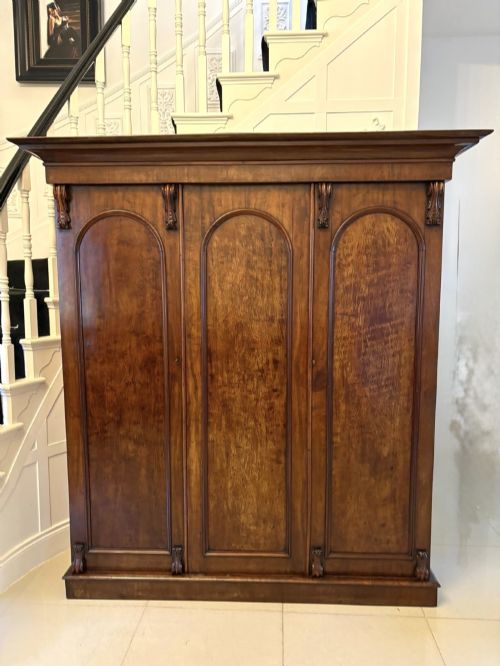
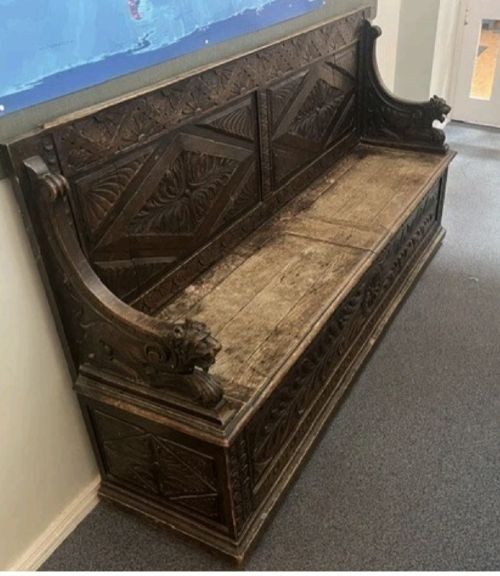
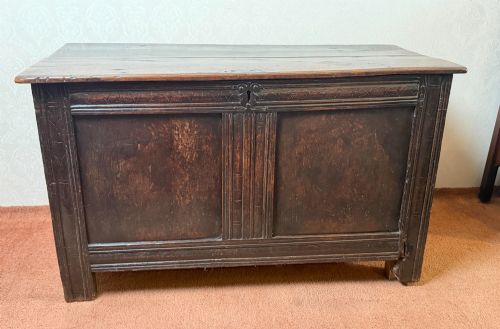
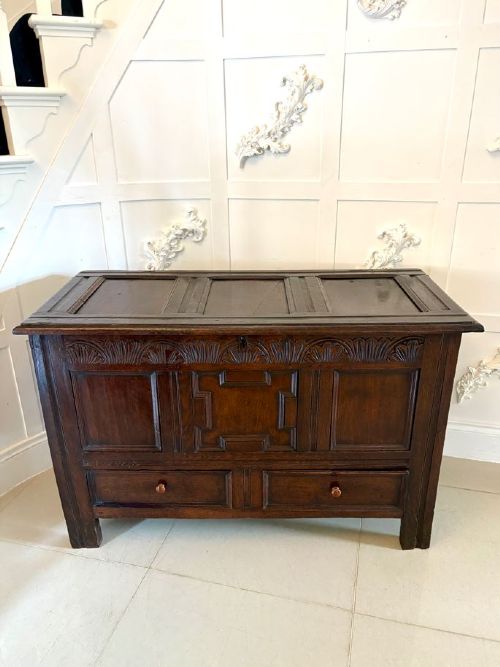
Carved wood storage brings together centuries of timber chests, coffers, and cabinets built to hold household possessions securely.
Carved Wood Storage
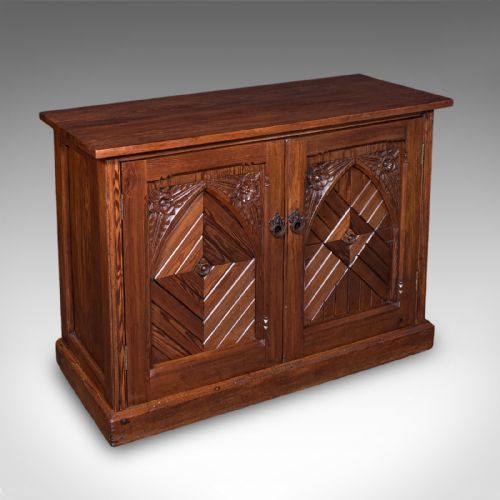
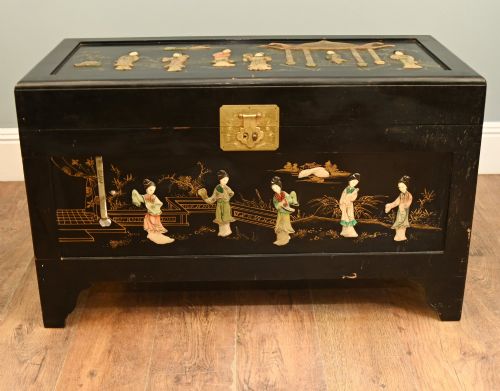
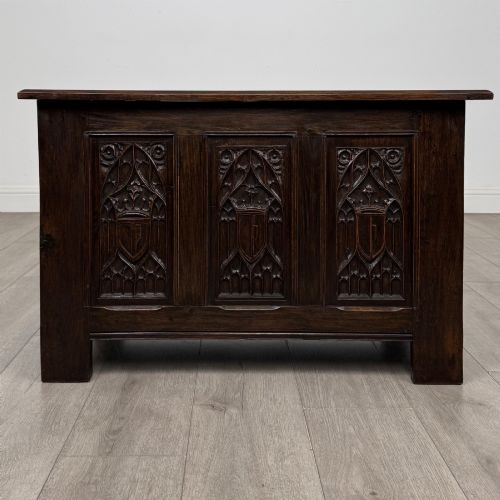
Carved wood storage encompasses a wide range of domestic utility pieces, from late seventeenth-century oak coffers and mule chests to Victorian wardrobes, sideboards, and blanket boxes.
Buyers looking for carved wood storage most frequently encounter sturdy oak pieces featuring relief decoration, alongside mahogany and walnut cabinets produced across the Victorian and Edwardian periods.
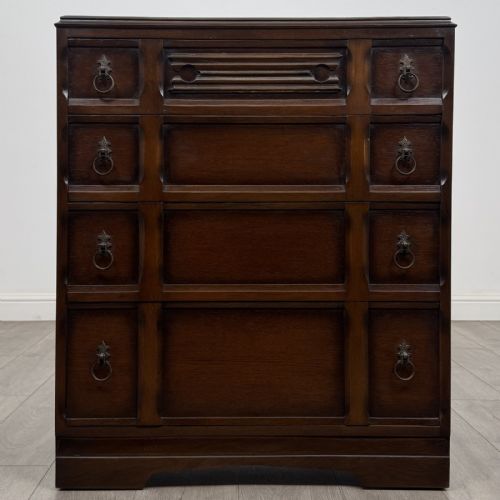
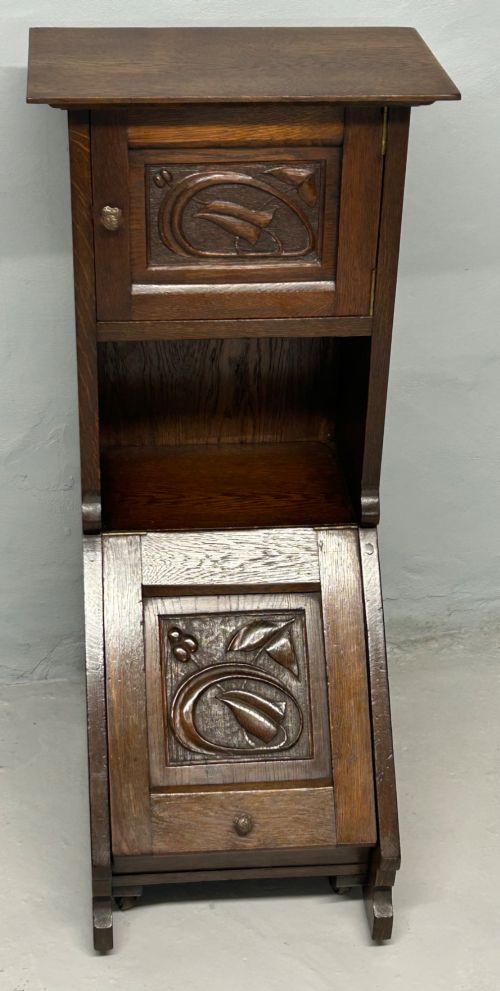
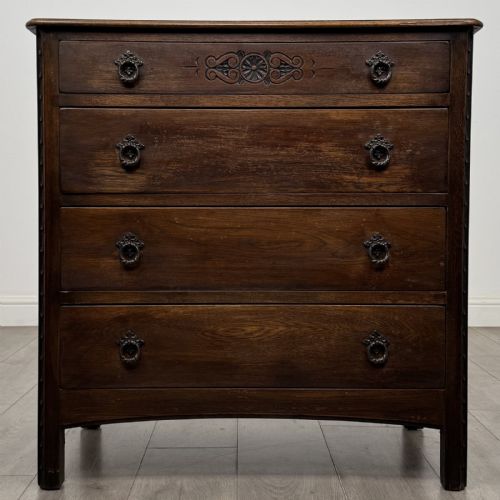
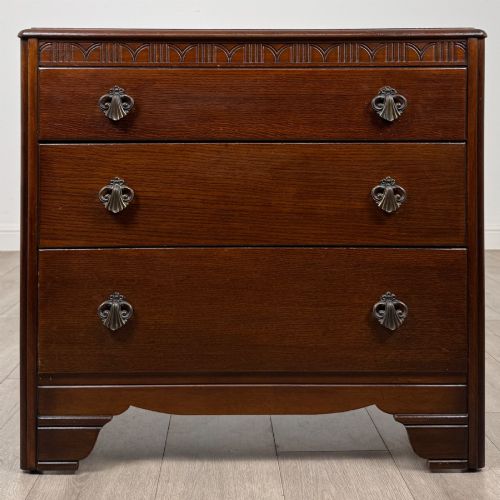
The selection ranges from tall chests of drawers and linen presses to specialised items such as purdoniums, umbrella stands, and music cabinets.
Materials and Construction
Makers relied primarily on native and imported timbers, with solid oak dominating the earlier centuries and mahogany, walnut, and burr walnut gaining prominence in Georgian and Victorian workshops.
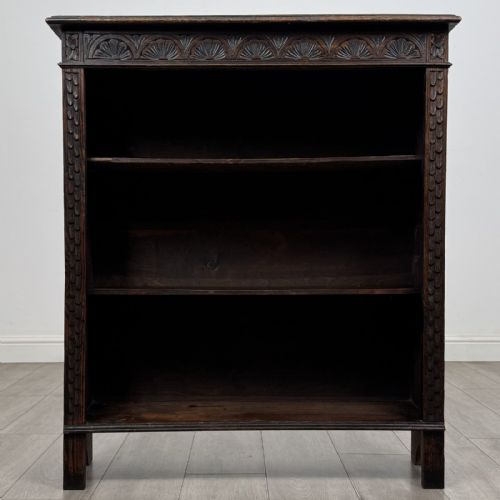
Surface enrichment relied on hand carving, panel moulding, and applied turnings, supplemented by brass and iron hardware such as handles, hinges, and original pierced brasses.
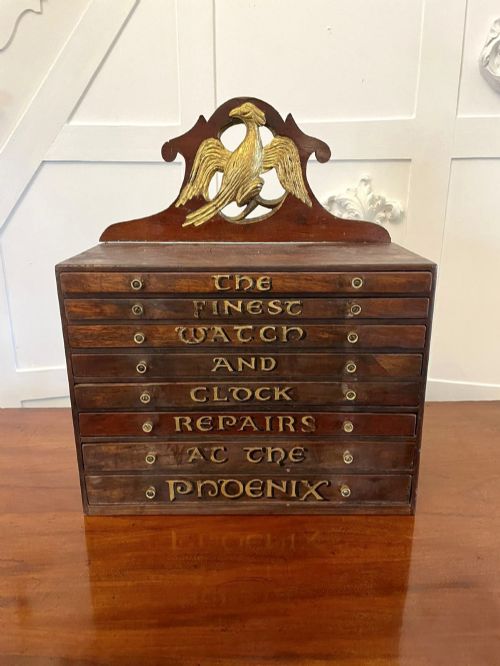
Some nineteenth-century watch and clock repairers required bespoke wooden chests with microscopic compartments to keep tiny gears from rolling away.
Distinctions in Execution
The division between standard utility pieces and superior examples rests on the crispness of the hand carving and the selection of figured timber veneers like burr walnut or figured mahogany.
Internal joinery, the retention of original brass hardware, and balanced proportions separate utilitarian storage from master-carved regional coffers and formal Georgian case furniture.
Charles Dudouyt
The Carved Wood Storage Glossary
- Coffer
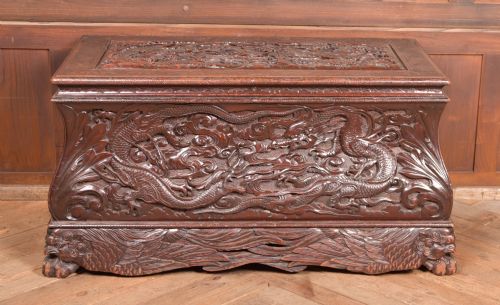
- A heavy wooden chest with a hinged lid, traditionally used for storing valuables or household textiles. Early examples are typically constructed from solid oak with carved front panels.
- Mule chest
- A traditional storage chest featuring one or more drawers built into the base beneath the main compartment. They bridge the design gap between simple coffers and full chests of drawers.
- Purdonium
- A specialised household cabinet designed specifically to store coal near a fireplace. These units often feature a sloping front and an internal metal liner.
- Linen press
- A tall cupboard featuring upper doors enclosing sliding trays for textiles, positioned above a base of wider drawers. They were essential for storing household linens before fitted wardrobes became common.
- Chiffonier
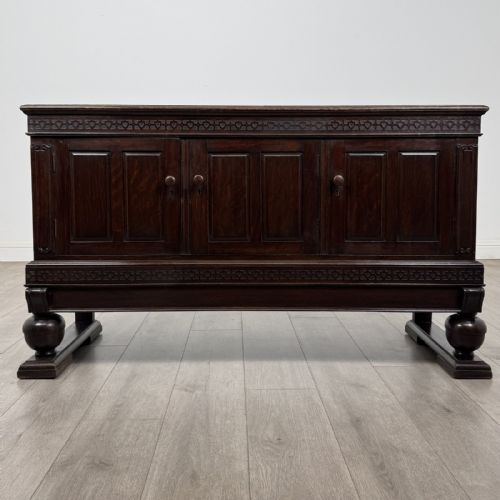
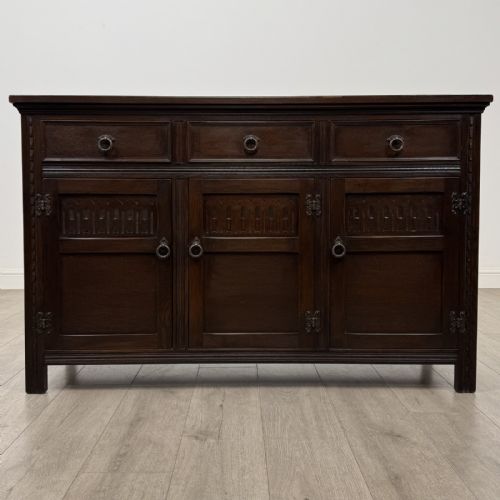
- A compact sideboard or low cabinet developed in the nineteenth century, often fitted with enclosed lower cupboards and upper shelving. They provide display space alongside concealed storage.
Carved Wood Storage: Frequently Asked Questions
How do I date an oak coffer?
Dating an oak coffer involves examining the construction methods, joint types, and the style of the hand-carved decoration. Earlier pieces from the seventeenth century often utilise pegged mortise and tenon joints with hand-split panels.
Later Victorian and Edwardian revivals frequently incorporate machine-sawn timber, standardised fixings, and softer carving styles that mimic historic motifs without genuine period wear.
Where should I place a blanket box?
Blanket boxes and coffers function well at the foot of a bed, in a hallway, or as a living room focal point offering concealed storage for spare cushions and throws. Their sturdy tops also allow them to double as bench seating.
Positioning wooden storage pieces away from direct heat sources and strong sunlight prevents the solid timber and veneers from drying out or splitting over time.
What is the difference between a coffer and a chest?
While both terms describe lidded storage containers, a coffer traditionally denotes a heavily constructed, often carved box secured with a simple hinged lid. A chest generally implies a more refined case piece.
Over time, the terminology overlapped considerably, with makers and dealers using both names interchangeably for heavy wooden storage boxes originating before the Victorian era.