


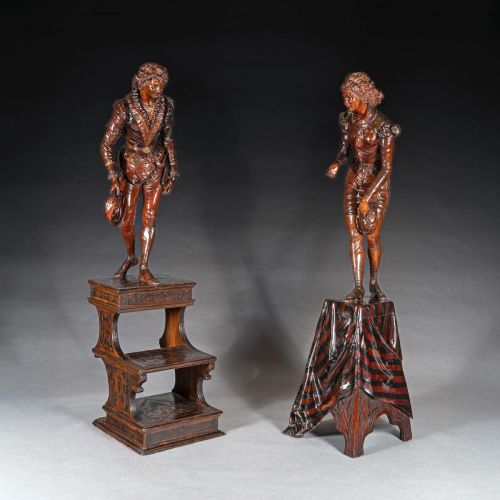


Carved Wood Steps
Carved wood steps are functional elevations designed for reaching high shelves or beds, combining sturdy timber construction with ornamental detail.
Carved Wood Steps
Carved wood steps serve specific domestic tasks, primarily assisting access to elevated library shelves or tall beds within period interiors. The selections found here span forms such as library steps originating in the Georgian and nineteenth-century periods.
Makers utilised robust timbers suitable for weight-bearing tasks while incorporating stylistic details like Gothic Revival motifs or simple A-frame profiles. Buyers encounter both utilitarian pieces built for daily service and decorative versions intended for grander reception rooms.
How they were made
Carpenters constructed these pieces primarily from solid hardwoods such as mahogany, oak, and pine to ensure structural integrity and load-bearing capacity. Joinery methods relied on traditional pegging and framing to withstand repeated climbing.
Surface embellishments involved hand-carving specific to the prevailing style, ranging from austere nineteenth-century Gothic lines to earlier Georgian joinery. Timber surfaces received finishes suited to the interior use, enhancing the natural grain of the walnut or oak.
Carved Wood Steps Retail Price Guide 2026
Typical asking prices for carved wood steps among the pieces listed under this phrase on Sellingantiques today, from the lower quarter to the upper quarter. They describe what is for sale here now, not the wider market.
The listings here feature library steps constructed from pine and oak, spanning the Georgian and nineteenth-century periods.
What varies in quality
Quality rests upon the integrity of the timber selection and the precision of the underlying joinery rather than surface decoration alone. Dense hardwoods like mahogany command higher regard than softer pine alternatives used for utilitarian examples.
The refinement of the hand-carving and the retention of original structural bracing separate standard workshop pieces from superior examples. Proportion and stability remain critical indicators of the maker's original skill.
Valentino Besarel
The Carved Wood Steps Glossary
- A-frame steps
- A self-supporting structural design shaped like the letter A, providing stability for climbing timber steps without requiring wall attachment.
- Library steps
- Purpose-built multi-tiered stairs used in domestic or institutional libraries to reach high bookcases. These items often feature hand-carved details.
- Gothic Revival
- An architectural and decorative style drawing inspiration from medieval forms, frequently distinguished by pointed arches and robust carved wooden elements.
- Georgian
- A style period spanning the eighteenth century characterised by classical proportions, symmetry, and the prominent use of oak and mahogany.
Carved Wood Steps: Frequently Asked Questions
What were carved wood steps used for?
These steps provided practical access to elevated bookshelves in large libraries or high-post beds in period bedchambers. Their sturdy timber construction allowed daily weight-bearing service.
Over time, owners also utilised them to display decorative objects or plants when not required for climbing.
How do I date library steps?
Dating relies on examining the timber species, joinery techniques, and stylistic motifs present in the carving. Georgian and nineteenth-century examples display distinct structural characteristics.
Tool marks and hardware fasteners further help distinguish earlier hand-tooled frames from later production methods.
Are these steps safe to use?
Most antique steps remain structurally sound if constructed from dense hardwoods like mahogany or oak. Regular inspection of the joints ensures continued stability under weight.
Buyers should verify the load capacity of specific period pieces before utilising them for regular climbing.
How do I care for wooden steps?
Maintain the timber by applying appropriate wax finishes periodically to prevent the wood from drying out. Avoid placing them in areas with direct sunlight or fluctuating humidity.
Gentle dusting with a dry cloth preserves the original carved details without damaging the patina.