


Carved Wood Mannequin
These carved wood mannequin figures range from functional artist lay figures to devotional Santos sculptures, offering sculptural presence and historical character.
Carved Wood Mannequin
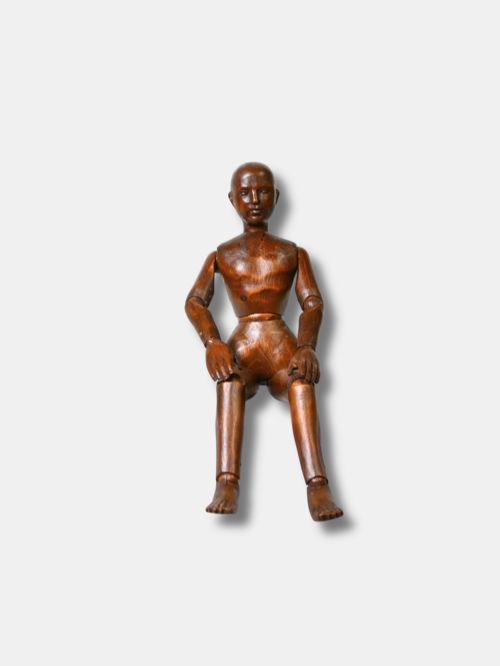
A carved wood mannequin encompasses several distinct forms on this page, principally artist lay figures, religious Santos figures, and trade display pieces. You will most frequently encounter nineteenth-century European lay figures designed for studio use, alongside eighteenth-century Italian and Spanish religious figures.
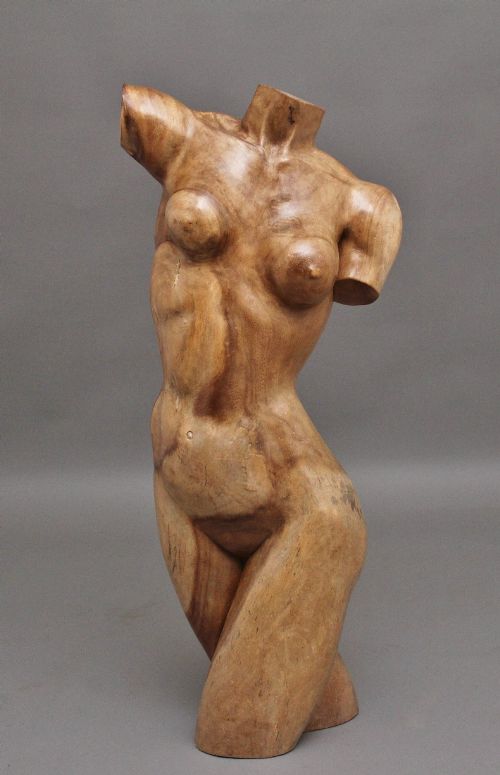
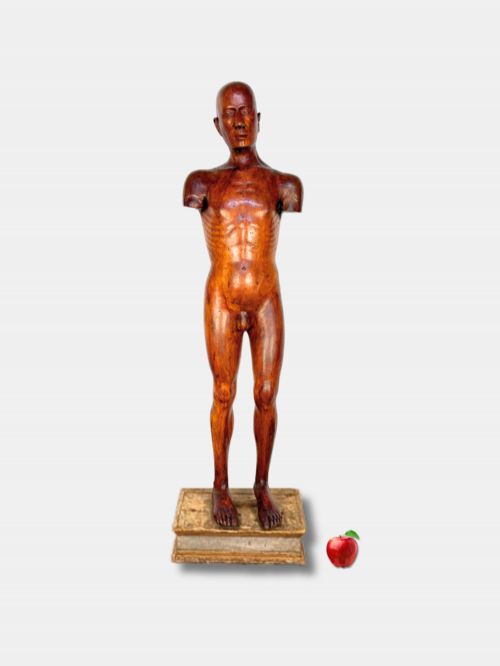
The selection extends from small desktop artist models up to life-size figures and torsos. Alongside studio models, trade pieces such as millinery heads, cigar store figures, and tobacco advertising pieces appear in wood and polychrome paint.
Geographic origins span England, France, Germany, Italy, Spain, and Nigeria, reflecting diverse sculptural traditions. These pieces bridge utilitarian studio equipment, religious devotion, and commercial display.
Materials and construction
Carvers shaped these figures from various hardwoods, utilising traditional hand-carving techniques to define anatomy and drapery. Many examples incorporate metal or iron internal pins and joints to allow articulation.
Surfaces often feature gesso preparation beneath layers of paint or polychrome decoration. Some trade and religious pieces retain their original painted finishes, while studio lay figures reveal the bare carved wood.
Listings feature items spanning from the early eighteenth century through to the early twentieth century, incorporating diverse regional styles from Italian Baroque to Early Twentieth Century Modernism.
Judging quality and character
Quality rests primarily in the sensitivity of the carving and the complexity of the articulation. Finer artist lay figures possess subtle anatomical joints that move fluidly, whereas simpler models have rigid or pinned limbs.
The Carved Wood Mannequin Glossary
- Lay figure
- An articulated wooden mannequin used by artists to drape fabrics and study human form. These figures range from small desktop models to life-size examples.
- Santos figure
- A carved wooden devotional sculpture representing a saint or religious figure, often originating from Spain, Italy, or Latin America. They frequently feature carved hair and polychrome painted surfaces.
- Capipote
- A Spanish religious figure constructed with a carved wooden head and hands attached to a framework designed for dressing in real textiles. They were utilised in church processions.
- Polychrome
- Decoration executed in multiple colours, commonly applied over a gesso ground on wooden sculptures and trade figures. This finish often exhibits craquelure and wear consistent with age.
- Articulated
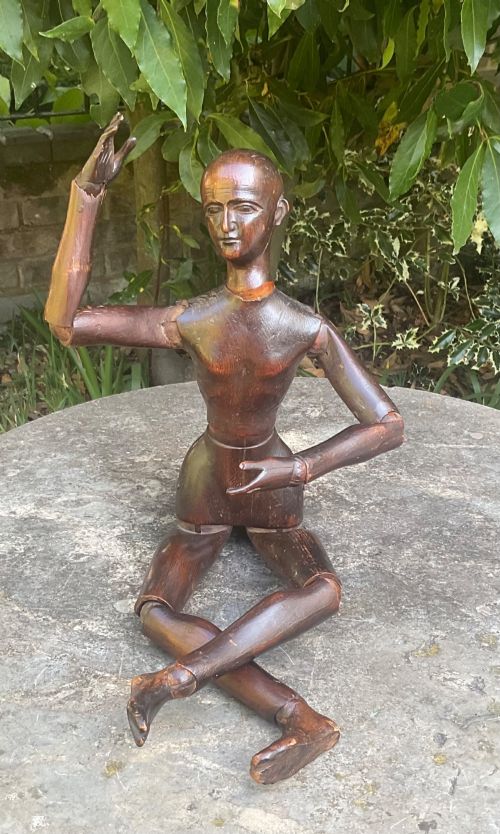
- Jointed to allow movement at the shoulders, elbows, hips, and knees. In lay figures, these wooden joints utilise internal pins or ball-and-socket mechanisms.
Carved Wood Mannequin: Frequently Asked Questions
What is an artist lay figure?
An artist lay figure is a jointed wooden mannequin utilised historically for studying drapery and human anatomy. Painters and sculptors posed these figures in the studio to maintain consistent perspective.
They feature articulated wooden limbs connected by internal pins. Examples range from compact nineteenth-century French models to life-size versions.
How do I tell a Santos figure apart from a lay figure?
Santos figures represent religious subjects and typically display fixed carved garments, serene facial expressions, and polychrome or gilt paint. Lay figures are constructed purely for studio utility with functional joints.
Religious figures often show evidence of processional use or mounting on wooden plinths. Studio models concentrate on anatomical articulation rather than devotional iconography.
Where were these figures made?
The pieces originate from various European workshops, particularly in France, Italy, Spain, Germany, and England. Specific regional traditions dictate whether a piece serves a religious or artistic function.
Traders and makers across these regions supplied studios, churches, and shopfronts. Materials and carving styles often point directly to the country of origin.
How should I display a carved wood mannequin?
These figures require stable indoor conditions away from direct sunlight and dramatic humidity shifts. Wooden joints and gesso surfaces benefit from steady atmospheric environments.
Larger pieces stand securely on original plinths or bespoke metal mounts. Smaller lay figures can be posed on tabletops or within display cabinetry.
Are trade figures the same as lay figures?
Trade figures served a commercial advertising function outside the artist studio. Pieces such as millinery heads and cigar store figures advertised wares to the public.
While both use carved wood, trade figures focus on eye-catching shop display rather than anatomical articulation. Their paint finishes are typically bolder and designed for storefront visibility.