




Carved Wood Magazine Holder
A carved wood magazine holder keeps periodicals tidy, combining practical division with the rich grain of rosewood, mahogany or walnut.
Carved Wood Magazine Holder
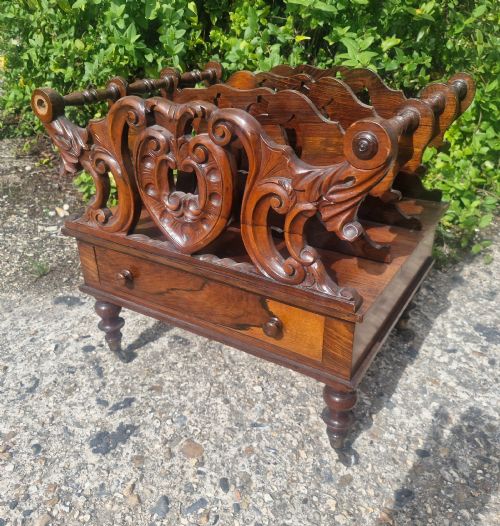
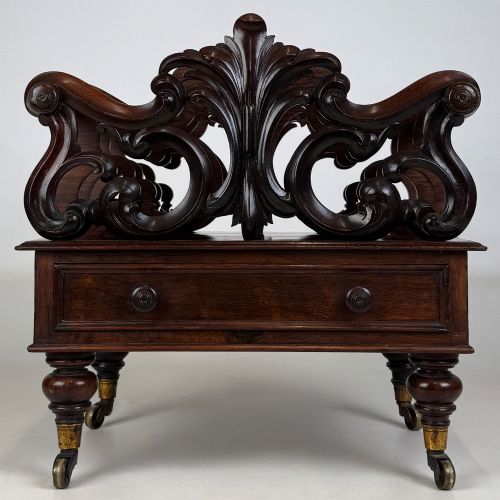
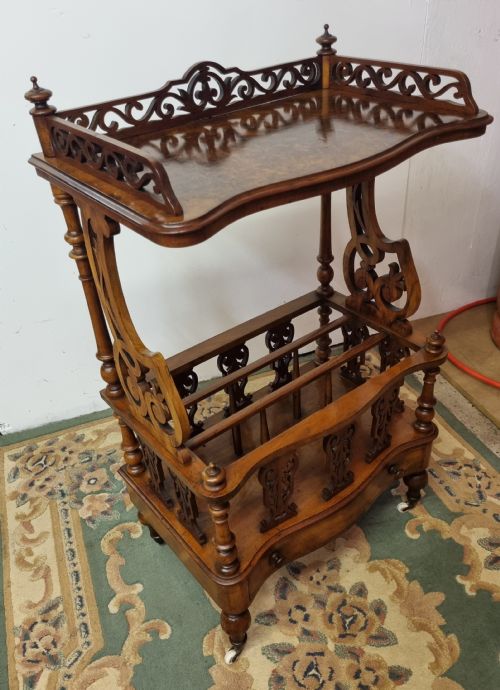
When you search for a carved wood magazine holder, you encounter pieces historically known as canterburys, music racks or folio stands. These items served domestic spaces by holding newspapers, sheets of music and periodicals upright in divided compartments.
The version you are most likely to meet on this page is the Victorian or Regency rosewood or mahogany canterbury. These pieces typically feature pierced scroll divisions and low turned supports, often fitted with castors for movement across the floor.
How they were made
Cabinet makers utilised dense hardwoods such as mahogany, rosewood and walnut to construct the frame and vertical divisions. Burr walnut and satinwood veneers also appear, adding distinct grain patterns to the surfaces.
Carving, piercing and inlay define the ornamentation, executed by hand to shape scrollwork, foliate designs and wreath motifs. Brass fittings occasionally secure the joints or form carrying handles.
Carved Wood Magazine Holder Retail Price Guide 2026
Typical asking prices for carved wood magazine holder among the pieces listed under this phrase on Sellingantiques today, from the lower quarter to the upper quarter. They describe what is for sale here now, not the wider market.
Materials recorded across the selection include brass, ceramic, satinwood, oak and burr walnut alongside primary rosewood and mahogany.
What varies in quality
The refinement of the woodwork dictates distinction, separating standard production from exceptional examples. Crispness in the carved scrollwork and pierced divisions shows the maker's hand.
The choice of primary timber and veneer selection alters visual depth. Richly figured rosewood and burr walnut elevate a piece above plainer mahogany variants.
J C Loudon
The Carved Wood Magazine Holder Glossary
- Canterbury
- A low stand with vertical divisions used for holding loose papers, sheet music and magazines. It often includes a drawer below the slatted or pierced upper section.
- Folio stand
- A piece of furniture designed to hold large books, prints or unbound sheets flat or upright. They frequently feature adjustable or hinged frames.
- Rosewood
- A heavy, dark timber with distinct figuring utilised extensively during the Regency and Victorian periods. Its natural oils permit a high polish.
- Pierced scroll
- An openwork decorative technique where timber is cut through to form sweeping, curved patterns. This lightens the visual weight of the dividers.
- Serpentine shape
- A curved line that bends inward and outward in a continuous wave. It appears along the edges of shelves and tops.
Carved Wood Magazine Holder: Frequently Asked Questions
What is a canterbury used for?
These stands were originally designed to hold sheet music, newspapers and unbound literary folios near a piano or seating area. Today they function effectively beside a modern sofa to store periodicals.
Their upright divisions prevent large magazines from slumping and folding over time.
How do I date a rosewood canterbury?
Regency examples often display sharp architectural lines and brass handle mounts, whereas Victorian pieces lean towards serpentine shapes and heavier fretwork. The transition from mahogany to rosewood popularity also helps anchor the decade of manufacture.
Secondary woods inside drawers provide further clues regarding the workshop's geographic origin.
Are these stands sturdy enough for daily use?
The dense hardwoods employed in their construction ensure structural durability for holding heavy modern publications. Their low centre of gravity keeps them stable on carpets and wooden floors.
Original castors allow easy repositioning without straining the joined uprights.
What distinguishes a music rack from a magazine holder?
Music racks generally feature shallower compartments designed specifically for thin paper folios and bound scores. Magazine holders often incorporate deeper partitions or a small drawer underneath for smaller accessories.
Both forms share the slatted vertical divisions characteristic of the type.