





Carved Wood Lectern
A carved wood lectern brings architectural weight and ecclesiastical presence into a room, holding open heavy folios and missals on a sturdy timber stem.
Carved Wood Lectern
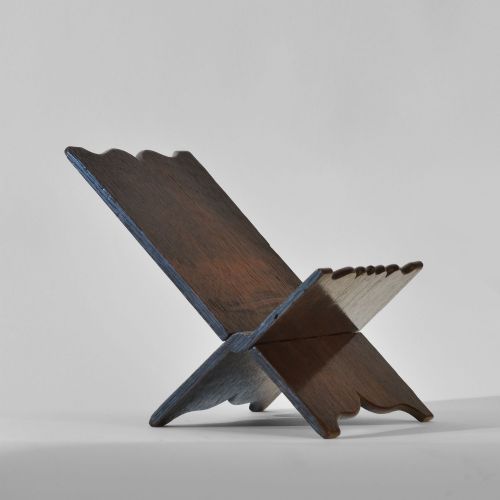
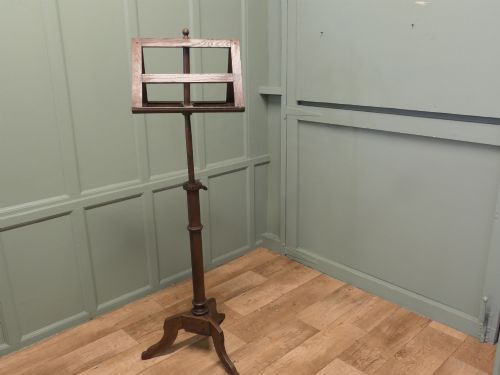
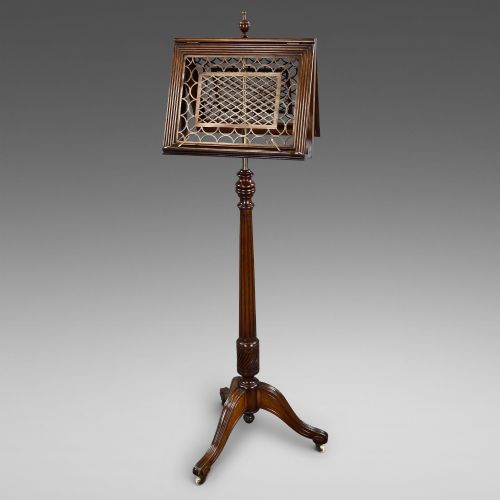
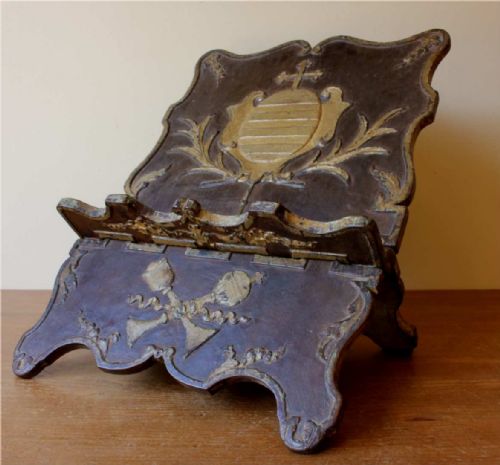
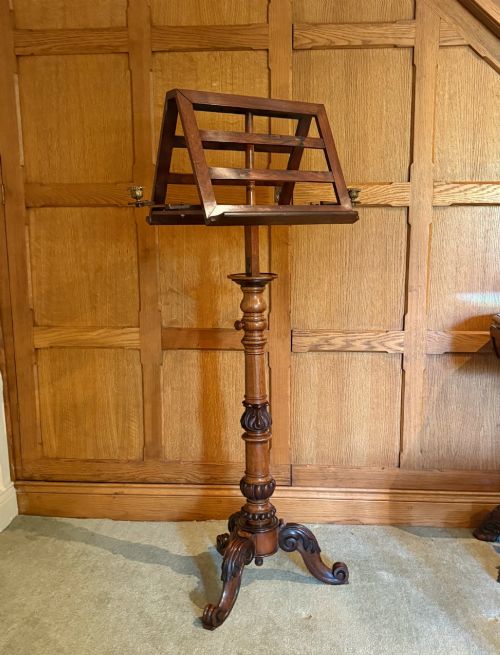
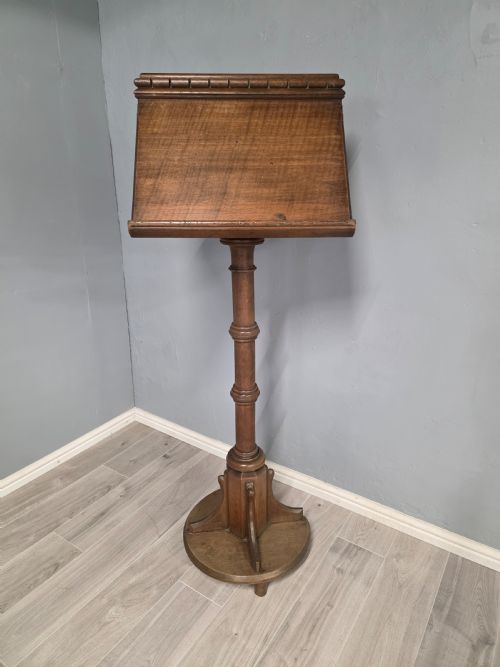
A carved wood lectern is a dedicated reading stand designed to hold large books at a comfortable angle for a speaker or reader. The pieces seen here span centuries of craftsmanship, taking forms such as church lecterns, folding book rests, and duet music stands.
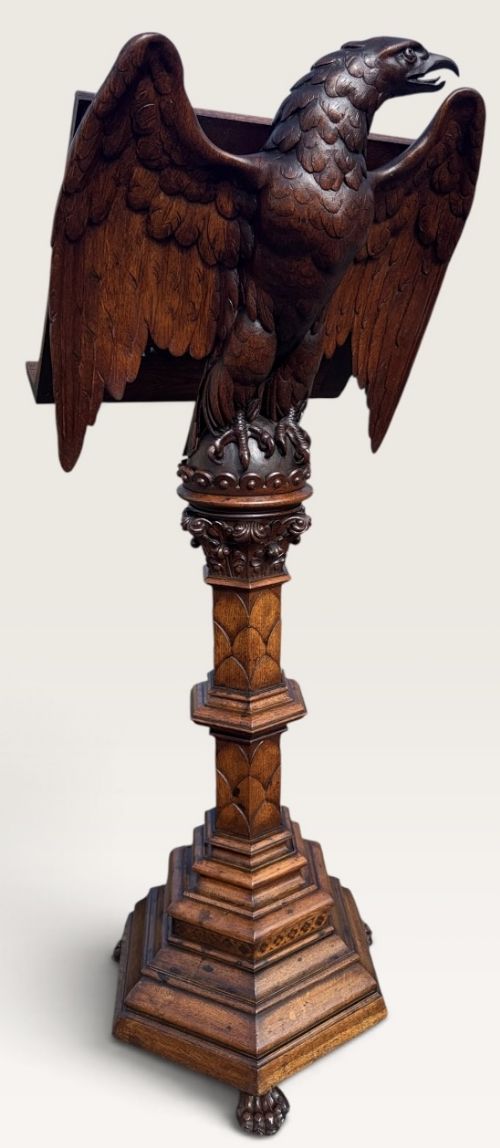
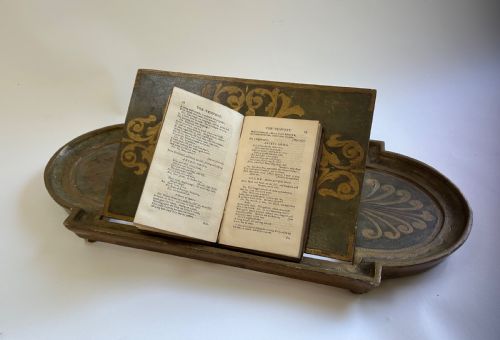
Most examples encountered on this page date from the nineteenth century, though earlier eighteenth-century variants and turn-of-the-century pieces also appear. Forms range from monumental church stands featuring carved eagles to portable scholar's reading pedestals and French missal stands.
Makers and workshops utilised robust hardwoods like oak and mahogany, often incorporating regional decorative idioms from Gothic Revival to Florentine and Anglo-Indian styles. These stands served both secular studies and religious services, resulting in a diverse survival of utilitarian art.
How they were made
Makers relied principally on dense timbers such as oak, mahogany, walnut, and rosewood, carving the structural supports and reading desks by hand. Joinery techniques varied from traditional mortise and tenon frames in church pieces to folding hinges on portable stands.
Surface ornamentation involved deep relief carving, fretted woodwork, and occasionally mother of pearl inlay or gilded gesso accents. The carving on figurative pieces, particularly eagles with outstretched wings, required skilled hand-chiselling to achieve anatomical depth in the timber.
Carved Wood Lectern Retail Price Guide 2026
Typical asking prices for carved wood lectern among the pieces listed under this phrase on Sellingantiques today, from the lower quarter to the upper quarter. They describe what is for sale here now, not the wider market.
Several wooden birds have glass eyes that still watch the room intently.
What varies in quality
The distinction between standard utility stands and superior examples lies in the depth and ambition of the carving. Master carvers produced intricate plumage on eagle lecterns and refined tracery on Gothic Revival pieces, whereas lesser items rely on simpler turned stems.
Material selection also dictates standing, with dense native oaks and figured mahogany outperforming plain secondary woods. The integrity of the original joints and the preservation of crisp hand-cut details separate workshop pieces from later mass production.
GILLOWS
The Carved Wood Lectern Glossary
- Lectern
- A tall stand with a sloped top used to hold a book for a standing reader. They often incorporate decorative carving or sculptural supports like eagles.
- Duet stand
- A music stand or reading desk wide enough to accommodate two scores or books side by side. These often feature adjustable brass stems or folding mechanisms.
- Gothic Revival
- An architectural and decorative style drawing on medieval ecclesiastical forms. Pieces in this style utilise pointed arches, trefoils, and heavy timber construction.
- Missal stand
- A small, portable desk designed to hold a liturgical book on an altar or table. Many examples feature folding book rests for easy storage.
Carved Wood Lectern: Frequently Asked Questions
What is a carved wood lectern used for?
These stands were originally constructed to support large church missals, Bibles, or heavy music folios at a legible angle. Today, they function effectively in domestic settings as statement book displays or reading desks.
Their sturdy timber construction allows them to bear significant weight without warping or losing stability.
How do I identify a Gothic Revival lectern?
Gothic Revival pieces typically feature architectural motifs drawn from medieval buildings, including pointed arches, quatrefoils, and heavy oak frames. The carving often mimics stonework patterns translated into timber.
These stands frequently appear in nineteenth-century church contexts or domestic libraries styled to match ecclesiastical interiors.
Are all these lecterns large church pieces?
Not at all, as the selection includes compact folding table models, scholar's reading stands, and duet music desks alongside monumental church furniture. Portable variations were designed for travel or domestic study rooms.
Dimensions range from tabletop book rests to freestanding architectural columns standing over a metre tall.
What woods were commonly used for these stands?
Oak and mahogany form the foundation of most surviving pieces, chosen for their structural strength and rich grain patterns. Walnut, rosewood, and exotic hardwoods also appear on specific nineteenth-century and Georgian examples.
Surface treatments sometimes include gilt highlights, gesso, or mother of pearl inlay to enhance the carved decoration.