



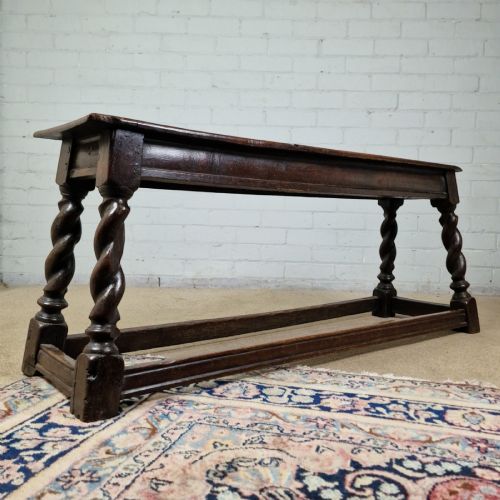

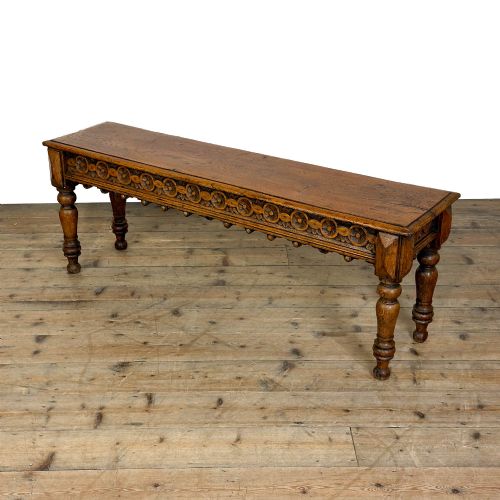
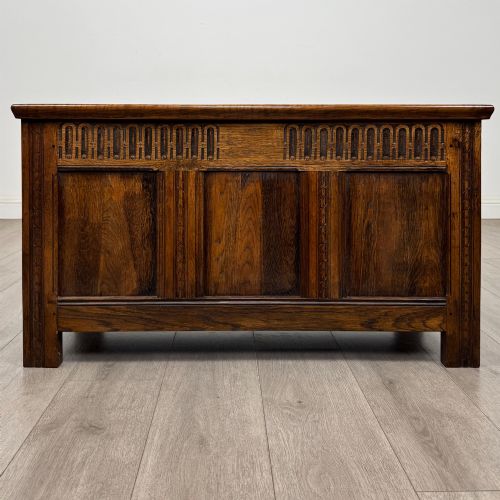
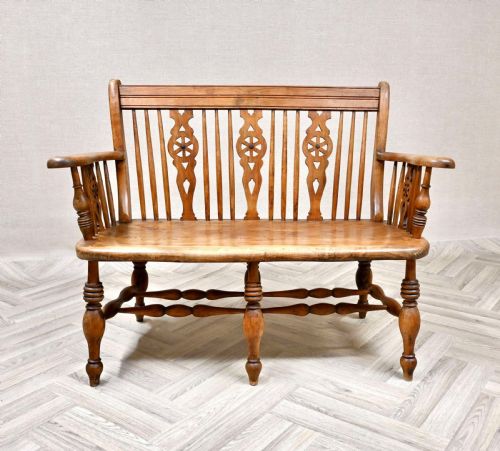
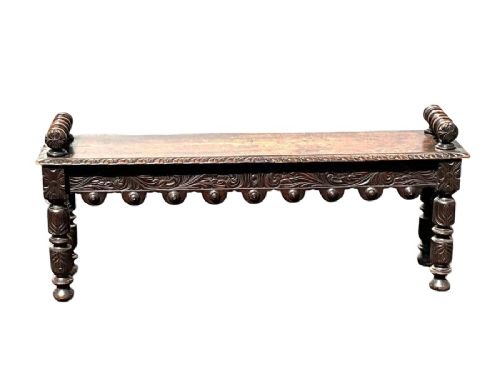
Carved Wood Hallway Bench
These carved wood hallway bench selections offer sturdy timber seating that grounds an entrance with period character.
Carved Wood Hallway Bench
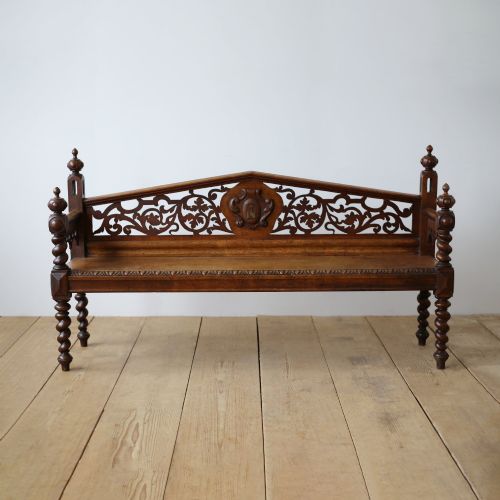
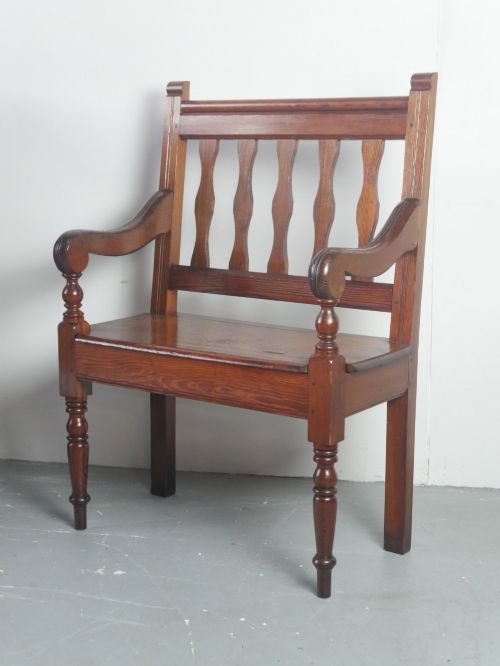
A carved wood hallway bench brings practical seating and period presence to an entrance space. Buyers searching for a carved wood hallway bench will encounter robust forms constructed primarily from oak and mahogany across periods spanning the eighteenth through to the early twentieth century.
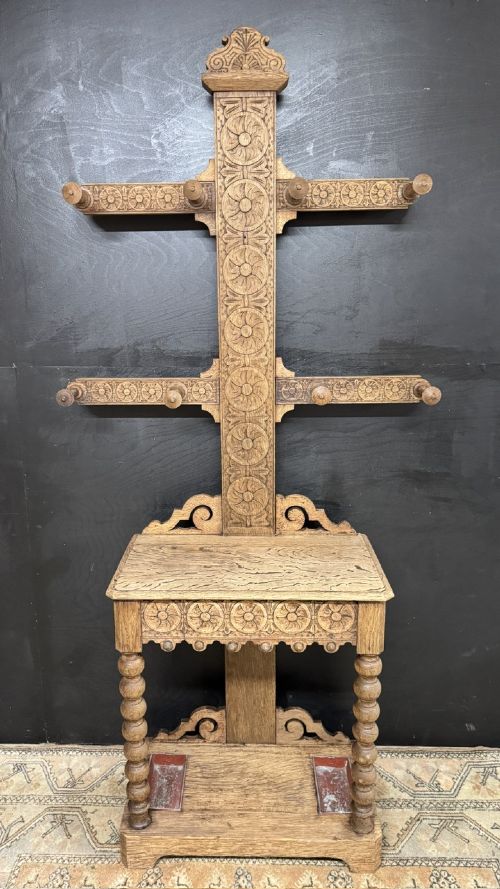
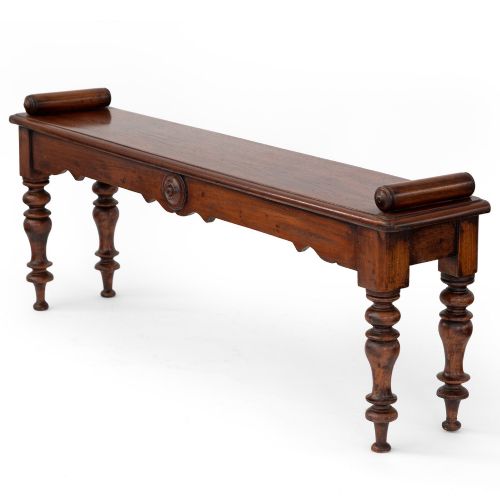
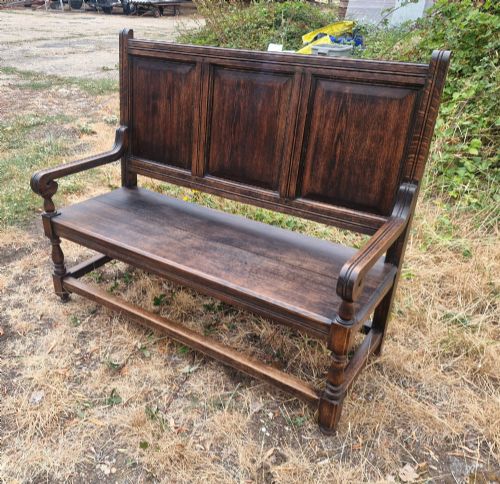
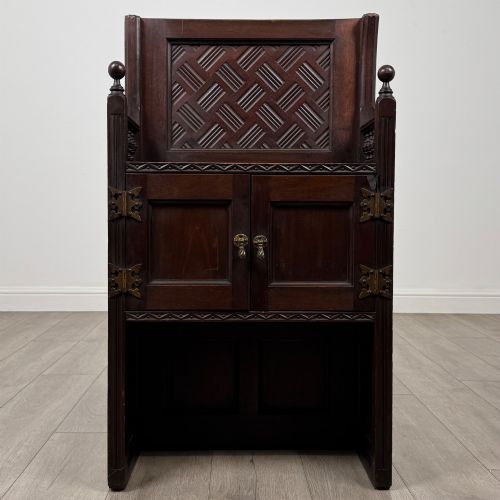
The selection ranges from tall-backed settles and blanket boxes to window seats and hall stands with integrated seating. Oak examples frequently display revivalist or country carving, while mahogany pieces often lean towards Regency or Victorian refinements.
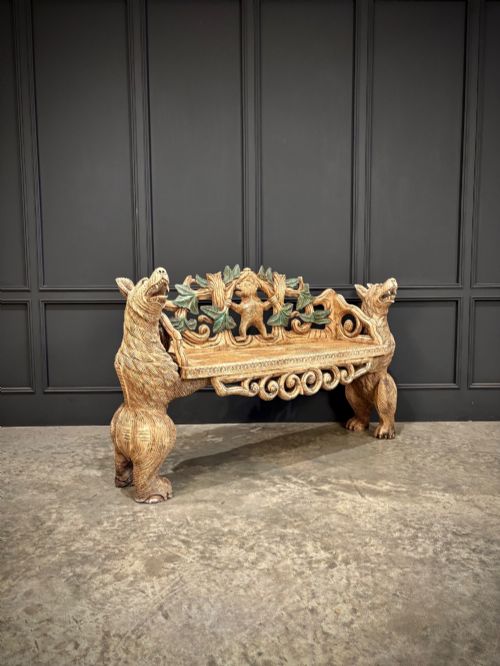
Origin points vary widely, encompassing English country workshops, European black forest carvers, and colonial Indian studios. This diversity ensures that forms adapt easily to both period properties and more contemporary interior layouts.
How they were made
Carpenters relied principally on solid oak, mahogany, hardwood, ash, and elm, building robust frames designed to withstand heavy daily use in busy corridors. Panels were frequently joined using traditional pegged mortise and tenon construction, allowing the timber to expand and contract naturally over decades.
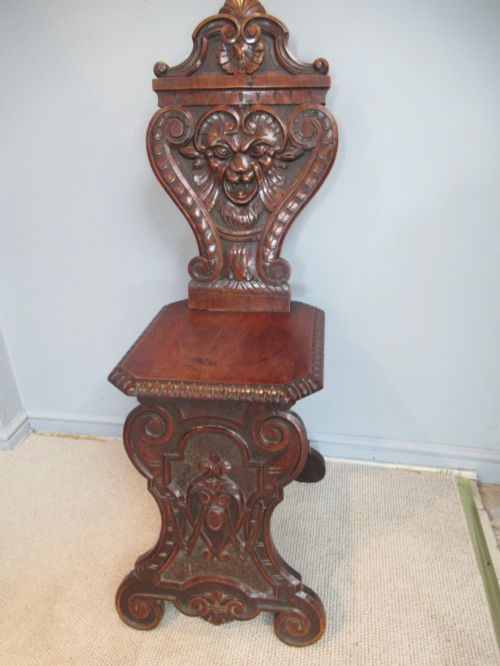
Carving was executed by hand, utilising chisels and gouges to render deep relief motifs such as floral patterns, linenfold, and grotesque Green Man masks. Secondary materials such as brass hinges, iron brackets, fabric upholstery, and glass panels were integrated where storage compartments or display elements were required.
Carved Wood Hallway Bench Retail Price Guide 2026
Typical asking prices for carved wood hallway bench among the pieces listed under this phrase on Sellingantiques today, from the lower quarter to the upper quarter. They describe what is for sale here now, not the wider market.
The inventory spans the eighteenth, nineteenth, and early twentieth centuries, encompassing Victorian, Edwardian, and Regency eras.
What varies in quality
The depth and crispness of the hand-carving separate standard utility seating from exceptional studio commissions. Sharp, well-defined relief work on armrests, friezes, and back panels indicates superior artisan skill during the shaping process.
Timber selection and structural integrity dictate longevity, with dense quartersawn oak and finely figured mahogany holding structural joints much firmer than softer pine or secondary hardwoods. Original hardware, such as heavy brass hinges on storage boxes and settles, also elevates the integrity of the piece.
The Carved Wood Hallway Bench Glossary
- Settle
- A wooden bench with a high back, solid arms, and often a hinged seat revealing a box compartment underneath. This form kept draughts away from people sitting near the entrance.
- Jacobean Revival
- A nineteenth-century style replicating the heavy, geometric, and carved ornamentation popular during the seventeenth century. Furniture in this taste utilises dark oak and bold relief motifs.
- Green Man
- A sculptural architectural ornament depicting a human face surrounded by or entwined with foliage and vines. It appears frequently as a carved detail on nineteenth-century oak furniture.
- Window Seat
- An elongated stool or small bench designed to fit within the recess of a window. These pieces often feature upholstered pads and turned legs.
- Hall Stand
- A multifunctional hallway furnishing combining a bench seat, coat hooks, and a mirror or umbrella stand. They maximise utility in narrow entrance spaces.
Carved Wood Hallway Bench: Frequently Asked Questions
How do I use a hallway bench?
These benches provide a convenient surface for putting on or removing shoes as you enter the house. Many incorporate internal storage compartments beneath the hinged seat or lid, making them ideal for keeping gloves and scarves out of sight.
Placing one against an entrance wall creates an immediate focal point that anchors the hallway. They also offer a practical drop zone for bags when returning home.
Are these benches comfortable to sit on?
Wooden hallway benches are designed primarily for short periods of sitting, such as changing footwear. Some variations include upholstered pads or cushions covered in fabric to soften the seat.
Adding a custom textile cushion is a simple way to increase comfort without altering the underlying timber structure. The firm wooden support ensures the piece maintains its shape over decades of use.
How do I care for antique wood?
Maintain the timber by applying a natural beeswax polish periodically to nourish the surface and preserve the finish. Avoid placing the bench near direct heat sources or in strong sunlight, which can cause the wood to dry out and split.
Dust regularly with a soft, dry cloth to prevent dirt from settling into carved recesses. Quick attention to minor scuffs keeps the antique patina intact for daily use.