




Carved Wood Foot Chairs
These carved wood foot chairs and associated seating combine robust timber framing with distinctive lower supports, offering collectors a solid grounding in period craftsmanship.
Carved Wood Foot Chairs
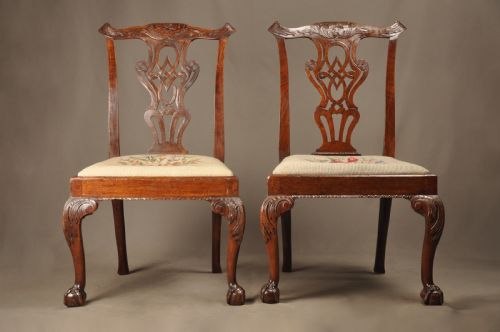
When you search for carved wood foot chairs, you encounter a diverse collection of seating forms ranging from robust armchairs and side chairs to compact stools and low lounges. These items showcase woodwork from the eighteenth and nineteenth centuries, alongside pieces originating around the nineteen-tens, twenties and thirties.
You are most likely to meet mahogany and general wood frames paired with fabric, velvet or leather upholstery, alongside specialised supports featuring brass elements and cane work. The selection spans distinct design vocabularies including Georgian, Victorian, Edwardian and Art Deco movements.
The assortment brings together varied regional expressions, taking in Anglo-Indian, Chinese export and European stylistic influences. Each piece centres on structural timber work and detailed lower terminals that define its period character.
Materials and construction methods
The primary framework relies upon dense timbers such as mahogany, walnut, oak, ebony and rosewood, selected for their structural stability and capacity to hold crisp hand-carved details. Specialised items incorporate exotic hardwoods like burr birch and elm, while gilded finishes appear on select formal frames.
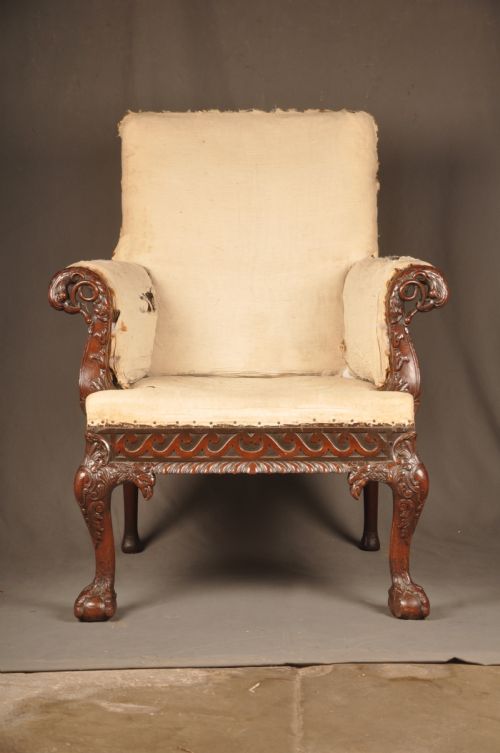
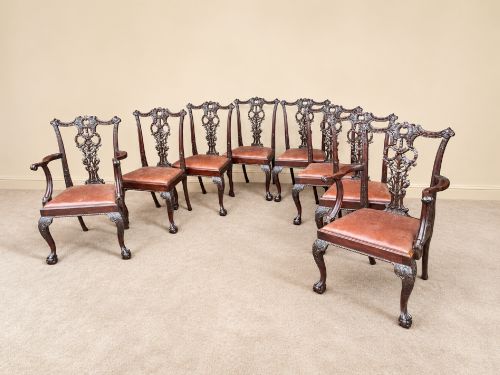
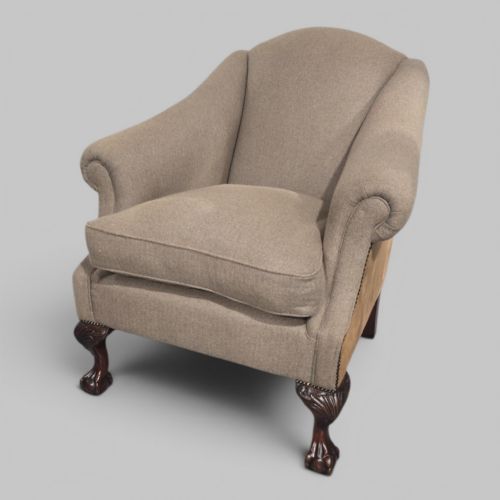
Joinery techniques utilise traditional pegged and tenoned framing, supporting upholstered elements upholstered in velvet, leather, textile and fabric. Lower sections frequently employ distinct terminal treatments, including carved claw and ball motifs or curved leg forms.
Carved Wood Foot Chairs Retail Price Guide 2026
Typical asking prices for carved wood foot chairs among the pieces listed under this phrase on Sellingantiques today, from the lower quarter to the upper quarter. They describe what is for sale here now, not the wider market.
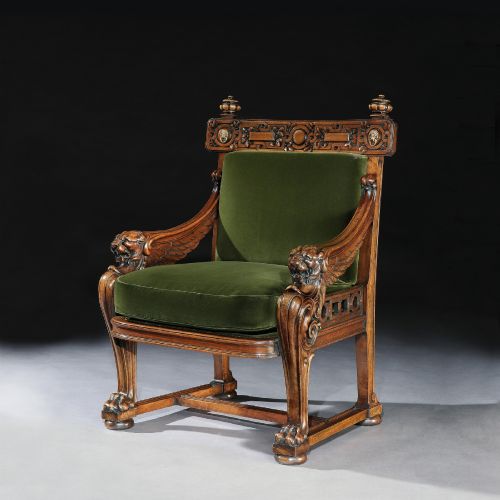
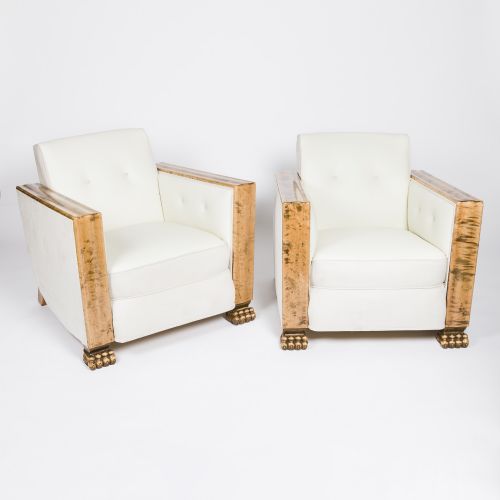
One exceptional armchair rests upon fierce lion monopodia feet, standing ready to pounce across the sitting room.
Judging the standard of execution
Quality rests primarily in the crispness and depth of the timber carving, where hand-rendered details display sharp edges and purposeful depth rather than soft, mechanical rounding. The selection of timber grain, particularly in figured veneers and solid hardwoods, dictates the visual richness of the frame.
Structural integrity governs the upper tier of examples, evident in tight joints, heavy gauge framing, and the thoughtful integration of secondary materials like cane panels or brass mounts. Finer specimens maintain their original proportions and decorative schemes without compromise to the primary timber skeleton.
Thomas Hope
The Carved Wood Foot Chairs Glossary
- Monopodia
- A furniture support carved to resemble a single animal leg, typically terminating in a paw or claw. This classical motif draws directly from ancient Roman prototypes.
- Bergere
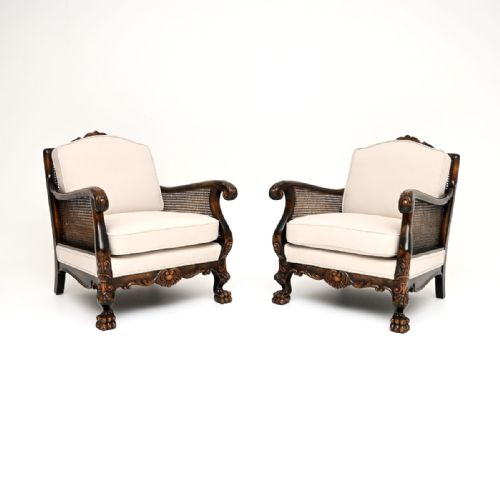
- An enclosed upholstered armchair with wooden framing exposed around the sides and back. The arm panels frequently incorporate woven cane work.
- Curule stool
- A folding stool featuring X-shaped legs derived from ancient Roman magistrate seats. This form provides both structural rigidity and a classical silhouette.
- Tete a tete
- A specialised double seat designed for two occupants to converse face-to-face in an S-shaped configuration. These frames often feature ornate carving throughout the timber structure.
- Giltwood
- Timber coated with a thin layer of gold leaf over a prepared gesso ground. This technique accentuates carved decorative elements on formal seating.
Carved Wood Foot Chairs: Frequently Asked Questions
What defines a carved wood foot chair?
These pieces combine wooden frames with distinct lower structural supports, encompassing various seating forms from history. They rely on solid timber construction and traditional joinery.
Items in this category range from compact stools to substantial armchairs, each displaying specific period carving styles on the base and legs.
How do I distinguish eighteenth-century pieces?
Eighteenth-century examples typically feature dense mahogany or walnut frames with hand-carved details that reflect Georgian or Chippendale design principles. The timber patination often shows deep natural ageing.
Construction methods from this era involve traditional pegged joinery and heavy framing designed to endure centuries of daily use.
Where should I place these in a room?
These seating forms work effectively as accent pieces in studies, libraries, or living spaces where their timber frames and textile upholstery can be appreciated from multiple angles. Smaller stools function well near larger armchairs or fireplaces.
Ensure placement avoids direct heat sources and strong sunlight to protect the antique wood surfaces and delicate upholstery fabrics.
How do Art Deco models differ?
Art Deco seating introduces streamlined forms utilising birch, elm, and burr birch alongside velvet or leather upholstery. The design language favours geometric curves over historical revival motifs.
These twentieth-century variants prioritize club chair proportions and smooth polished timber surfaces rather than intricate hand-carved ornamentation.