





Carved Wood Cooler
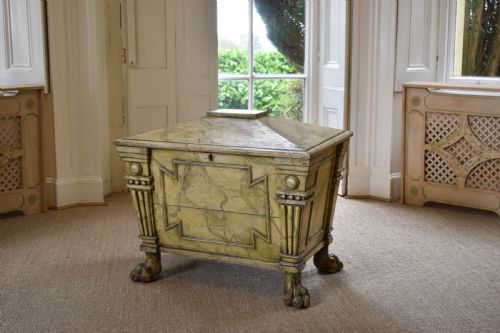
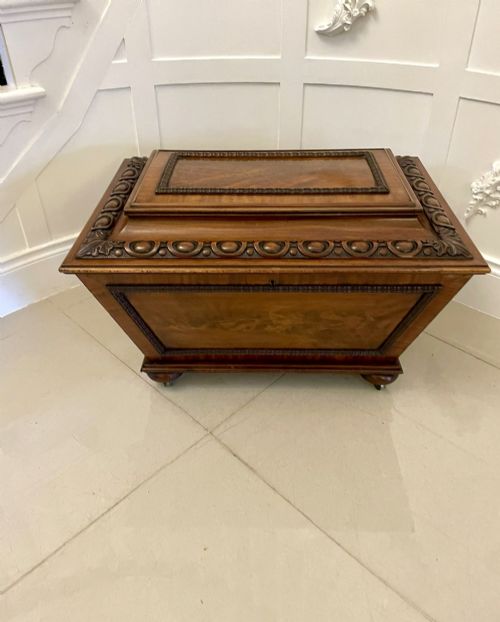
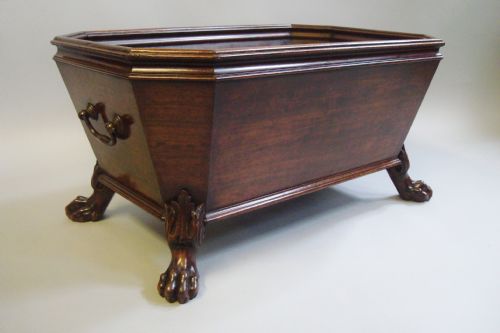
These carved wood cooler examples combine heavy timber construction with classical forms designed to keep wine cold.
Carved Wood Cooler
A carved wood cooler is primarily encountered on this page as a wine cooler or cellarette originating from the eighteenth, nineteenth, and early twentieth centuries. These vessels served the dining rooms of wealthy households, where they stored bottles alongside ice or water during meals.
The prevailing examples span Georgian, Regency, William IV, and Victorian periods, often taking the shape of a sarcophagus with fitted interiors. Woods such as mahogany, walnut, burr elm, and padouk dominate the forms available here.
Buyers also encounter variations like wine cooler tables and large freestanding boxes alongside Anglo-Indian interpretations. Each piece reflects the formal dining customs of its era through robust timber framing and substantial carving.
How they were made
Cabinetmakers constructed these pieces using dense hardwoods like mahogany and walnut, frequently selecting figured veneers and burr elm to add surface pattern. Timber selection prioritized stability and weight to support lead-lined interiors meant for holding melting ice.
Joinery techniques combined traditional carcass construction with applied mouldings, carved paw feet, and brass fittings. Inlaid details and specific sarcophagus profiles required precise hand woodworking skills common to period workshops.
Carved Wood Cooler Retail Price Guide 2026
Typical asking prices for carved wood cooler among the pieces listed under this phrase on Sellingantiques today, from the lower quarter to the upper quarter. They describe what is for sale here now, not the wider market.
Listings feature woods including mahogany, walnut, burr elm, padouk, and softwood alongside giltwood accents.
What varies in quality
Quality rests heavily on the choice of timber figure, the crispness of the hand-carved elements such as paw feet, and the integrity of the original proportions. Finer examples display superior wood selection like burr elm or highly figured mahogany paired with balanced architectural forms.
The presence of maker attribution, sophisticated inlay work, and retained internal lead linings or original brass handles separate ordinary utility pieces from exceptional cabinetmaking achievements.
Freemans of Norwich·Maples and Co
The Carved Wood Cooler Glossary
- Cellarette
- A lockable container used for holding bottles of wine beneath the dining table or sideboard. These were standard dining room accessories in wealthy homes before fitted refrigerators.
- Padouk
- A heavy tropical hardwood with a reddish hue, utilised in Anglo-Indian furniture production. It resists warping and takes fine carved detail.
- Burr Elm
- A knotty timber growth showing intricate swirling grain patterns, prized for decorative veneer panels on antique cabinet furniture.
- Giltwood
- Timber coated with gold leaf or gold paint to provide a decorative metallic finish. This technique appeared on ornamental mounts and frames.
Carved Wood Cooler: Frequently Asked Questions
What is a carved wood cooler?
A carved wood cooler is a heavy period container, frequently called a cellarette or wine cooler, designed to hold wine bottles and ice in formal dining rooms. They date mainly from the eighteenth, nineteenth, and early twentieth centuries.
These pieces use dense timbers like mahogany, walnut, and burr elm, often shaped like sarcophagi with carved feet and brass fittings.
How were these coolers used?
They sat in the dining room near the table, often lined with lead to hold ice and water that chilled wine before or during meals. Servants accessed the bottles through heavy hinged lids.
Many included internal partitions to keep bottles separate and secure while resting against the melting ice.
How do I identify Regency pieces?
Regency examples typically show classical architectural influences, sarcophagus shapes, and carved details like paw feet or bold mouldings. They frequently employ dark, heavily grained mahogany or exotic woods.
Proportions tend to be robust and monumental, reflecting the neoclassical taste of the early nineteenth century.
Are these pieces functional today?
While they can still store bottles, most owners utilise them as decorative side tables, plant stands, or discrete storage boxes in living spaces. The original lead linings may no longer hold water reliably.
Placing them in a room adds a focal point of dark period timber and traditional cabinet craftsmanship.