





Carved Wood Club Chair
A carved wood club chair offers deep comfort and solid timber construction, making it a robust centrepiece for any traditional study or living room.
Carved Wood Club Chair
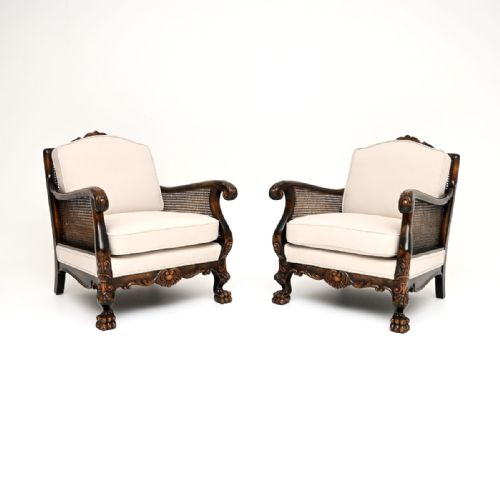
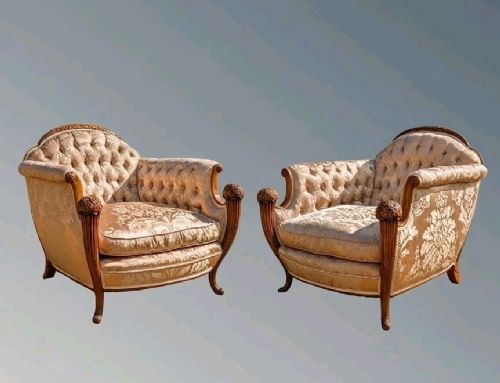
A carved wood club chair brings substantial seating to a room, often taking the form of a low, wide armchair designed for relaxation. When searching for a carved wood club chair, buyers encounter pieces spanning the Victorian era through the Art Deco period, alongside Edwardian designs.
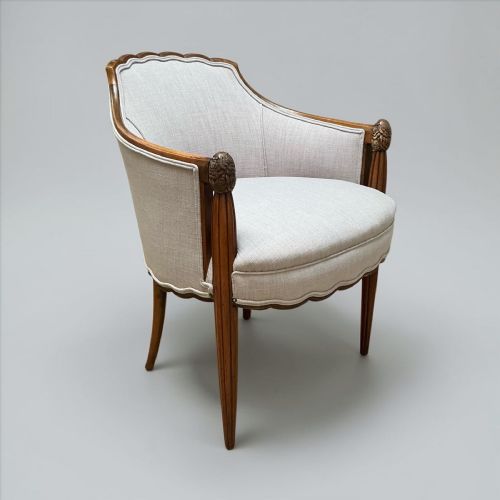
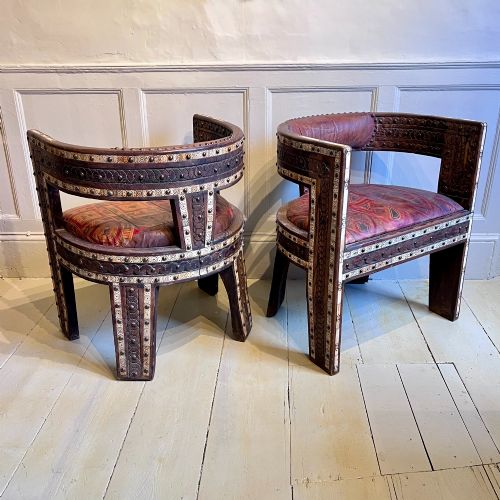
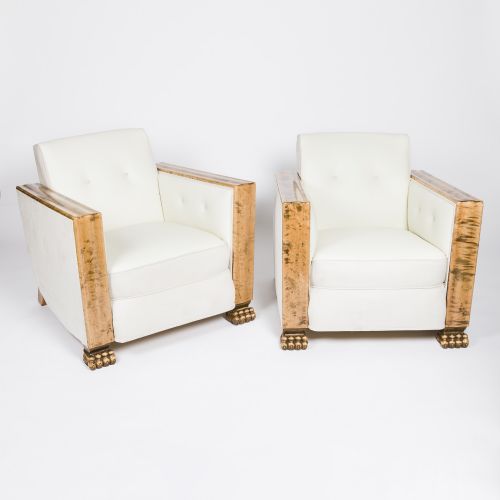
The selections on this page include mahogany, walnut, and hardwood frames, frequently paired with leather upholstery or cane panels. Many examples originate from French workshops or British makers, showing styles from Jacobean Revival to clean Art Deco lines.
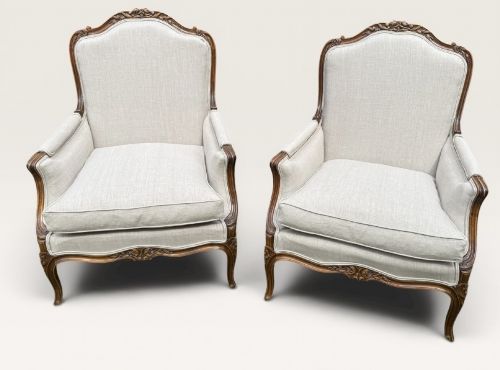
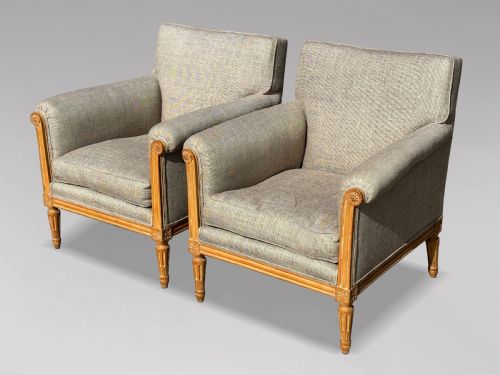
Armchairs and library chairs dominate the available forms, ranging from button-backed leather seats to open cane tub chairs. Buyers frequently find pairs alongside individual lounge chairs suitable for studies and drawing rooms.
Materials and construction
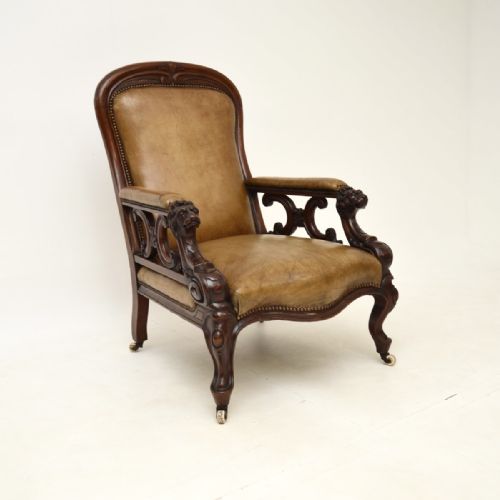
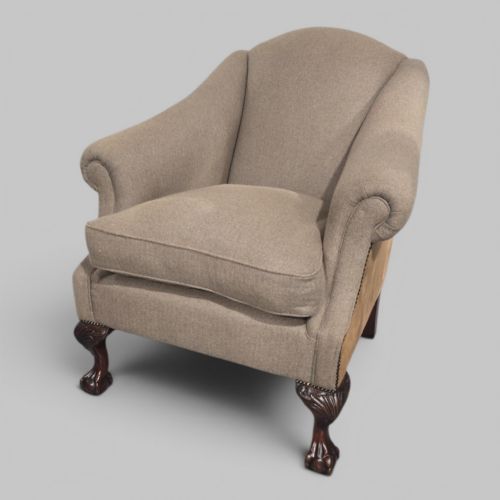
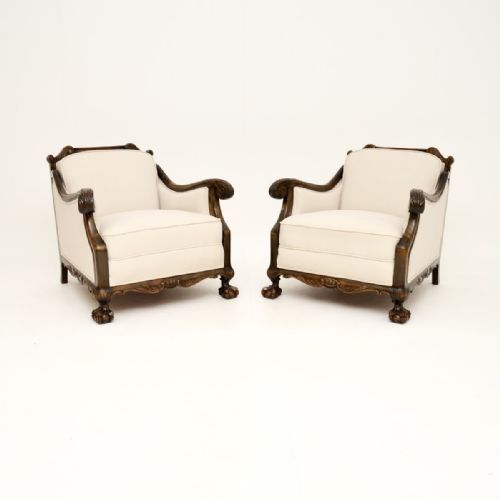
Makers shaped these frames from dense timbers such as mahogany, walnut, birch, and satin birch, often applying hand-carved details to the arms and legs. Claw and ball feet or lion hand-carvings appear on specific Victorian and Edwardian iterations.
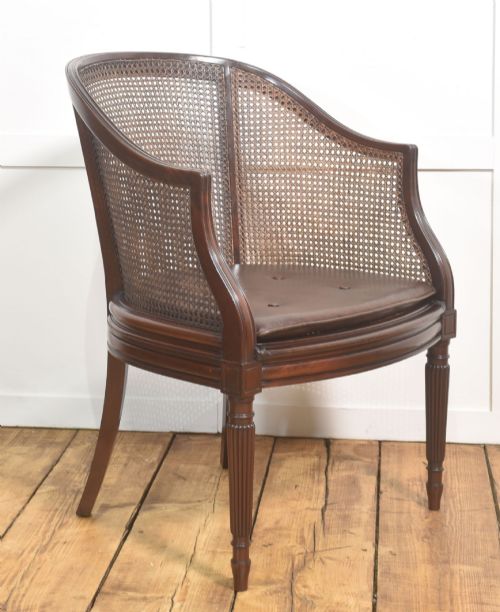
Upholstery methods rely on traditional stuffing beneath leather, pure silk, or fabric, secured with brass detailing or button-backed finishing. Caning provides a lighter alternative on Edwardian and Art Deco tub and bergere models.
Carved Wood Club Chair Retail Price Guide 2026
Typical asking prices for carved wood club chair among the pieces listed under this phrase on Sellingantiques today, from the lower quarter to the upper quarter. They describe what is for sale here now, not the wider market.
Listings span from the Victorian period through Edwardian times to Art Deco designs of 1930, using mahogany, walnut, leather, and cane.
Judging quality in construction and finish
The distinction between standard and exceptional pieces rests upon the crispness of the timber carving and the density of the hardwood frame. Superior chairs utilise fine veneers like burr birch or solid mahogany coupled with traditional joinery that maintains structural integrity over generations.
Upholstery execution dictates daily comfort, with top-tier examples showing precise buttoning, well-sprung interiors, and high-grade leather or silk coverings that complement the timber framework.
The Carved Wood Club Chair Glossary
- Bergere
- An enclosed upholstered armchair with a wooden frame where the sides are frequently filled with cane or wicker work. This French style offers a lighter visual weight than fully padded club chairs.
- Tub armchair
- A comfortable seat featuring a continuous curved back and arms that form a single semi-circular enclosure. Edwardian makers often combined this form with cane panels and mahogany frames.
- Satin birch
- A pale, lustrous hardwood utilised for cabinet making and chair frames during the late nineteenth and early twentieth centuries. It provides a distinctive golden grain pattern.
- Claw and ball
- A traditional furniture foot motif carved to represent an animal's talon grasping a spherical ball. This detail frequently appears on Edwardian mahogany armchairs.
- Jacobean Revival
- A nineteenth-century style replicating the heavy, rectilinear furniture of the seventeenth century. Pieces in this manner display dark woods and formal carved ornamentation.
Carved Wood Club Chair: Frequently Asked Questions
How do I identify an Art Deco club chair?
Art Deco club chairs generally feature streamlined silhouettes, rounded profiles, and smooth wood veneers such as burr birch or elm. They date from the 1920s and 1930s and emphasise geometric simplicity over heavy carving.
Unlike Victorian models, these chairs often omit ornate embellishments in favour of clean architectural lines and functional comfort.
Where were bergere armchairs used?
Bergere armchairs traditionally served in formal sitting rooms, salons, and libraries where guests gathered for conversation. Their cane panels and lighter frames made them easy to move around grand domestic interiors.
Today, they function well as reading chairs in living spaces or bedrooms, offering formal elegance combined with comfortable seating.
What is the difference between library and salon chairs?
Library chairs are typically built for sustained reading and relaxation, often incorporating deep leather upholstery, sturdy mahogany frames, and supportive button-backed padding. They prioritise solid construction and durability for daily use.
Salon chairs tend to be lighter and more decorative, frequently upholstered in silk or delicate fabrics with exposed carved wood frames designed for formal entertaining.
How should I care for antique leather upholstery?
Antique leather requires gentle cleaning with a damp cloth and occasional conditioning to prevent the hide from drying and cracking. Avoid placing leather chairs in direct sunlight or near heat sources, which accelerates wear.
Proper maintenance preserves the natural patina and ensures the material remains supple for years of daily service.