



Carved Wood Book Supports
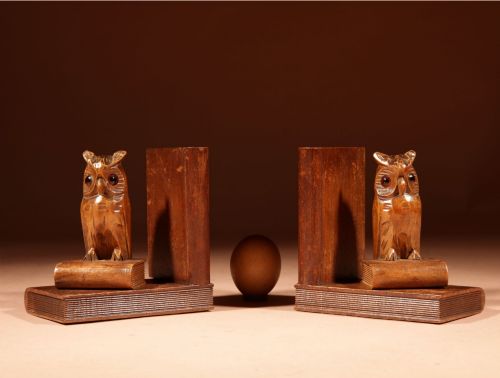
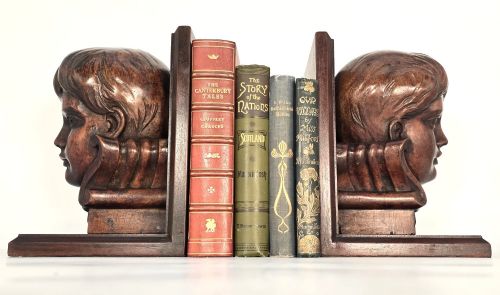
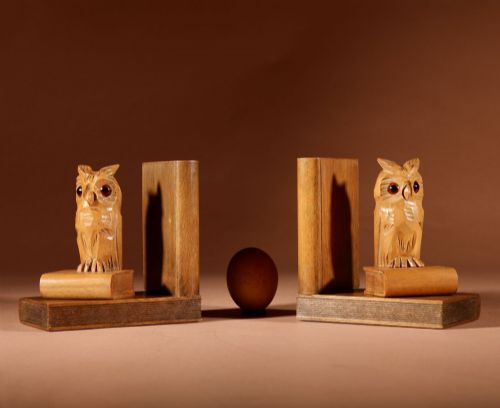
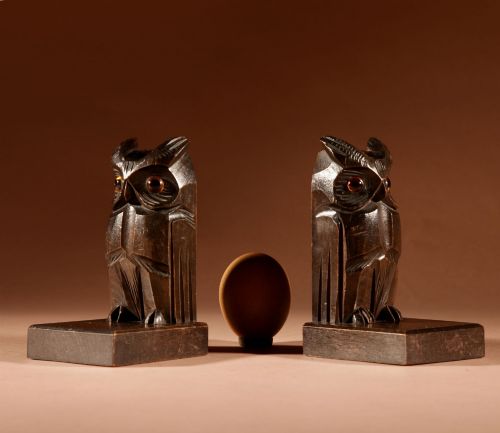
Carved wood book supports steady heavy volumes on the shelf with animal figures and architectural details.
Carved Wood Book Supports
Carved wood book supports take the form of paired animal figures, architectural motifs, and figural sculptures designed to hold upright rows of books on shelves and desks. When you search for carved wood book supports, you encounter functional library accessories that doubled as decorative shelf ornaments in nineteenth and twentieth-century interiors.
The selections on this page feature animal subjects such as owls, bears, elephants, lions, and dogs alongside ecclesiastical and vernacular designs. These items originate from periods spanning the Victorian era, Edwardian years, and the early twentieth century, showing regional workshops ranging from Black Forest carvers to Anglo-Indian artisans.
Materials and construction methods
Makers utilised hand-chiselling and relief carving techniques to render fur, feathers, and architectural tracery with distinct depth. Workshops finished the timber surfaces with waxes and polishes that highlighted the grain and natural tones of the wood.
Carved Wood Book Supports Retail Price Guide 2026
Typical asking prices for carved wood book supports among the pieces listed under this phrase on Sellingantiques today, from the lower quarter to the upper quarter. They describe what is for sale here now, not the wider market.
The listings show items spanning the Victorian, Edwardian, and early twentieth-century periods, utilising linden wood, mahogany, oak, and ebony.
Factors that determine quality
The definition and depth of the chisel work distinguish superior examples from plain production pieces, particularly in the rendering of animal expressions and anatomical accuracy. Crisp feathering on an owl or detailed musculature on a lion denotes the hand of a skilled carver.
The choice of timber and the preservation of original surface patination influence the standing of each pair. Solid hardwoods and finely grained exotic woods retain structural integrity and surface character better than softer utility timbers.
The Carved Wood Book Supports Glossary
- Black Forest
- A style of Swiss and German wood carving originating in the Brienz region, noted for realistic animal figures such as bears and owls. These pieces often feature deeply textured fur and expressive glass eyes.
- Anglo-Indian
- A designation for items produced in the Indian subcontinent under British rule, combining traditional local carving skills with European furniture forms. These objects frequently utilise dense tropical hardwoods.
- Gothic Revival
- An architectural and decorative style drawing on medieval forms, featuring pointed arches, tracery, and ecclesiastical motifs. Library accessories in this taste mirror church stonework in carved timber.
- Georgian Revival
- A twentieth-century style looking back to eighteenth-century classical proportions and ornamentation for inspiration. Pieces in this manner display restrained classical details executed in pine or mahogany.
- Bookrest
- An alternative term for a book support or bookend designed to prop volumes upright on a sloping desk or flat shelf. These items provide stability through weighted bases or hinged ledges.
Carved Wood Book Supports: Frequently Asked Questions
What wood types are used?
Carvers utilised a range of timbers including linden wood, mahogany, oak, pine, ebony, and beech depending on the regional workshop and period.
Exotic woods such as coromandel also appear in items produced within the British Empire, offering dense weight and dark colouration.
How old are these supports?
The pieces span the Victorian era, the Edwardian period, and the early twentieth century up to the Art Deco years.
Specific decades represented include the eighteen-sixties, nineteen-hundreds, and nineteen-twenties, reflecting changing domestic interior fashions.
What animal subjects appear?
Owls, bears, elephants, lions, and dogs such as West Highland terriers form the primary animal subjects encountered in these carvings.
Many of these figural designs originate from Swiss and German alpine workshops or Anglo-Indian trading centres.
How do I care for wood?
Keep carved wooden book supports away from direct sunlight and heat sources to prevent the timber from drying out or splitting.
Apply a microcrystalline wax occasionally to nourish the surface and clean away dust with a soft, dry cloth.