







Carved Wood Book Shelf
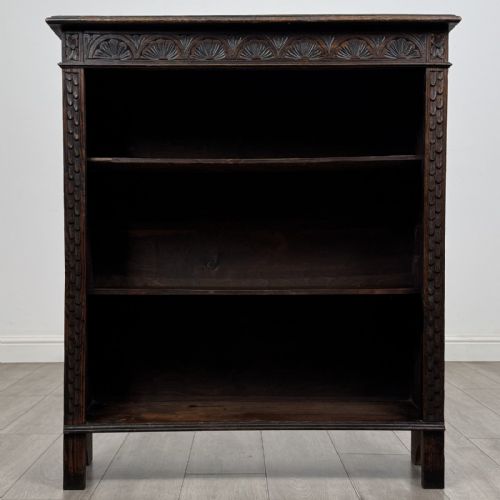
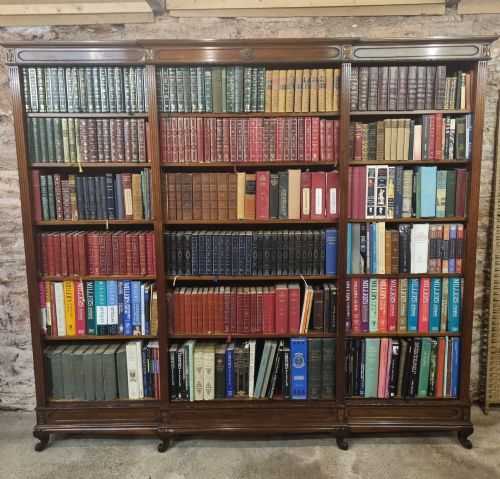
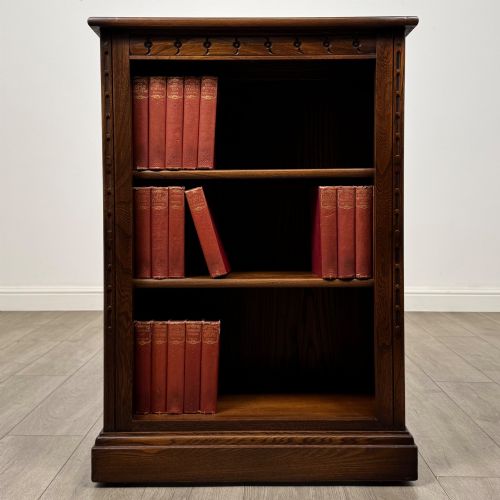
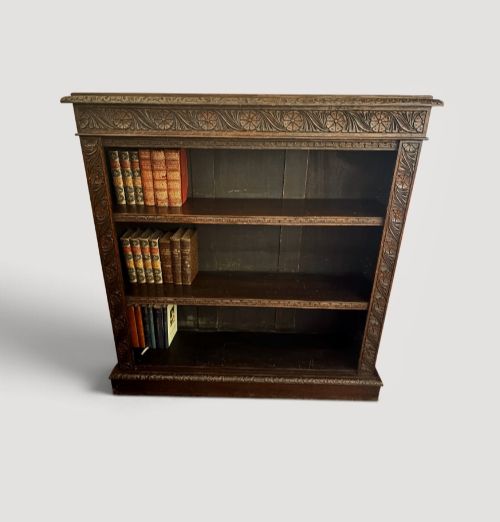
These pieces for a carved wood book shelf bring together practical storage and period craftsmanship in oak, mahogany, rosewood, and walnut.
Carved Wood Book Shelf
A carved wood book shelf takes many forms across the Victorian, Edwardian, and Regency periods, appearing as open bookcases, tiered whatnots, etageres, and wall-hung shelving units. The pieces on this page lean heavily toward Victorian and Edwardian examples, alongside Regency, 19th century, and 1930s interpretations of earlier styles.
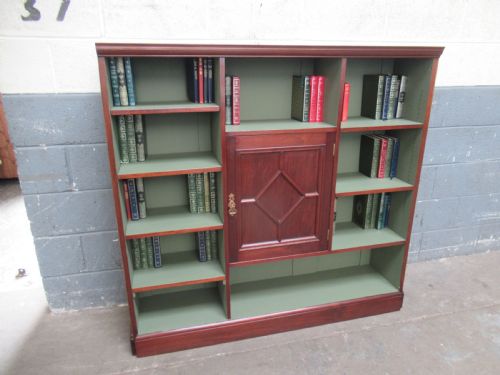
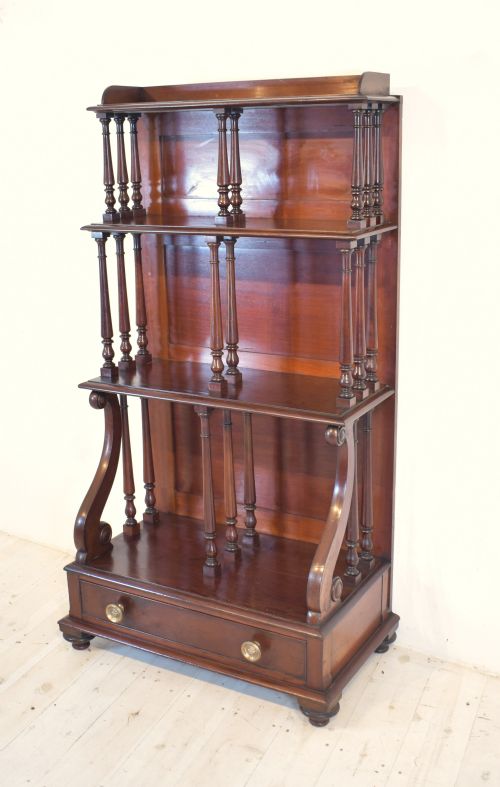
Buyers most commonly encounter open bookcases in oak or mahogany, often fitted with adjustable shelves or a lower drawer, alongside multi-tiered rosewood waterfall bookcases. More specialised items such as carved wooden bookends, corner cabinets, and portable bookshelves also appear within these periods.
Materials and construction
Makers utilised solid hardwoods like oak, mahogany, walnut, and rosewood, frequently incorporating decorative elements such as carved corbels, mouldings, or Green Man motifs into the framework. Brass fittings, leather details, and painted finishes appear alongside deal and beech in secondary or lighter pieces.
Construction techniques balanced utility with aesthetic depth, employing adjustable shelving mechanisms, pegged joints, and tiered platforms supported by turned or carved uprights. Details ranged from the intricate owl carvings on Black Forest bookends to the geometric mouldings of later Art Deco and Arts & Crafts designs.
Carved Wood Book Shelf Retail Price Guide 2026
Typical asking prices for carved wood book shelf among the pieces listed under this phrase on Sellingantiques today, from the lower quarter to the upper quarter. They describe what is for sale here now, not the wider market.
Among the heavy timber and formal shelving, an amusing pair of carved wooden owls keeps watch over the books.
Assessing quality
The standard of a carved wood book shelf rests on the selection of timber, such as burr walnut or figured mahogany, and the crispness of its hand-carving. Dense grain, well-figured veneers, and substantial timber thickness distinguish finer workshops from utility pieces.
Proportion and structural integrity also divide the range, seen in the balance of small-proportion oak units against larger breakfront or multi-tiered arrangements. Original working mechanisms for adjustable shelves and intact architectural mouldings indicate superior cabinet-making.
Ercol·Shapland & Petter·Waring and Gillows·Gillows
The Carved Wood Book Shelf Glossary
- Open bookcase
- A piece of furniture designed for holding books with unglazed fronts, allowing direct access to the volumes inside. These units frequently feature adjustable shelves supported by wooden ratchets or brass studs.
- Waterfall bookcase
- A tiered shelving unit where each successive shelf steps back from the one below, creating a silhouette that resembles cascading water. These often appear in rosewood or walnut from the Victorian and Edwardian eras.
- Whatnot
- A multi-tiered piece of open shelving designed for displaying ornaments, books, or small objects. They rest on upright supports and span the Victorian, Regency, and mid-nineteenth century periods.
- Étagère
- A French term for a piece of furniture with several open shelves for display, functionally similar to a whatnot. They are frequently constructed in rosewood and date to the nineteenth century.
- Corbel
- A structural or decorative bracket projecting from the face of a bookcase to support an upper shelf or cornice. These are often hand-carved with foliage or scrollwork on nineteenth-century pieces.
Carved Wood Book Shelf: Frequently Asked Questions
What is a waterfall bookcase?
A waterfall bookcase is a tiered shelving unit where each shelf is narrower than the one beneath it, creating a stepped, cascading profile. These pieces were particularly popular during the Victorian and Edwardian periods in rosewood and mahogany.
They offer a compact footprint while providing multiple levels for displaying books and small objects. Their open construction makes them suitable for smaller rooms or corners.
How do I use an open bookcase?
An open bookcase is designed for everyday access to books, allowing the spines and bindings to become part of the room's decor. Many period examples feature adjustable shelves, which let you accommodate varying book heights.
Position these pieces away from direct sunlight and strong heat sources to protect the timber and bindings. They function well against walls in studies, libraries, and living spaces.
How do I identify Victorian oak bookcases?
Victorian oak bookcases often feature heavier proportions, deep grain patterns, and hand-carved elements such as foliage, corbels, or Green Man motifs. They frequently include functional additions like adjustable shelving systems or lower drawers.
Constructed solidly from native or imported timbers, these pieces reflect the revival of earlier styles alongside standard nineteenth-century manufacturing methods. Look at the timber thickness and joint construction to gauge the period.
What is the difference between a whatnot and a bookcase?
A whatnot is primarily designed for displaying ornaments and small decorative items across multiple open tiers, whereas a bookcase is built specifically to hold rows of books. Whatnots tend to have lighter upright supports and more open sides.
Both forms utilise similar woods like rosewood and walnut, but the whatnot prioritises display versatility over book storage capacity. Some larger Victorian examples blur the line by combining shelving for both books and display objects.