
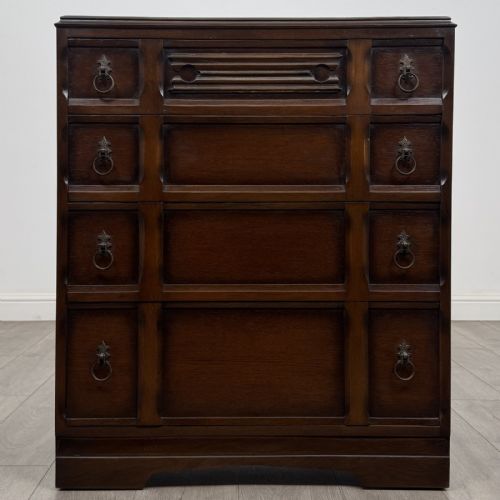
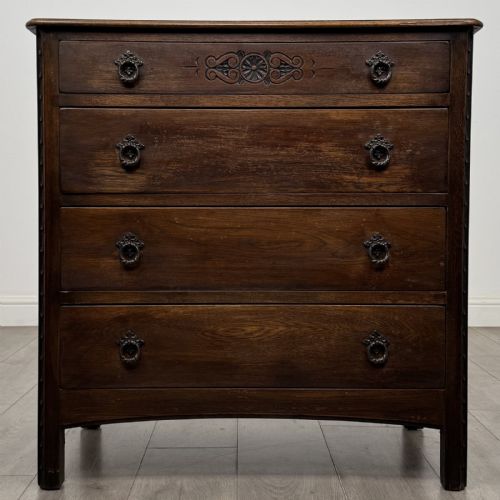
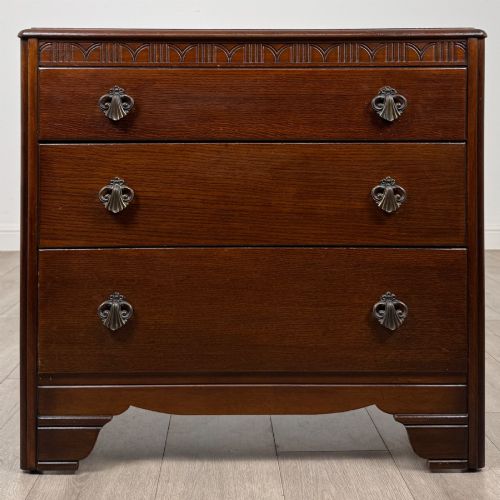
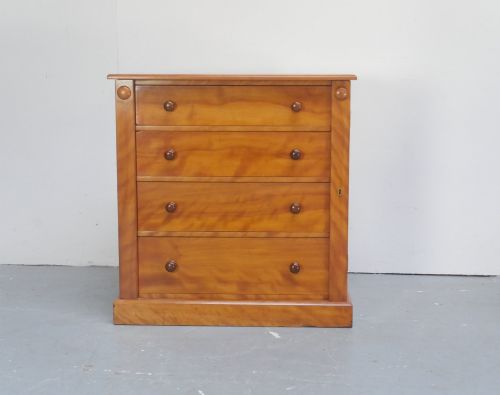
Carved Wood Bedroom Chest
A carved wood bedroom chest offers sturdy storage and genuine period character for domestic interiors.
Carved Wood Bedroom Chest
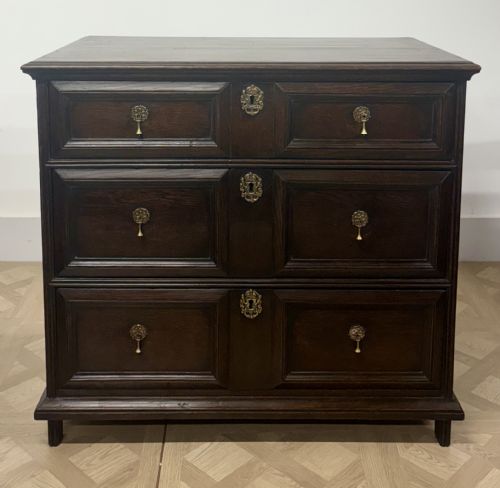
A carved wood bedroom chest provides substantial storage capacity while bringing historic craftsmanship directly into a modern domestic setting. These pieces range from substantial oak examples dating to the seventeenth century through to lighter Edwardian iterations and later twentieth-century interpretations.
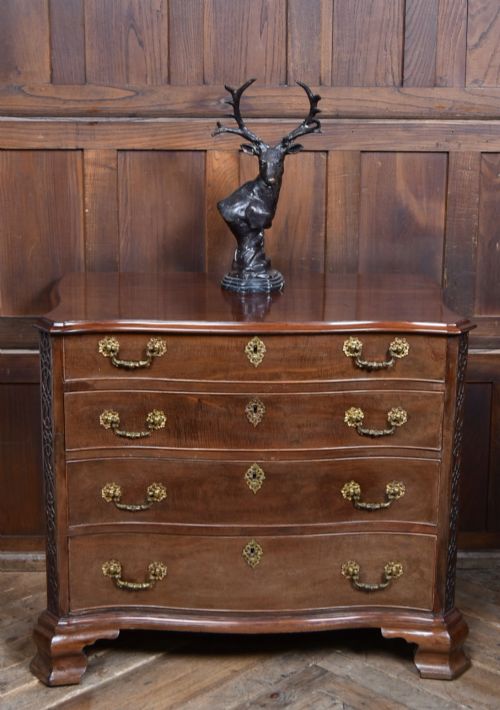
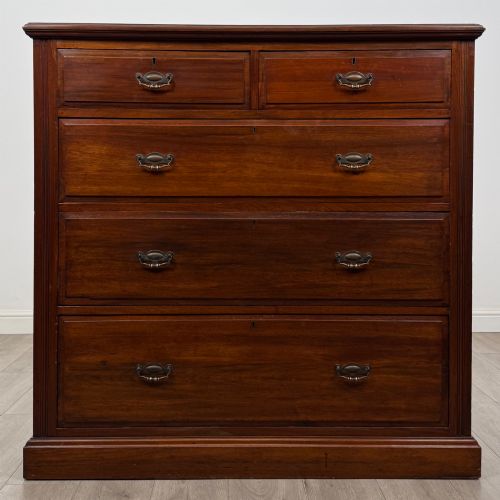
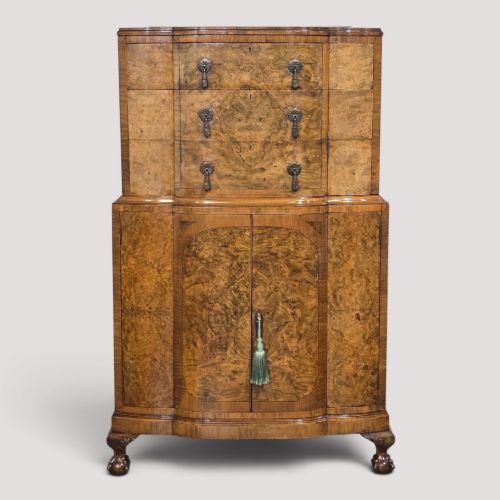
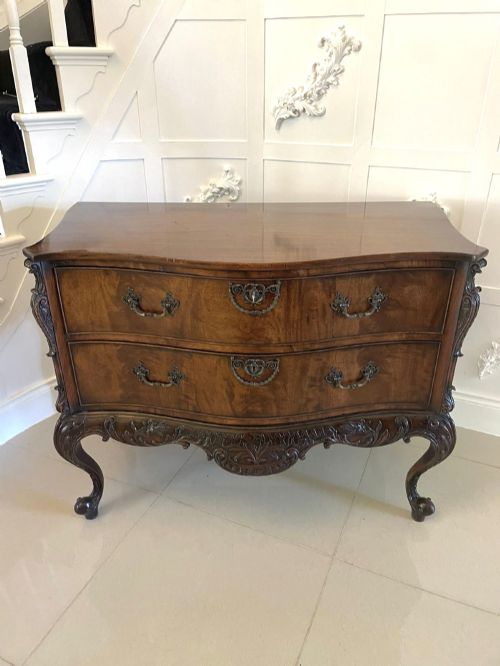
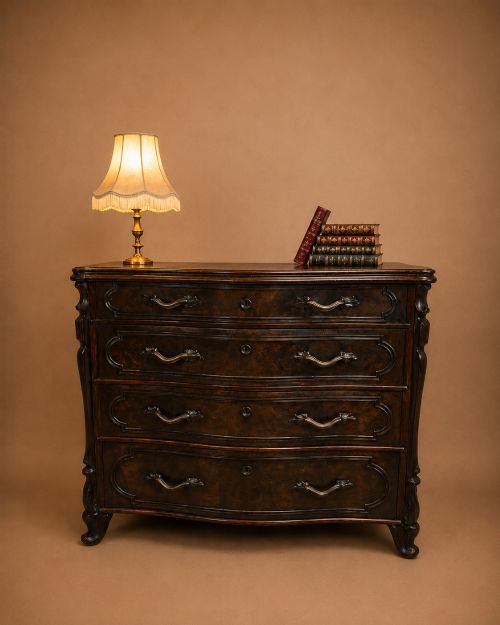
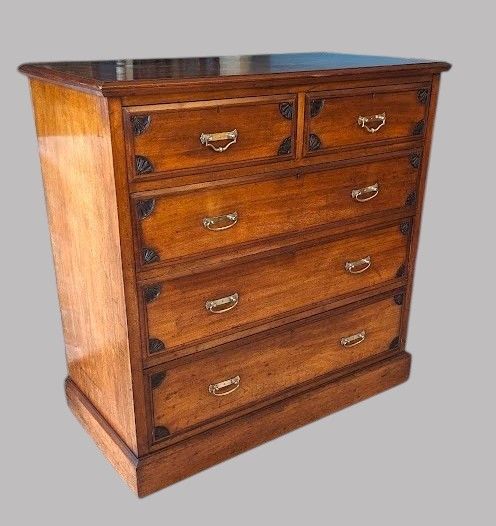
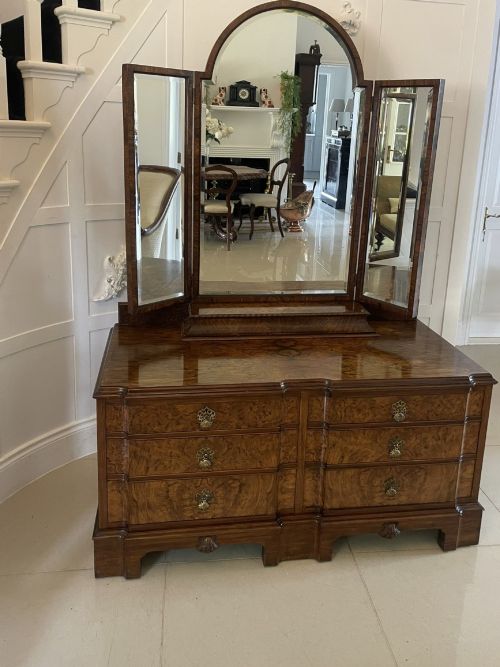
Buyers searching for a carved wood bedroom chest encounter various forms across this selection, predominantly chests of drawers alongside related linen presses, dressing tables, and washstands. Oak and mahogany appear most frequently, shaped into standard drawer configurations or more elaborate serpentine and bombe profiles.
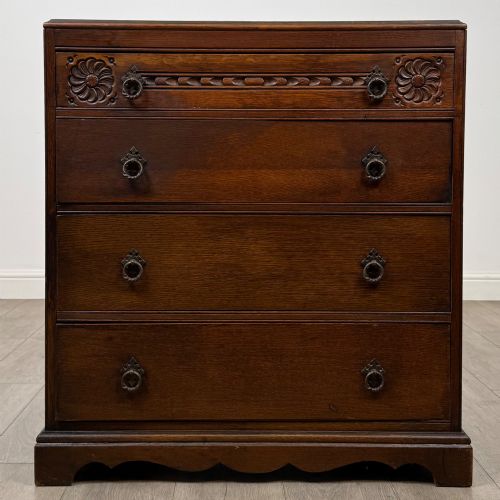
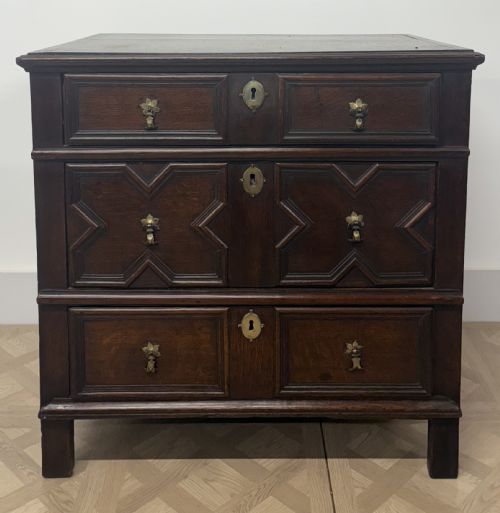
Origins span across British, French, Swedish, and American workshops, displaying regional preferences in timber selection and decorative carving. The seventeenth-century oak pieces rely on deep relief work, whereas later nineteenth-century examples often combine figured mahogany or burr walnut with subtle edge ornamentation.
Materials and construction methods
Cabinetmakers utilised solid timbers such as oak, mahogany, walnut, and birch, frequently applying figured veneers or burr walnut to primary display surfaces. Brass hardware and glass components appear selectively as handles, mirrors, or protective tops depending on the specific period and form.
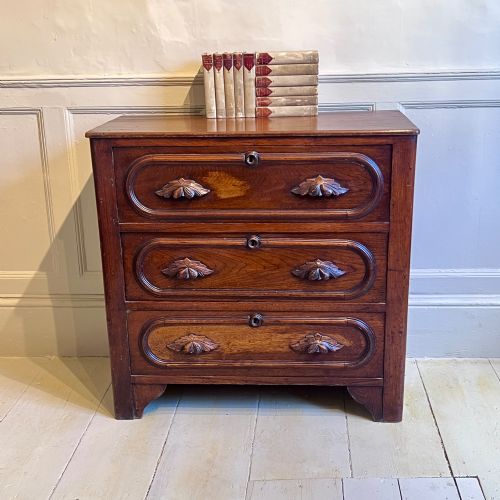
Construction techniques evolved from heavy joined oak framing in earlier centuries to sophisticated veneering and curved serpentine shaping by the Victorian era. Carved details are executed directly into the solid wood frames or applied as decorative mouldings along top edges and drawer fronts.
The inventory includes specialised forms such as dressing tables, washstands, bedside cabinets, and tall linen presses.
Distinctions in quality and execution
Superior examples of a carved wood bedroom chest demonstrate exceptional timber selection, such as highly figured Cuban mahogany or richly patterned burr walnut. The depth and crispness of the carved ornamentation reveal the competence of the original artisan, separating standard workshop output from finer commissions.
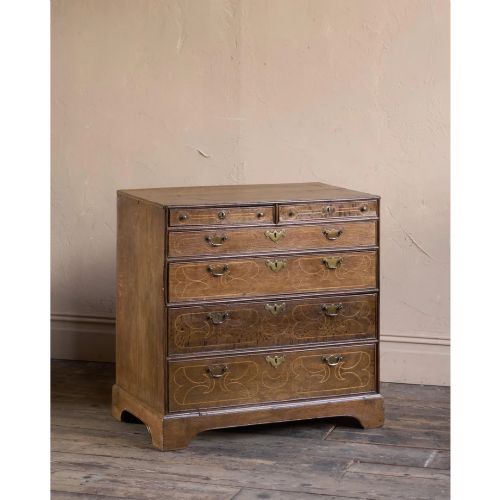
Structural integrity and the retention of original brass hardware and proportional drawer arrangements distinguish better pieces within any given period. Grain matching across drawer fronts and refined secondary timbers inside the carcass indicate higher standards of nineteenth-century and earlier manufacturing.
The Carved Wood Bedroom Chest Glossary
- Serpentine
- A front profile curving outward in the centre and inward at the sides. This shape requires advanced woodworking skill to execute properly.
- Linen Press
- A tall piece combining upper cabinet storage with lower drawers originally intended for textiles. These units often feature panelled doors and internal sliding trays.
- Bombe
- A swollen or bulging outward profile typical of continental commodes. The technique creates a dramatic curved silhouette from top to base.
- Bachelors Chest
- A compact form equipped with a pull-out slide above the primary drawers. These items served functional writing or surface needs in domestic chambers.
- Figured Mahogany
- Wood grain displaying distinctive patterns such as flame or mottle. Artisans selected these boards for prominent drawer fronts to enhance visual depth.
Carved Wood Bedroom Chest: Frequently Asked Questions
How do I date a carved wood bedroom chest?
Dating relies on identifying the primary timber species, construction joints, and decorative styles typical of specific centuries. Earlier pieces utilise solid joined oak while later examples incorporate mahogany or walnut veneers over secondary woods.
Hardware styles and drawer configurations also provide reliable clues. Dovetail joints change from wide handmade iterations in earlier periods to more uniform machine-cut versions by the late nineteenth century.
Where should I place a linen press?
A linen press requires adequate vertical clearance and floor space due to its substantial height and depth. Bedrooms and dressing rooms provide logical settings for storing folded garments and linens within the sliding trays.
Because these pieces often feature significant decorative presence, they also function effectively in large landings or hallways. Ensure placement avoids direct sunlight to protect vulnerable wood veneers and finishes.
What is the difference between a commode and a chest of drawers?
A commode generally refers to continental European drawer units, often exhibiting curved serpentine or bombe profiles and decorative ebonised finishes. Chest of drawers is the standard British term for rectangular storage units.
Continental pieces frequently originate from French or Swedish workshops and display distinct regional carving patterns. British examples tend toward rectilinear proportions influenced by Georgian and Victorian design idioms.
How do I care for antique wood furniture?
Maintain stable indoor humidity levels and avoid positioning wooden furniture directly beside heat sources or air conditioning units. Sudden environmental shifts cause timber to warp and veneers to lift from their substrates.
Apply high-quality beeswax sparingly and buff gently with a soft cloth to preserve the finish. Avoid silicone-based sprays that penetrate the pores and complicate future conservation efforts.