





Carved Walnut Shelves
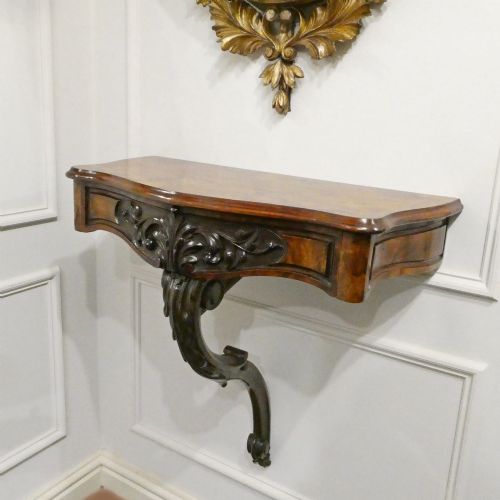
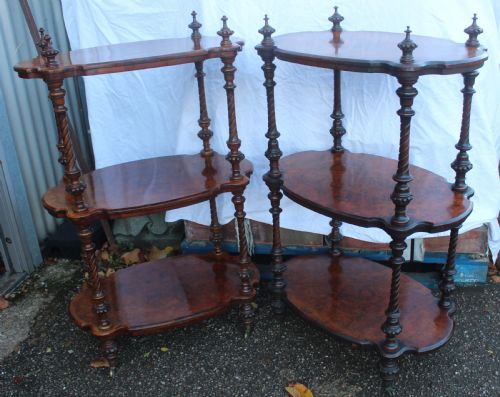
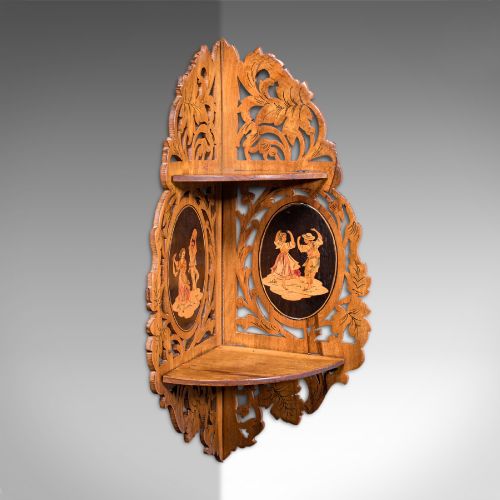
These carved walnut shelves bring rich timber grain and layered tiers to your walls.
Carved Walnut Shelves
When you search for carved walnut shelves, you encounter wall-mounted brackets, hanging cabinets, and tiered whatnots designed to display objects. These pieces emerge predominantly from the Victorian and Edwardian eras, spanning the mid-nineteenth century up to the early twentieth century.
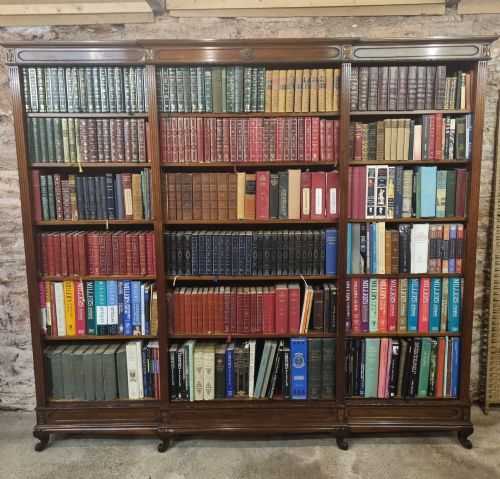
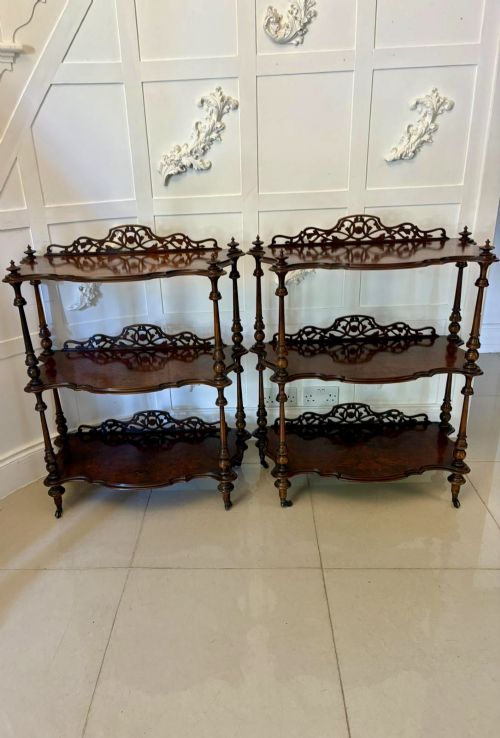
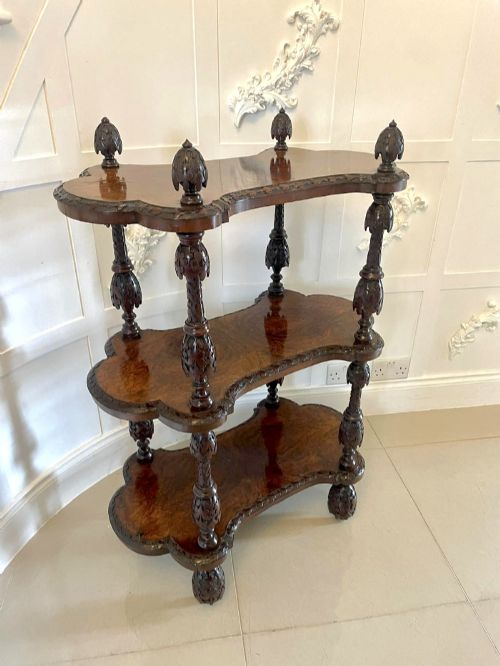
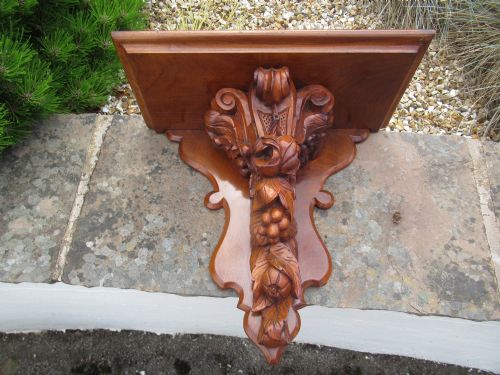
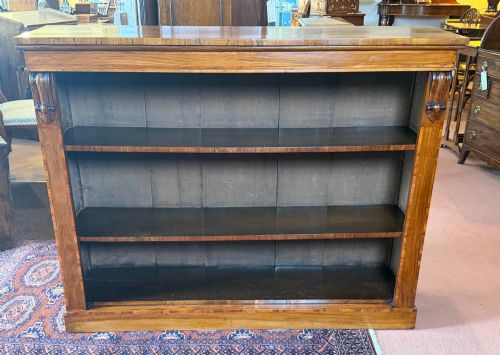
The selections on this page range from compact decorative wall brackets to larger freestanding étagères and open bookcases incorporating multiple tiers. Walnut and burr walnut dominate the forms, frequently paired with mirror glass, brass fittings, and timber frames.
Continental workshops, French makers, and English cabinet-makers all contributed to this category, producing diverse regional interpretations of nineteenth-century styles including Gothic, Aesthetic Movement, and Japonisme.
How they were made
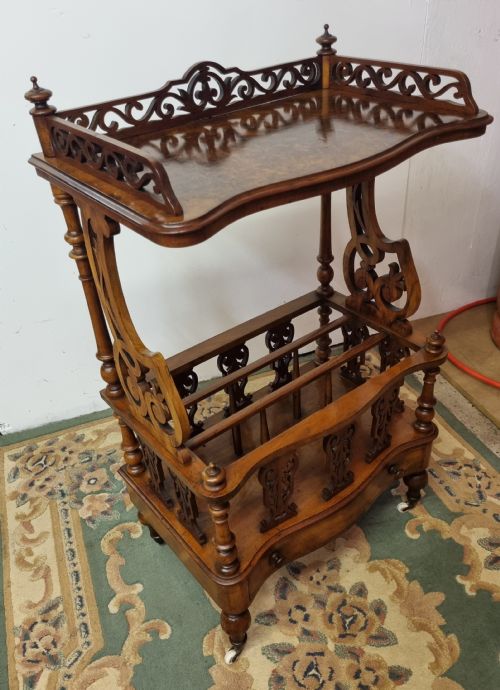
Cabinet-makers utilised solid walnut and figured burr walnut veneers applied to secondary timbers like pine and general wood substrates. Carpenters shaped decorative elements through hand carving, working the dense grain to create corbels, mouldings, and pierced galleries.
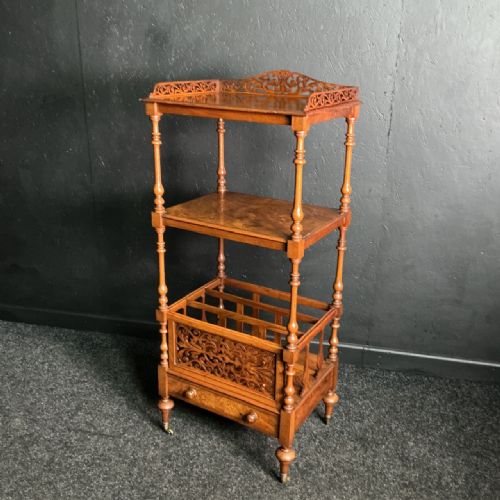
Many items integrate functional hardware such as brass mountings, or incorporate bevelled mirror glass into back panels and display sections. Turned wooden legs, applied mouldings, and tiered platforms define the structural assembly of these wall shelves and whatnots.
Carved Walnut Shelves Retail Price Guide 2026
Typical asking prices for carved walnut shelves among the pieces listed under this phrase on Sellingantiques today, from the lower quarter to the upper quarter. They describe what is for sale here now, not the wider market.
Listings feature walnut, burr walnut, glass, mirror glass, brass, pine, and timber across Victorian, Edwardian, and nineteenth-century periods.
What varies in quality
The character of the walnut veneer dictates the visual impact, with figured burr walnut offering complex, swirling grain patterns that distinguish superior examples from plain timber surfaces. Depth and precision in the hand carving separate standard production pieces from exhibition-grade work.
Structural complexity also defines the tier, from simple wall brackets to multi-tiered étagères featuring turned supports, glazed doors, or ormolu mounts. The integration of secondary materials, such as heavy brass fixtures and clear mirror glass, signals higher manufacturing standards.
Gabriel Viardot·German H.A.C.
The Carved Walnut Shelves Glossary
- Whatnot
- A piece of furniture consisting of a set of open shelves for displaying small objects, popular in the Victorian period. These tiered stands frequently feature turned columns and carved galleries.
- Burr walnut
- A veneer derived from the woody growths on walnut trees, prized for its swirling, highly figured grain patterns. Cabinet-makers used this material on the primary display surfaces of high-status furniture.
- Étagère
- A French piece of furniture with a series of open shelves for displaying ornaments. They appear in both freestanding formats and wall-mounted variations.
- Corbel
- A projecting bracket of stone, wood, or metal supporting a structure above. In this category, carved wooden corbels function as decorative wall brackets for display.
- Aesthetic Movement
- A late nineteenth-century design style that emphasised decorative arts for their visual beauty rather than narrative content. Pieces from this movement often display refined lines and Japanese-influenced carving.
Carved Walnut Shelves: Frequently Asked Questions
What periods do these carved walnut shelves represent?
The listings span the nineteenth and early twentieth centuries, with a strong concentration of Victorian and Edwardian pieces.
Maker dates and stylistic markers such as Aesthetic Movement details help assign pieces to specific decades between eighteen-fifty and nineteen-twenty.
How were wall brackets and whatnots used originally?
Victorian households utilised wall brackets and whatnots to display ceramics, small books, and decorative ornaments in reception rooms and hallways.
Tiered shelves allowed families to exhibit prized possessions vertically, saving floor space while enhancing interior decoration.
What is the difference between an étagère and a whatnot?
While both terms describe multi-tiered shelving units for display, étagère often points to French origins and lighter, more decorative framing.
Whatnot is the traditional English term for similar shelved furniture encountered frequently in nineteenth-century burr walnut.
How should I care for antique walnut furniture?
Keep walnut shelves away from direct sunlight and steady heat sources to protect the wood grain and prevent veneer lifting from the timber base.
Apply a light wax polish periodically to maintain the lustre of the polished walnut surface without building up excessive residue.