

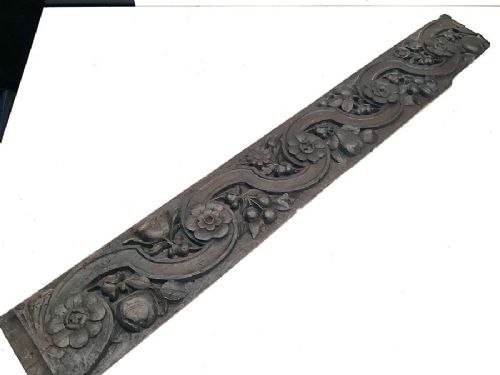


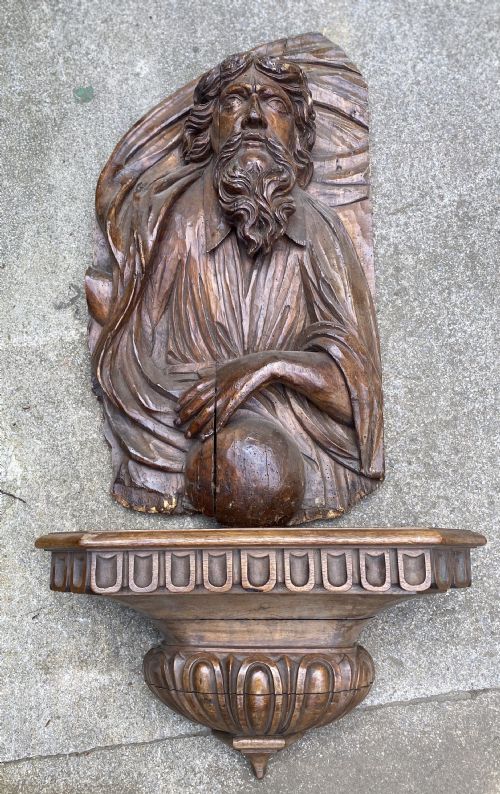


Carved Walnut Relief
Carved walnut relief pieces are sculptural wooden works shaped with deep pictorial scenes and architectural figures that bring tangible historic texture to a room.
Carved Walnut Relief
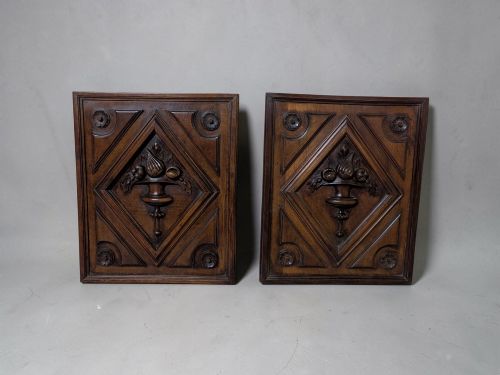
Carved walnut relief works encompass panels, plaques, and architectural fragments shaped from dense timber across multiple centuries. When searching for carved walnut relief, buyers encounter items ranging from sixteenth-century English Tudor panels and seventeenth-century Italian carvings to nineteenth-century Black Forest hunting scenes and French revival cabinets.
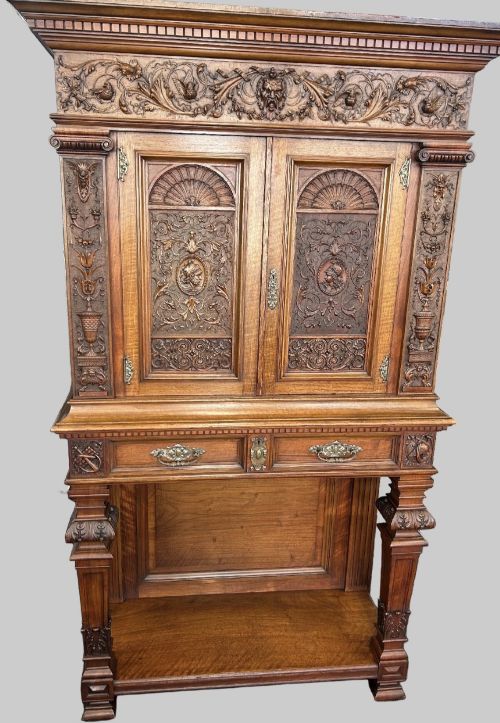
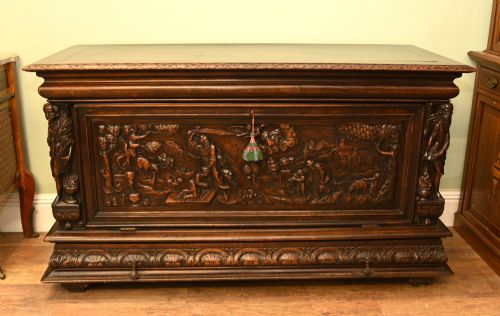
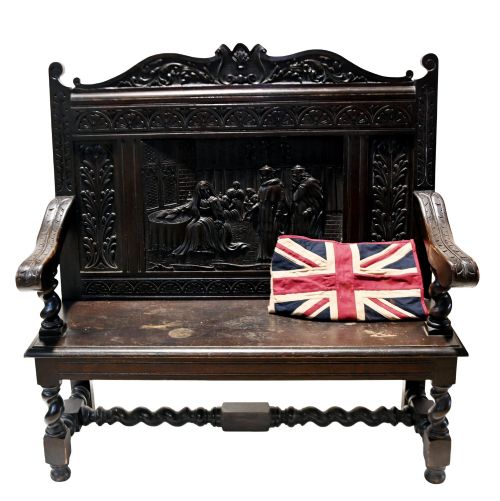
The objects themselves take varied forms, including wall plaques, armorial panels, figurative sculptures, and fitted furniture elements like buffets and coffers. Pieces from the nineteenth century frequently adopt Renaissance or Louis XIII revivals, incorporating classical motifs and deep pictorial depth into domestic settings.
Origins span across England, Italy, Germany, France, and Kashmir, reflecting diverse regional carving traditions. Buyers are most likely to meet nineteenth-century revival panels and architectural fragments on this page, alongside earlier seventeenth-century figurative works.
Variations in quality
Quality rests in the anatomical precision of figures, the depth of the undercut, and the crispness of the chisel work across the walnut surface. Master carvers achieved three-dimensional projection where limbs and foliage detach from the background board, whereas lesser examples remain flat and mechanically finished.
The choice of timber significantly affects the piece, with figured burr walnut and dense old-growth Italian walnut commanding greater visual presence than standard plain timber. Integrity of proportion and the retention of original surface patination distinguish workshop masterpieces from later decorative copies.
Carved Walnut Relief Retail Price Guide 2026
Typical asking prices for carved walnut relief among the pieces listed under this phrase on Sellingantiques today, from the lower quarter to the upper quarter. They describe what is for sale here now, not the wider market.
One extraordinary nineteenth-century panel captures a dog hunting scene so fiercely detailed that even the local hounds might pause to inspect it.
Gillows
The Carved Walnut Relief Glossary
- Terme
- A tapering pillar ending in a human bust or upper body at the top. These architectural supports frequently appear in sixteenth and seventeenth-century furniture.
- Armorial panel
- A carved wooden plaque displaying a coat of arms or heraldic insignia. Such panels often recorded family lineages and civic identities.
- Black Forest carving
- A style of highly naturalistic animal and woodland sculpture originating from nineteenth-century Switzerland and Germany. These pieces typically depict dogs, stags, and hunting motifs in deep relief.
- Gingerbread mould
- A large carved wooden board used for pressing festive biscuit dough. They feature intricate pictorial subjects like horsemen and figures.
Carved Walnut Relief: Frequently Asked Questions
How were carved walnut panels used originally?
These panels functioned primarily as architectural walling, overdoors, and decorative inserts within substantial furniture such as cabinets and buffets. Wealthy patrons commissioned them to display biblical scenes, heraldry, and classical motifs in domestic interiors.
Over time, many panels were detached from their original furniture or wall schemes to be framed and hung as independent works of art.
How do I date a carved walnut relief?
Dating relies upon stylistic markers, tool marks left by the carver, and the specific characteristics of the walnut timber. Sixteenth and seventeenth-century pieces often display distinct Tudor or Renaissance architectural phrasing and deep hand-chiselled tool paths.
Nineteenth-century revival works frequently mimic these earlier periods but utilise machine-assisted preparation or exhibit softer, more uniform surface patination.
How should I care for antique walnut carvings?
Maintain stable indoor humidity and keep walnut carvings away from direct heat sources and strong sunlight to prevent timber splitting. Gentle dusting with a dry, soft cloth preserves the original wax polish without stripping the historic finish.
Avoid applying modern silicone sprays or heavy oils, as these substances attract dust and darken the grain unnaturally.
What is the difference between high relief and low relief?
High relief carving projects sharply from the background plane, with major figurative elements almost detached as three-dimensional sculptures. This technique creates dramatic shadows and spatial depth.
Low relief, or bas-relief, keeps figures closer to the flat surface with shallow carving depths, commonly seen on smaller panels and decorative mouldings.