





Carved Walnut Parlor Table
A carved walnut parlor table brings nineteenth-century warmth into a room through rich timber and disciplined craftsmanship.
Carved Walnut Parlor Table
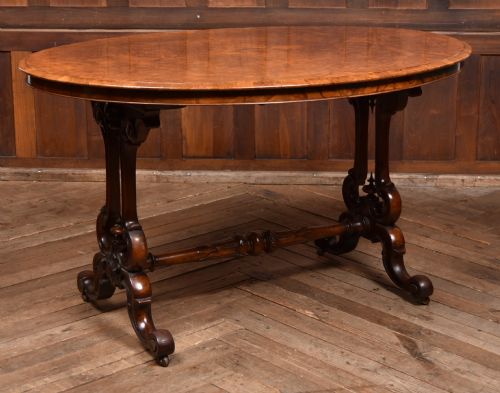
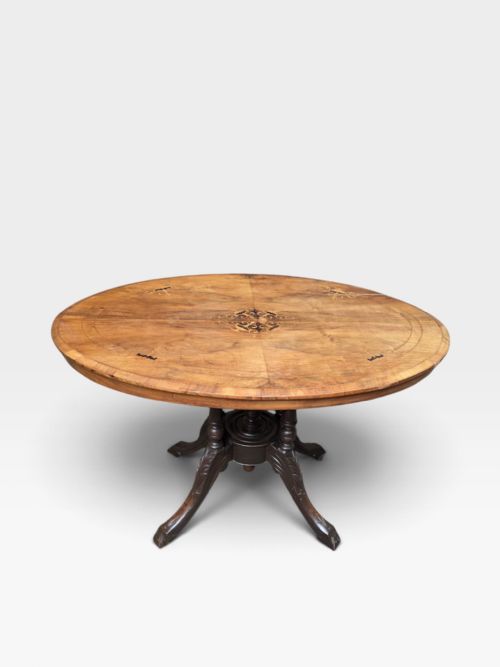
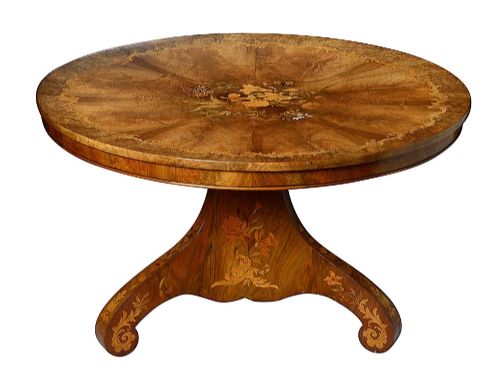
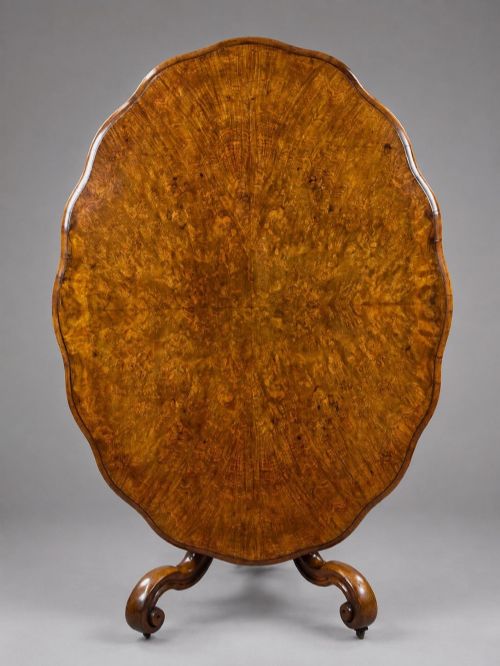
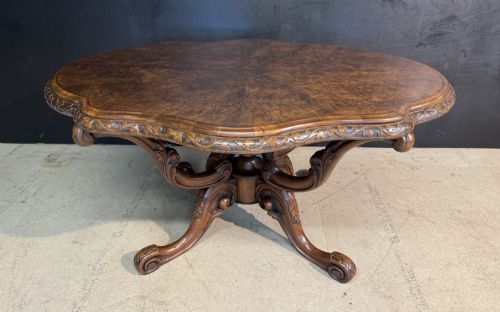
A carved walnut parlor table serves as a sturdy yet decorative centrepiece, frequently encountered on this page in Victorian incarnations from the mid to late nineteenth century. These pieces encompass various forms including round coffee tables, tilt-top surfaces, and expansive loo tables designed for central room placement.
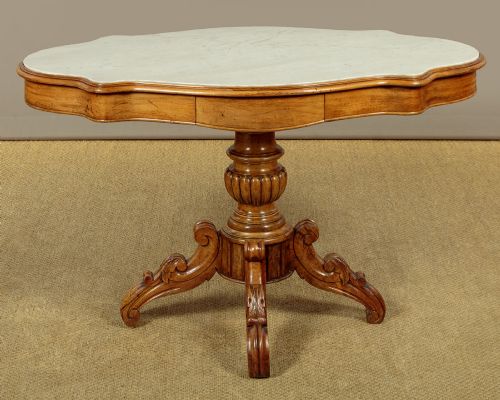
Makers often shaped these tables with oval or octagonal tops, mounting them on freestanding basket bases or cabriole legs. The primary function centres on domestic display and social gathering within the Victorian parlour.
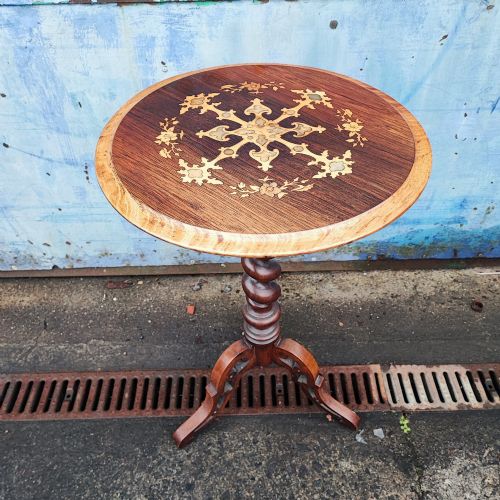
Alongside standard centre tables, occasional tables and window tables appear with specific decorative agendas. Buyers will notice that walnut and burr walnut dominate the selection, frequently paired with marquetry or boxwood inlay.
Materials and construction
Cabinet makers utilised solid walnut and figured burr walnut veneer over supportive secondary timbers to create richly grained table tops. Marquetry and boxwood inlay decorate the surfaces, requiring precise hand-cutting of contrasting woods.
Structural elements like pedestal and basket bases provide sturdy support for heavy marble inserts or solid timber tops. Brass fittings and ceramic castors appear on specific examples to facilitate movement across carpeted drawing rooms.
French polishing finishes the wood, sealing the grain to highlight the natural figure of the walnut. Tilt-top mechanisms employ robust timber catches and iron hinges to allow the surface to fold upright when space is required.
Carved Walnut Parlor Table Retail Price Guide 2026
Typical asking prices for carved walnut parlor table among the pieces listed under this phrase on Sellingantiques today, from the lower quarter to the upper quarter. They describe what is for sale here now, not the wider market.
Listings span the Victorian and Edwardian eras, showcasing walnut, burr walnut, and marble across occasional, centre, and loo table formats.
Distinctions in quality
The sophistication of the timber figure dictates the initial visual appeal, with tightly patterned burr walnut commanding greater attention than plain grain. Superior examples exhibit continuous, well-matched veneer panels across the entire table top rather than fragmented sections.
The precision of the marquetry and boxwood inlay reveals the artisan's competence, where tight joints and clean lines separate fine work from hurried production. Carved details on pedestals and cabriole legs show depth and crisp undercutting rather than shallow moulding.
Structural integrity rests on the stability of the central pillar and the soundness of the joints connecting the base to the top. Tables with heavy marble inserts require robust internal framing to prevent sagging over decades of use.
James Winter
The Carved Walnut Parlor Table Glossary
- Burr walnut
- A veneer sliced from the grotesque growth or knot of a walnut tree, prized for its swirling, highly figured grain patterns. Cabinet makers utilised this timber on prominent table tops to create dramatic visual movement.
- Marquetry inlay
- The art of applying decorative pieces of veneer to a structural surface to form intricate pictures or geometric patterns. Boxwood and contrasting timbers frequently feature in these nineteenth-century designs.
- Tilt top
- A table construction featuring a hinged mechanism that allows the horizontal surface to pivot vertically. This design enabled the furniture to be stored against a wall when floor space was needed.
- Loo table
- A large nineteenth-century centre table designed for card games such as loo, typically featuring a tilt top and a substantial pedestal base. They served as primary social surfaces in Victorian drawing rooms.
- Cabriole leg
- A furniture leg that curves outward in a convex arc and then bends inward in a concave arc, terminating in a decorative foot. Makers applied this classical form to tables and occasional seating.
- Aesthetic Movement
- A late nineteenth-century design style that emphasised visual beauty over narrative content, often incorporating ebony, coromandel, and subtle walnut contrasts. Pieces from this movement reject heavy Victorian ornamentation for cleaner lines.
Carved Walnut Parlor Table: Frequently Asked Questions
What is a parlor table used for?
These tables served as decorative display surfaces for lamps, books, and ornamental objects in nineteenth-century reception rooms. They also accommodated afternoon tea and social gatherings.
Larger variations functioned as game tables for cards and conversation. Their freestanding nature allowed placement in the centre of a room rather than against a wall.
Can I use a tilt top table daily?
Tilt top tables function well for everyday use provided the mechanical catch remains secure and stable. The folding mechanism requires careful handling to protect the hinges and prevent sudden drops.
Placing these tables on level flooring prevents undue stress on the central pedestal and leg joints. Avoid placing excessive weight on the outer edges of tipped or unlocked surfaces.
What distinguishes marquetry from plain inlay?
Marquetry involves assembling a mosaic of various wood veneers to create pictorial or complex geometric compositions across the entire surface. Plain inlay typically inserts simple lines or discrete motifs into a solid background.
Marquetry requires advanced woodworking skill to fit contrasting timbers tightly together. This detailed work usually indicates a higher tier of nineteenth-century cabinet making.