

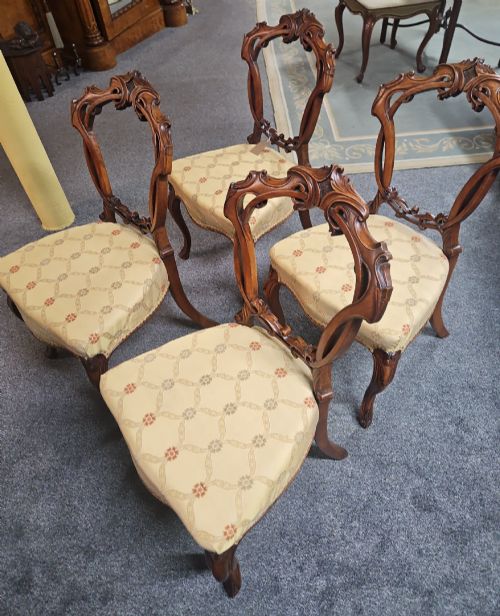
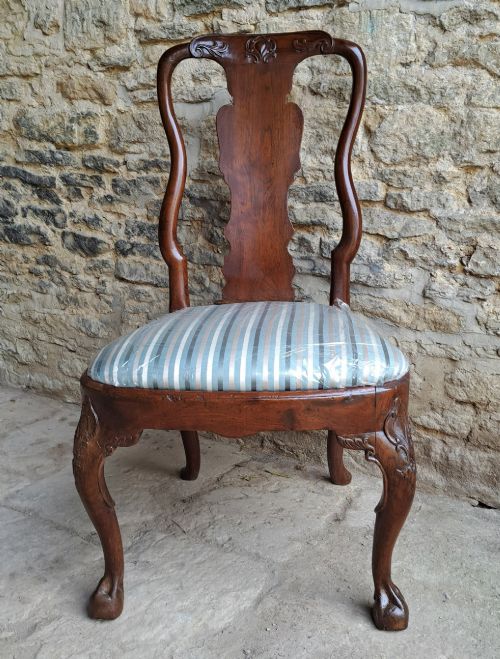
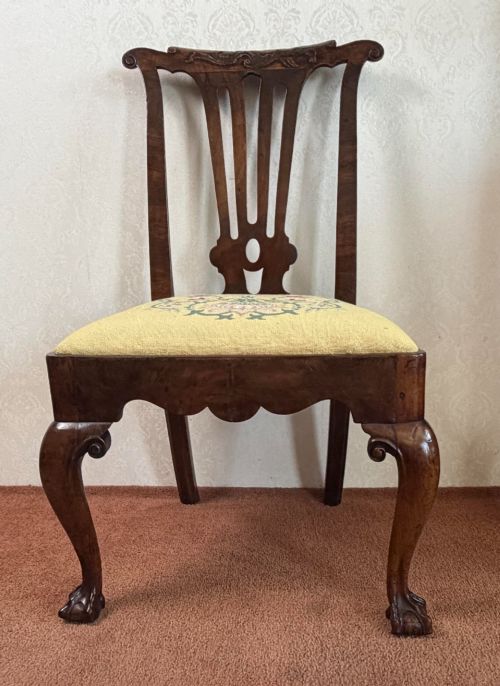
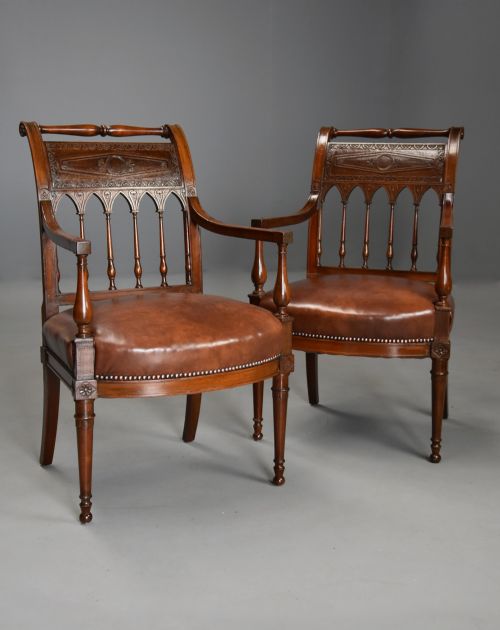
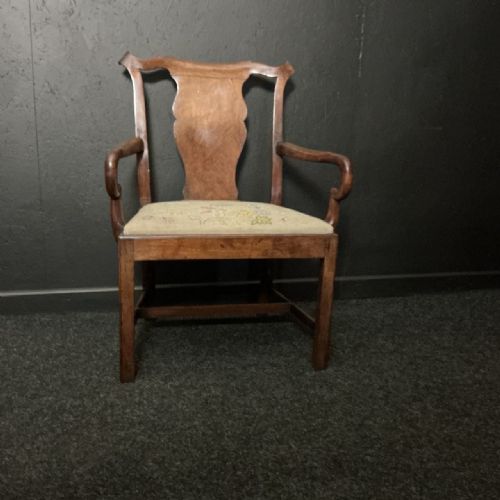
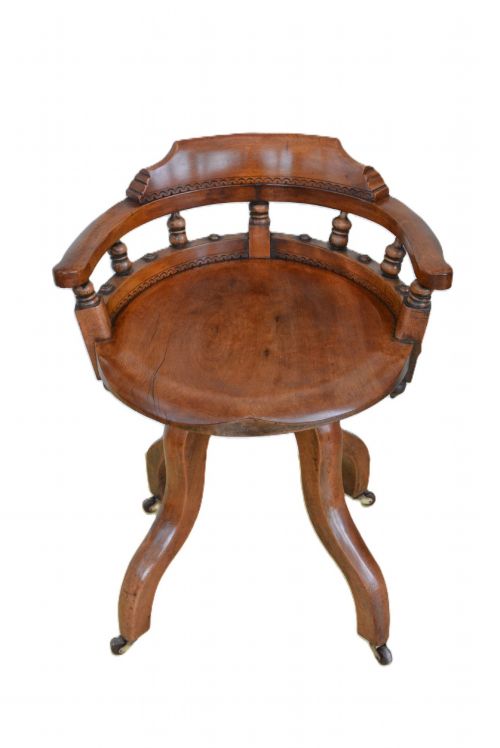


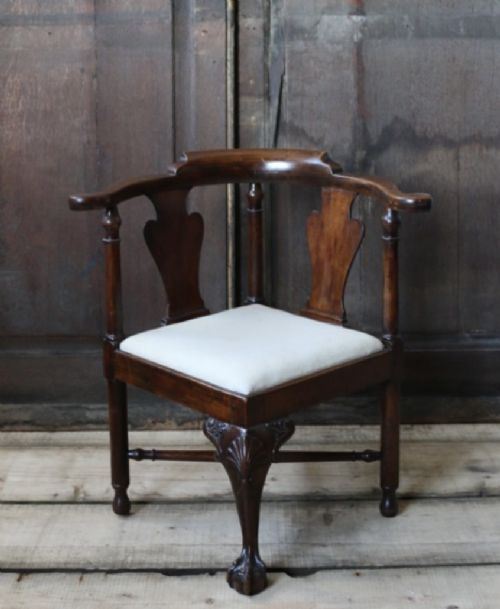
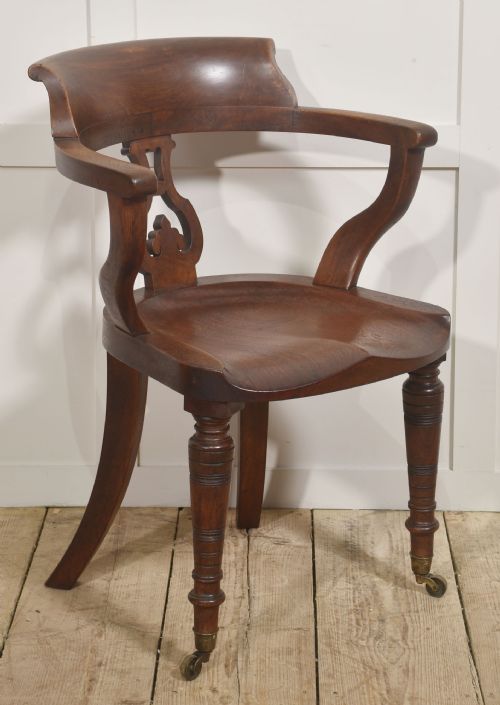
Carved Walnut Desk Seat
A carved walnut desk seat brings rich timber and period form to a study, offering the solid comfort required for daily work.
Carved Walnut Desk Seat
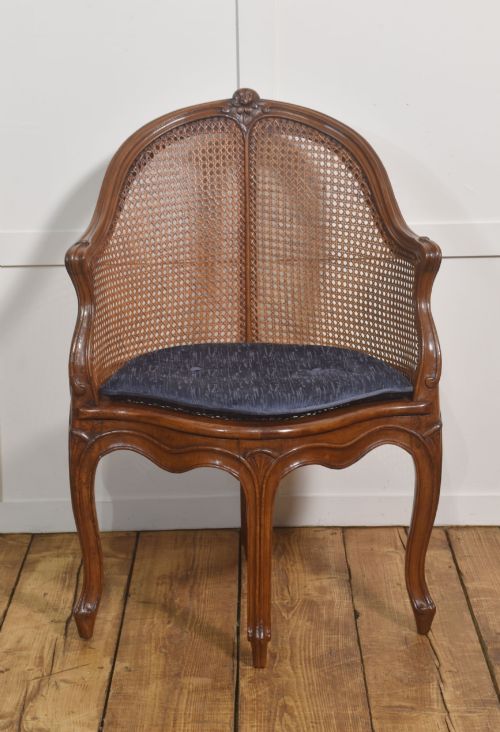
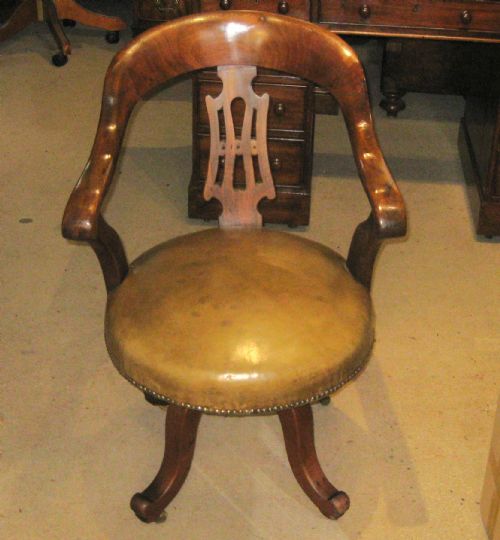
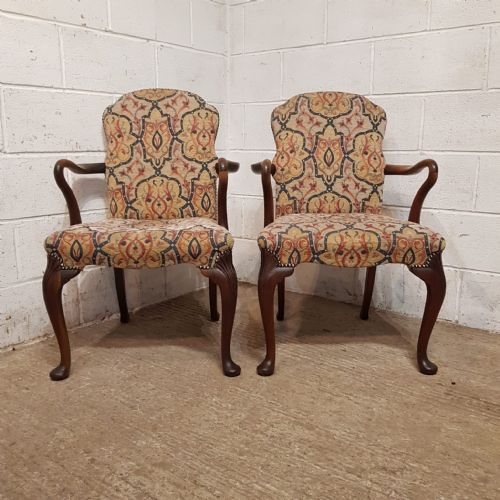
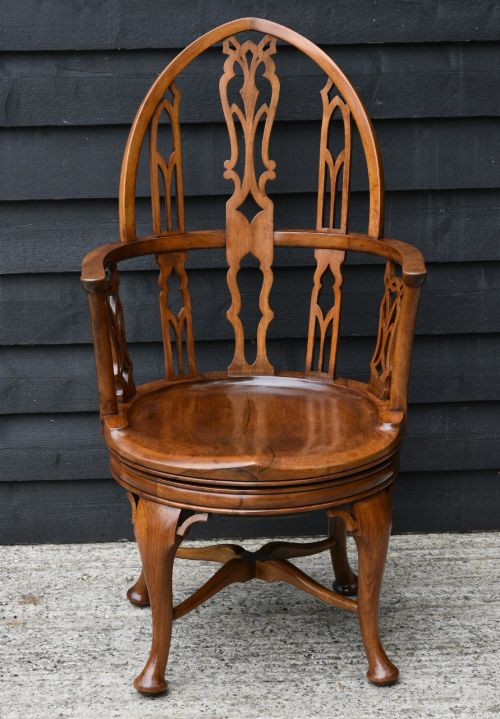
A carved walnut desk seat covers a varied group of heavy timber seating designed for study and office use, stretching from early eighteenth-century examples to later revivals. Buyers seeking a carved walnut desk seat encounter forms ranging from revolving library chairs and swivelling office seats to traditional side chairs and open armchairs suited to a writing table.
The selection spans several distinct eras, drawing heavily on eighteenth-century Georgian and Queen Anne designs alongside nineteenth-century Victorian pieces and later revivals. Makers of these periods utilised durable hardwoods and traditional joinery to produce sturdy seating that accommodates functional workspace requirements.
Origin and style vary widely across the inventory, with English, French, and Italian influences appearing in the framing, carving, and overall proportion. Pieces take the shape of corner chairs, tub chairs, and library armchairs, each adapting the dense grain of walnut to support long hours at a desk.
Materials and construction methods
Construction relies primarily on solid walnut timbers, prized for their rich colour and ability to hold crisp carved detail along the crest rails, splats, and cabriole legs. Workshops combined mortise and tenon joinery with sturdy framing to ensure stability, particularly in swivelling and revolving desk seats that experience regular mechanical movement.
Upholstery and secondary materials play a vital role in completing each seat, incorporating leather, velvet, tapestry, needlepoint, cane, and textile drop-in pads. Brass fittings and hardware appear on revolving mechanisms and office adaptations, complementing the dark tones of the polished wood.
Children join the study ranks via diminutive walnut chairs, proving that eighteenth-century scholars came in smaller packages too.
Distinctions in craftsmanship and preservation
Quality rests in the depth and crispness of the carved detail, where sharp hand-tool work on walnut frames distinguishes superior pieces from simpler commercial output. The integration of revolving mechanisms and the original integrity of the timber frame dictate the overall standard of survival.
The choice of covering material and the preservation of original upholstery elements, such as leather or needlepoint inserts, significantly influence the character of the piece. Uniformity in timber grain and the absence of clumsy structural repairs separate fine examples from routine workshop stock.
Charles Tozer
The Carved Walnut Desk Seat Glossary
- Cabriole leg
- A furniture leg that bends outward in a convex curve and tapers inward to a foot, typical of eighteenth-century design. This shape draws inspiration from animal limbs and appears frequently on quality walnut chairs.
- Drop-in seat
- A removable wooden frame upholstered separately and dropped into the seat rails of a chair. This construction method allows for straightforward reupholstering without dismantling the main timber frame.
- Splat
- The vertical central strip of wood in the back of a chair, often carved or shaped in walnut examples. It provides structural support while offering a primary surface for decorative carving.
- Cane
- Woven peeled rattan used to form resilient panels for chair seats and backs. It provides a lightweight, breathable surface that contrasts with solid timber frames.
- Needlepoint
- Stitched textile work executed on canvas, commonly utilised for historical chair seat covers. It introduces patterned colour and texture to walnut framing.
Carved Walnut Desk Seat: Frequently Asked Questions
How do I identify a Georgian desk seat?
Georgian examples often display restrained proportions, rich walnut grain, and classic elements such as cabriole legs or ribbon backs. The carving remains sharp and structural, reflecting the prevailing furniture fashions of the eighteenth century.
Makers of this era focused on robust joinery and functional comfort tailored for writing and study. Examining the underside and joint construction helps confirm the period origin.
Are these chairs suitable for daily use?
Many of these pieces were built for active libraries and studies, making them structurally capable of contemporary workspace duties. Solid walnut frames and supportive arm designs provide reliable daily seating.
Care should be taken with antique mechanisms on revolving models and delicate upholstery fabrics. Regular maintenance preserves both the timber and the working parts.
What upholstery materials are common?
Upholstery on these seats typically includes leather, velvet, needlepoint, tapestry, and simple textile fabrics. Drop-in upholstered pads and fixed squab cushions also appear frequently across the inventory.
Caned panels offer an alternative breathable surface on specific chair backs and seats. These materials vary depending on the specific period and intended function of the furniture.
How do Victorian versions differ from earlier ones?
Victorian interpretations often incorporate heavier carving, gothic revival motifs, or mechanical innovations such as swivelling office bases. These adaptations responded to nineteenth-century workspace requirements while retaining traditional walnut construction.
Earlier eighteenth-century pieces favour cleaner lines and simpler structural forms. Comparing the carving style and hardware clarifies the chronological distinction between eras.