





Carved Vanity Unit
A carved vanity unit bridges the gap between historical craft and modern utility, bringing genuine period character to a bedroom or wash space.
Carved Vanity Unit
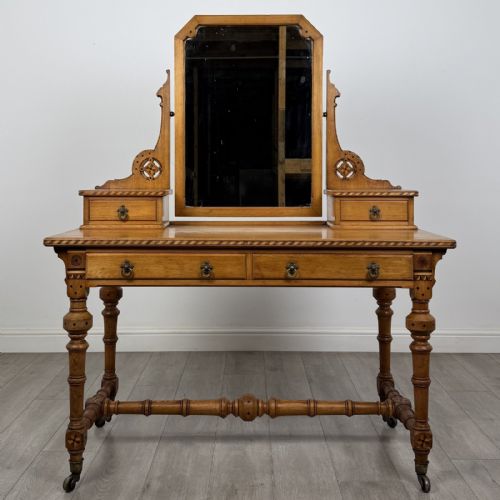
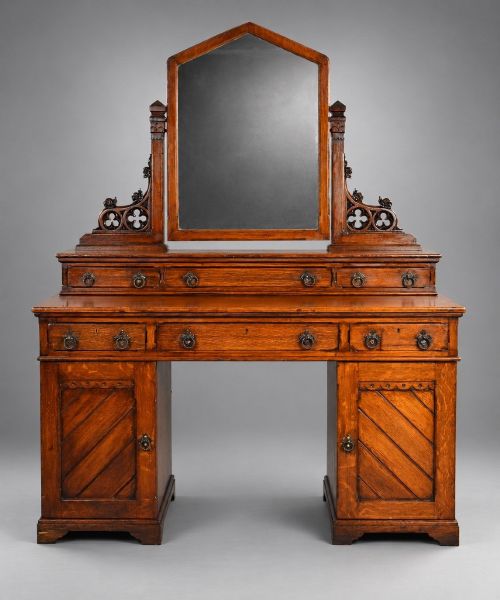
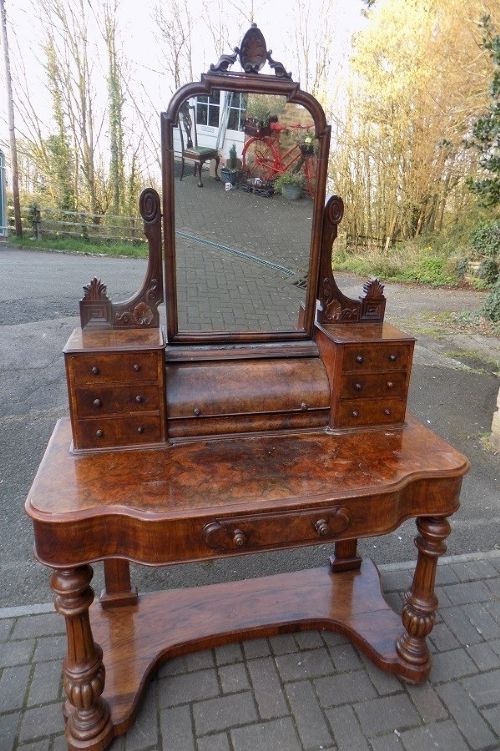
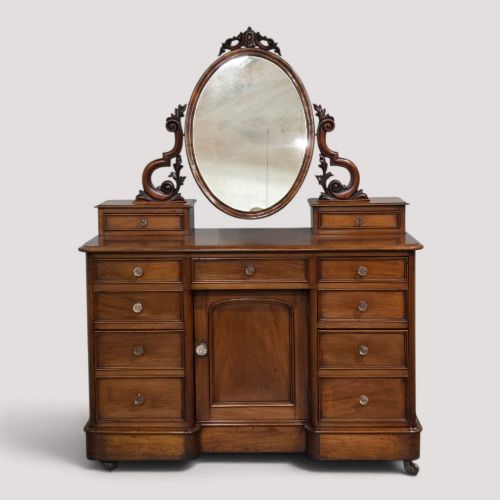
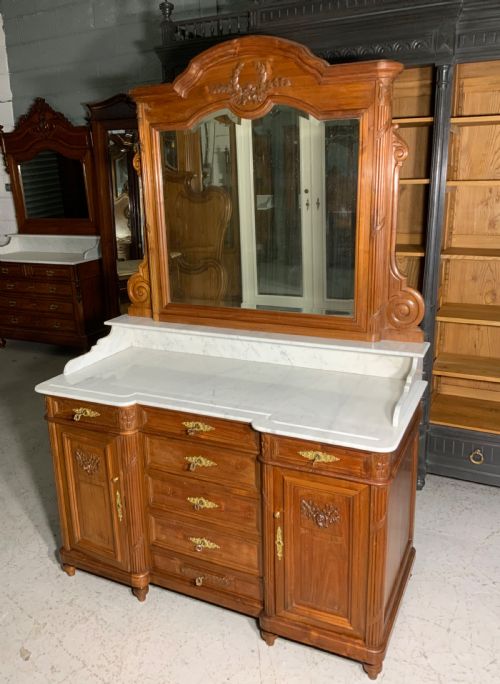
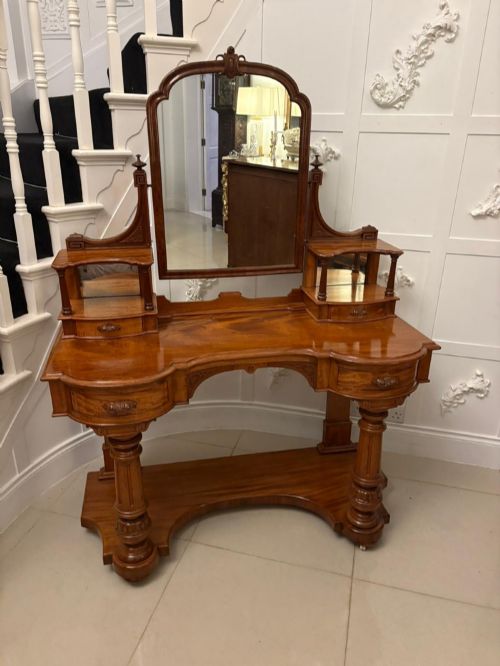
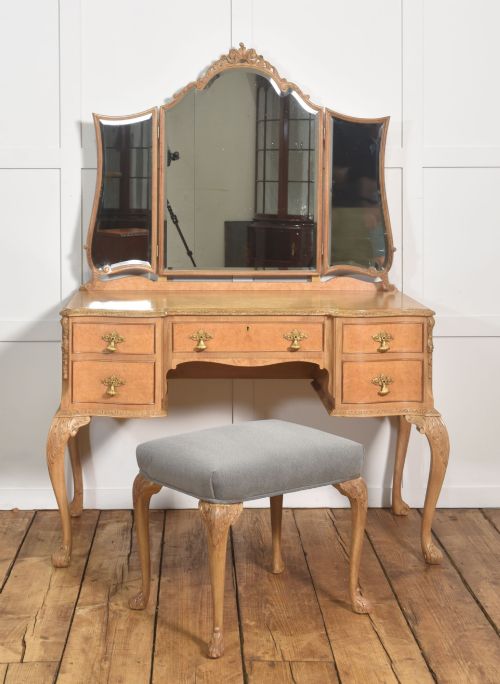
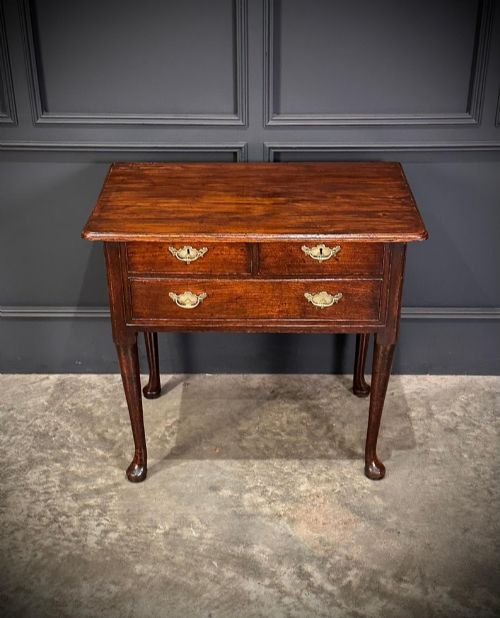
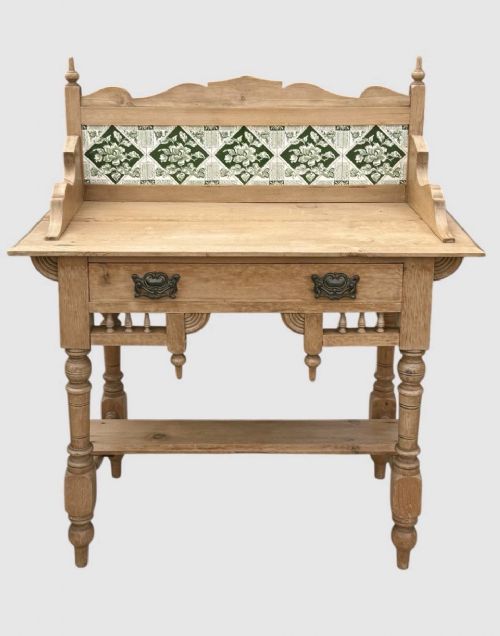
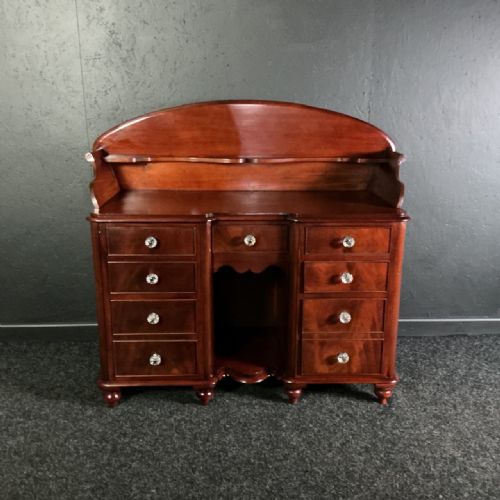
When you search for a carved vanity unit, you are looking at nineteenth- and early twentieth-century dressing tables, washstands, and lowboys adapted or built for personal grooming and ablutions. These pieces range from Victorian mahogany and burr walnut dressing tables to Edwardian marble-topped washstands and French oak designs.
The most common examples on this page are Victorian mahogany dressing tables and marble-topped washstands dating from the 1860s to the 1910s. They combine functional storage drawers and basins with decorative carved details, French Rococo Revival curves, or sturdy barley twist supports.
How they were made
Cabinet makers utilised dense hardwoods such as mahogany, walnut, burr walnut, and oak to construct the carcasses and frames of these pieces. These timbers were selected for their durability and grain pattern, often enhanced by marquetry inlay or French polishing.
Functional surfaces frequently incorporated inset marble tops and ceramic basins to handle moisture in washstands, paired with brass hardware, glass mirrors, and tile splashbacks. Carving was executed by hand, yielding deep relief work on drawer fronts, mirror supports, and legs.
Carved Vanity Unit Retail Price Guide 2026
Typical asking prices for carved vanity unit among the pieces listed under this phrase on Sellingantiques today, from the lower quarter to the upper quarter. They describe what is for sale here now, not the wider market.
Materials documented across the pieces include solid mahogany, burr walnut, oak, marble, ceramic, brass, and glass.
What varies in quality
The distinction between standard pieces and the finest examples lies in the selection of timber figures, such as burr walnut, and the depth of the hand carving. Superior pieces display crisp, articulate detailing on the mirror frames and legs rather than shallow, mechanical stamping.
Original components dictate higher quality, meaning that surviving marble slabs, glass plates, ceramic elements, and brass handles remaining intact alongside the timber structure elevate the integrity of the piece.
The Carved Vanity Unit Glossary
- Washstand
- A piece of bedroom furniture designed to hold a washbasin, jug, and toiletries. Many surviving examples feature marble tops and tiled splashbacks.
- Duchess dressing table
- A large Victorian dressing table featuring a large central mirror flanked by smaller drawers or trinket boxes, supported on scrolled legs.
- Burr walnut
- Timber taken from a walnut tree growth where the grain has grown in a deformed, swirling pattern. It produces highly decorative veneer surfaces.
- Lowboy
- A small oak or walnut table with drawers, originating in the eighteenth century and often used for grooming or writing.
Carved Vanity Unit: Frequently Asked Questions
Can I use an antique washstand as a modern bathroom basin unit?
Many buyers adapt marble-topped washstands for modern plumbing by mounting vessel basins and running pipes through the wooden cabinetry.
Because the original timbers and marble were built to withstand moisture, they handle contemporary bathroom conversions well with proper sealing.
How do I tell a Victorian dressing table from an Edwardian one?
Victorian dressing tables tend to use heavier, deep-toned mahogany or burr walnut with elaborate carved mirror supports and rich French polish. Edwardian pieces often lean towards lighter oak, simpler satinwood inlay, or clean lines reflecting changing domestic fashions.
Examining the drawer construction and mirror framing usually reveals the shift from mid-century Victorian exuberance to Edwardian restraint.
What is the difference between a dressing table and a duchess dressing table?
A standard dressing table focuses on a singular large mirror and practical drawer space for daily storage and primping. A duchess dressing table incorporates a towering superstructure with multiple small tier drawers surrounding a grand central mirror.
Duchess variants command more visual weight in a bedroom and offer significantly more display surface for trinkets.
How do I care for the marble top on an antique washstand?
Marble surfaces require regular wiping with a soft, damp cloth and gentle, pH-neutral soap to prevent staining from water or cosmetics. Acidic liquids like lemon juice or vinegar will etch the polished stone surface and must be cleaned up immediately.