
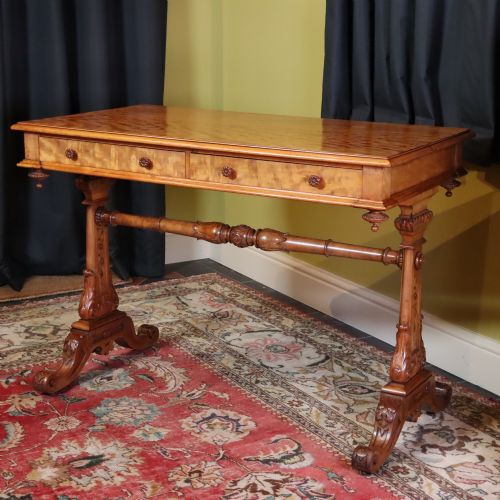
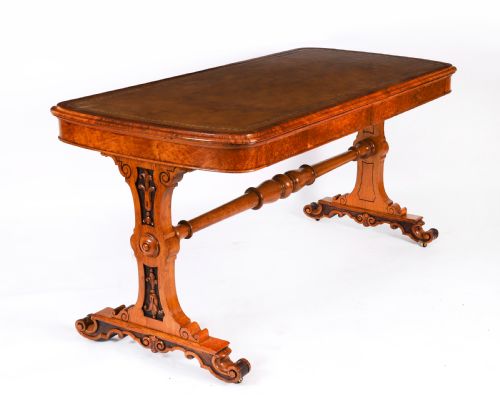
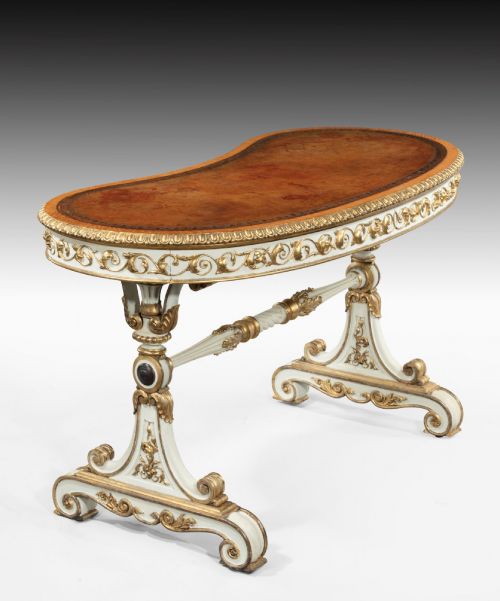
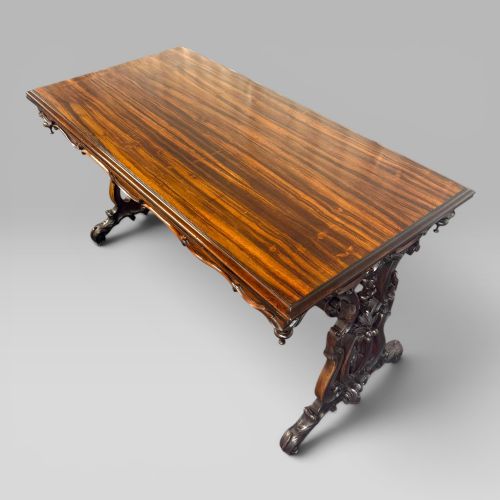
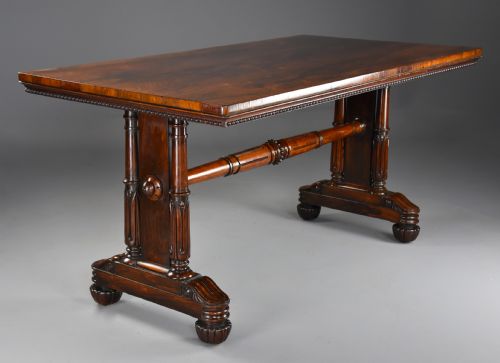
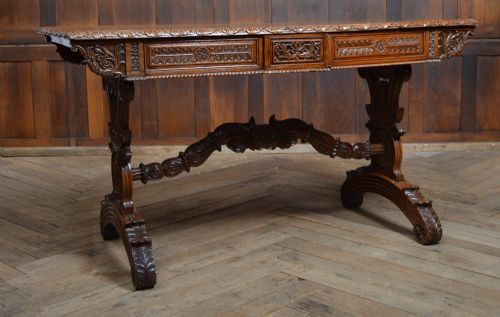
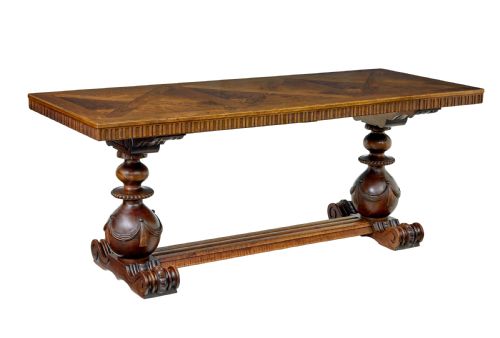

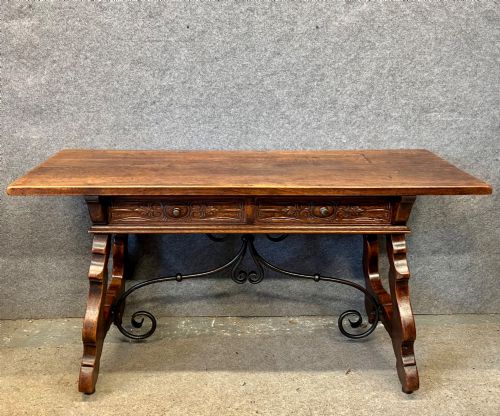

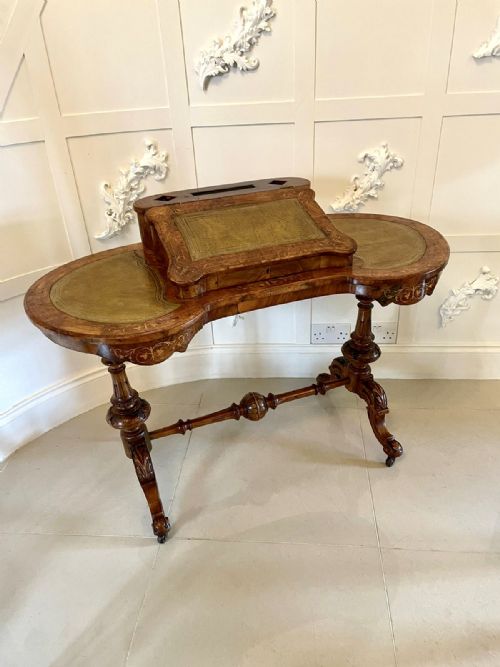


Carved Trestle Writing Desk
A carved trestle writing desk brings sculptural timber and steady support to a room, offering a generous workspace grounded in period character.
Carved Trestle Writing Desk
A carved trestle writing desk or library table combines substantial timber framing with a dedicated surface for correspondence and reading. The pieces seen here span the seventeenth century through the early twentieth century, taking in Regency, Victorian, and Gothic Revival aesthetics.
Most examples lean towards nineteenth-century mahogany, rosewood, and walnut forms designed to stand freely in the centre of a room. Makers from these periods utilised sturdy pillar supports, shaped ends, and intricate underframe carving to elevate a functional desk into a principal room feature.
Buyers will encounter freestanding writing tables and library tables that double as writing desks, often featuring inset leather tops and turned or carved stretchers. These descendants of earlier library tables balance architectural presence with everyday usability.
How they were made
Cabinetmakers constructed these writing desks using dense native and exotic timbers such as mahogany, rosewood, pollard oak, and burr walnut, frequently applied as veneers over stable secondary woods. Flame mahogany and satinwood introduced rich grain patterns, while brass fittings and leather writing surfaces added tactile contrast.
Carving was executed by hand, defining the Gothic tracery, scrollwork, and foliate details seen on nineteenth-century supports and friezes. Joinery relied on traditional mortise and tenon frames to ensure the substantial trestle ends supported the heavy timber tops without warping.
Periods represented span from seventeenth-century Spanish walnut tables to early twentieth-century Scandinavian walnut desks.
What varies in quality
The distinction between ordinary and exceptional pieces lies in the choice of timber and the ambition of the carved ornament. Figured veneers like pollard oak, zebrawood, and burr walnut elevate a desk's visual depth, whilst crisp, deeply undercut carving distinguishes workshop-produced furniture from simpler regional output.
Proportion and structural honesty also dictate distinction. The finest examples maintain balanced scale across freestanding bases, integrating drawers and turned columns seamlessly so the desk holds presence from every angle.
Gillows·Holland and Son·Currie and Co·Gillingtons of Dublin·Charles Bevan
The Carved Trestle Writing Desk Glossary
- Trestle
- A supporting framework consisting of a horizontal beam supported by two pairs of sloping legs. This architectural base provides stability without bulky corner posts.
- Library table
- A large freestanding table used for reading and writing, finished on all sides so it could sit in the centre of an apartment. These often served the same function as writing desks in grand interiors.
- Pollard oak
- Oak timber taken from trees that have been pollarded, producing a dense, knotty grain pattern prized by nineteenth-century cabinetmakers. It creates a mottled surface texture full of movement.
- Gothic Revival
- An architectural and decorative style drawing on medieval ecclesiastical forms, featuring pointed arches, tracery, and heavy carved mouldings. It gained prominence during the nineteenth century.
- Frieze
- The horizontal band beneath the top of a table or desk, frequently housing one or more drawers and decorated with carved details or marquetry.
Carved Trestle Writing Desk: Frequently Asked Questions
Where should I place a freestanding desk?
These tables are finished on all four sides, making them ideal for the middle of a study or drawing room rather than pushed against a wall. Their carved trestle ends and polished backs reward a central position.
Ensure there is enough clearance around the base to walk freely and pull out a chair comfortably without obstructing doorways or foot traffic.
How do I care for an antique leather writing insert?
Keep leather tops away from direct sunlight and excessive heat to prevent the material from drying out and cracking. Dust gently with a dry, soft cloth.
Avoid using harsh modern chemical cleaners or excessive water, which can stain the hide and damage the surrounding timber edge moulding.
How do I distinguish Regency from Victorian desks?
Regency pieces often display restrained classical lines, rosewood or mahogany veneers, and brass inlay inspired by antique Roman and Greek forms. They feel lighter and more linear in their proportions.
Victorian desks tend to be heavier, featuring denser carvings, Gothic Revival motifs, or robust burr walnut and oak timbers designed to command large nineteenth-century rooms.
Can I use a library table as a modern desk?
Many nineteenth-century library tables match the height and surface area of contemporary executive desks, making them practical for daily laptop and paperwork use. Their frieze drawers offer convenient storage for modern supplies.
Check the knee clearance beneath the frieze rails to ensure your office chair fits comfortably underneath before settling on a permanent workspace.