

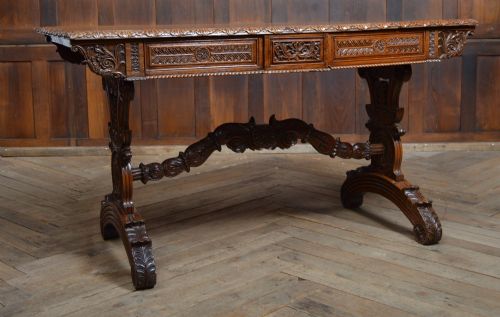
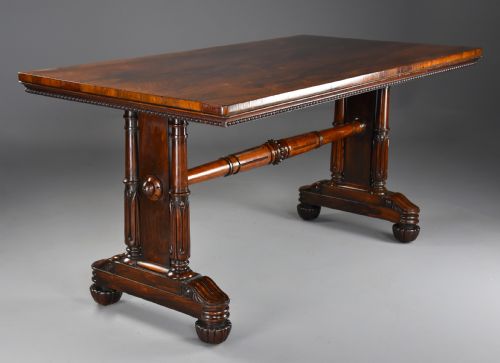
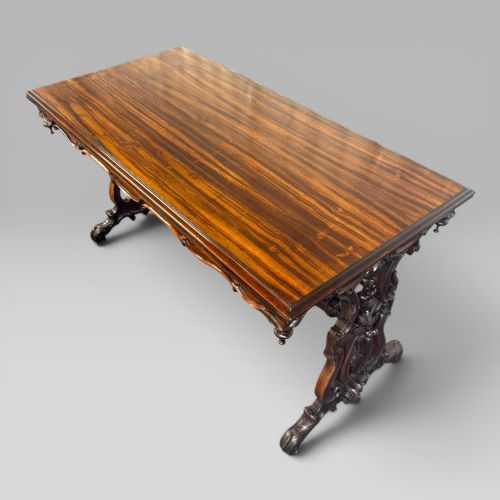

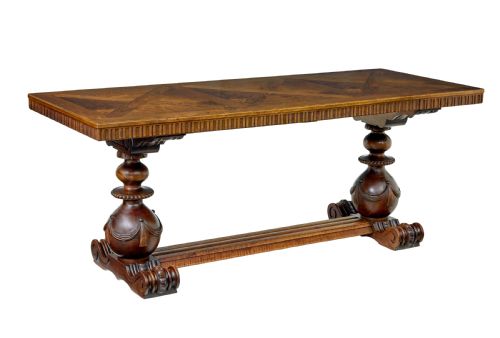


Carved Trestle Library Table
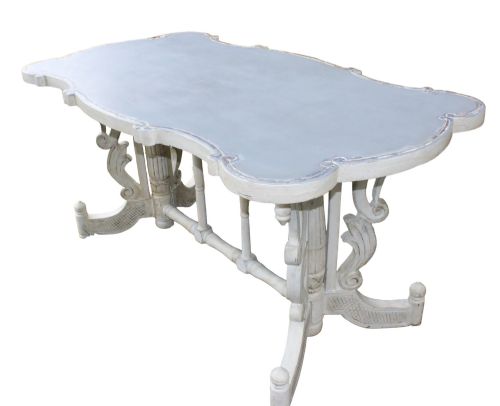
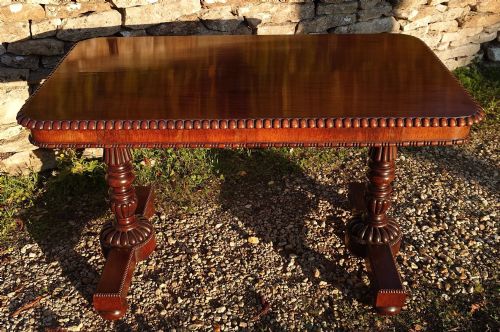
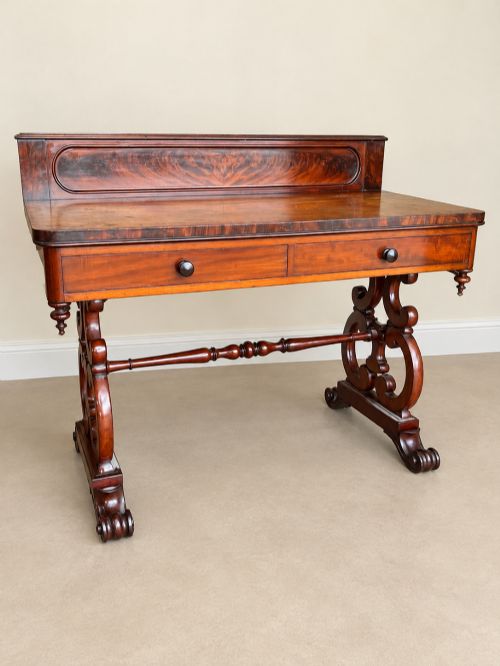
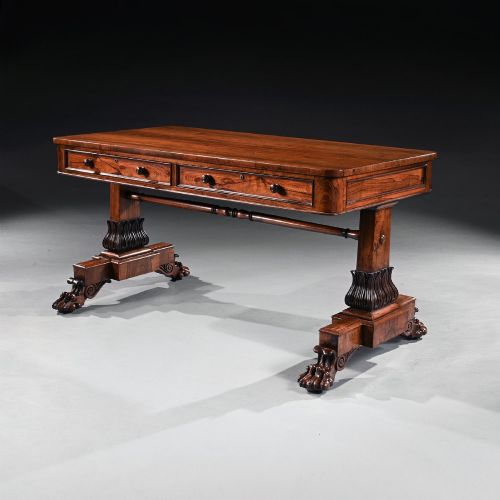
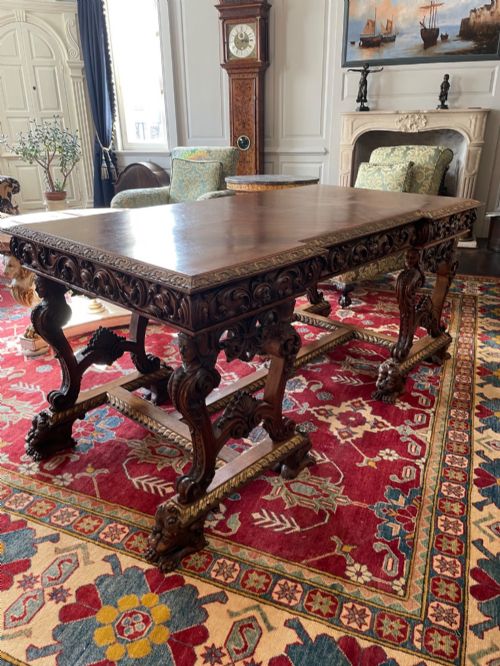
These carved trestle library table examples bring substantial nineteenth-century timber work and sturdy pedestals into a room.
Carved Trestle Library Table
A carved trestle library table serves as a heavy-duty writing or display surface supported by substantial end pedestals rather than four simple legs. These forms appear predominantly across nineteenth-century styles, including Regency, William IV, and Victorian iterations.
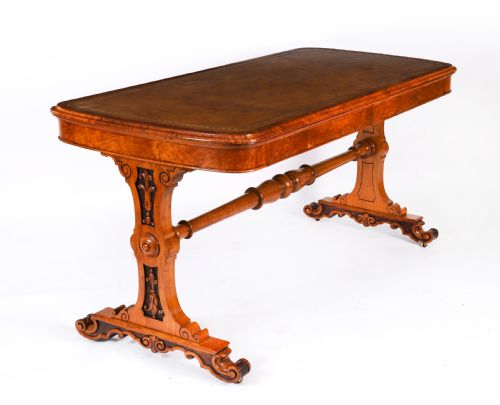
Makers often shaped these tables from dense hardwoods like mahogany, rosewood, and walnut, frequently incorporating leather inserts or marquetry details into the top. Buyers regularly encounter pieces designed to stand free in the middle of a room rather than pushed against a wall.
Materials and construction
Cabinetmakers utilised rich timber veneers such as pollard oak, zebrawood, and flame mahogany over sturdy secondary woods, applying hand-carved ornamentation to the trestle supports. Brass castors frequently conceal beneath the heavy feet to allow movement across heavy carpets.
Joinery techniques rely on solid framing and pegged joints to bear the considerable weight of the thick timber tops and elaborate central stretchers. Giltwood accents, ivory paintwork, and brass fittings appear across several Regency and William IV examples.
Carved Trestle Library Table Retail Price Guide 2026
Typical asking prices for carved trestle library table among the pieces listed under this phrase on Sellingantiques today, from the lower quarter to the upper quarter. They describe what is for sale here now, not the wider market.
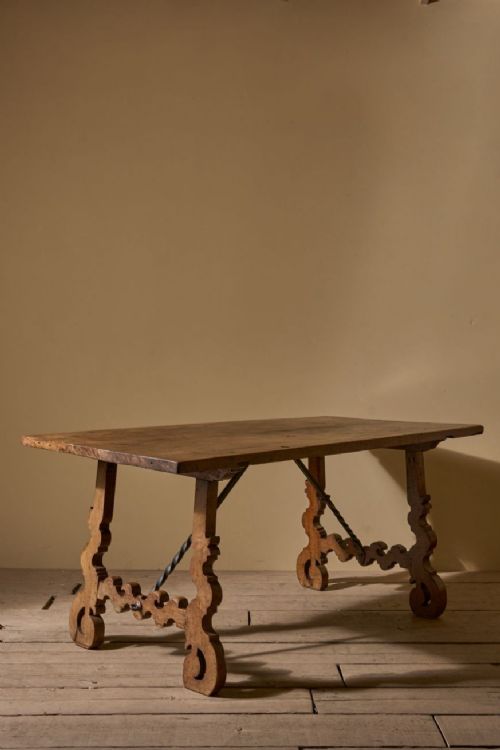
Listings span from the eighteenth century to the early twentieth century, encompassing Spanish Baroque, Regency, Gothic Revival, and Victorian styles.
Assessing the craftsmanship
The crispness of the hand-carving on the trestle ends separates standard production from exceptional workshop output. Deep, undercut foliage and well-defined scrollwork indicate skilled labour rather than routine manufacturing.
Timber selection dictates the visual impact, with highly figured grains, uniform veneer matching, and patinated solid walnut commanding greater attention. The structural stability of the central stretcher and the integrity of the writing surface determine long-term durability.
Gillows·Holland and Son·Gillingtons of Dublin·Currie and Co
The Carved Trestle Library Table Glossary
- Trestle
- A supporting structure consisting of a horizontal beam fixed to two splayed upright feet. This design allows generous legroom beneath heavy writing surfaces.
- Library table
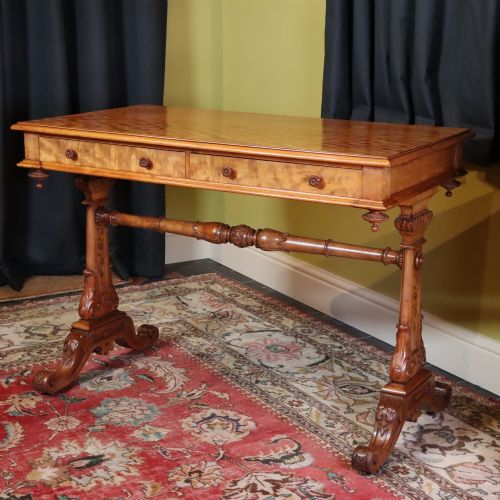
- A large freestanding table designed for the storage and consultation of books. These pieces typically feature drawers integrated into the frieze.
- Centre table
- A freestanding table finished on all sides to stand in the middle of a room. They frequently share dimensions and forms with library tables.
- Pollard oak
- Timber taken from the upper branches of pollarded trees, yielding a dense burr pattern. Cabinetmakers valued this wood for decorative drawer fronts and crossbanding.
- Frieze
- The horizontal band situated immediately beneath the top edge of the table. Drawers are frequently housed within this structural section.
Carved Trestle Library Table: Frequently Asked Questions
How do I use a library table today?
These tables function effectively as large desk spaces or central display surfaces in home studies and living rooms. Their generous proportions provide ample room for computers, paperwork, or decorative objects.
The finished backs allow them to float in the middle of an interior rather than sit flush against a wall. The built-in drawers also offer practical storage for daily stationery.
Are these tables sturdy enough for daily work?
Nineteenth-century library tables were built from dense hardwoods like mahogany and oak to withstand heavy daily use. Their substantial trestle frames provide exceptional rigidity compared to standard four-legged tables.
Most examples incorporate heavy timber stretchers between the uprights to prevent wobble. Regular placement away from direct heat sources maintains the stability of the original joinery.
How do I distinguish Regency from Victorian examples?
Regency tables generally display cleaner classical restraint, often featuring rosewood veneers, brass inlay, and subtle reeding on the supports. The lines tend to reflect architectural principles derived from ancient Greek and Roman design.
Victorian pieces frequently showcase heavier carving, darker walnut or pollard oak timbers, and more exuberant revival styles such as Gothic or Rococo. The scale also tends to increase in the later decades of the nineteenth century.
What maintenance do antique timber tables require?
Routine dusting with a dry, soft cloth preserves the polished surface and prevents dust accumulation in carved crevices. Avoiding excessive moisture and sudden temperature changes protects the aged timber and delicate veneers.
Applying a traditional beeswax polish occasionally nourishes the grain and enhances the natural patina. Leather writing inserts benefit from specialised balms to prevent cracking over time.