




Carved Stone Lighting Shade
These carved stone lighting shade examples bring warmth through translucent minerals, offering period illumination for classical and modernist interiors alike.
Carved Stone Lighting Shade
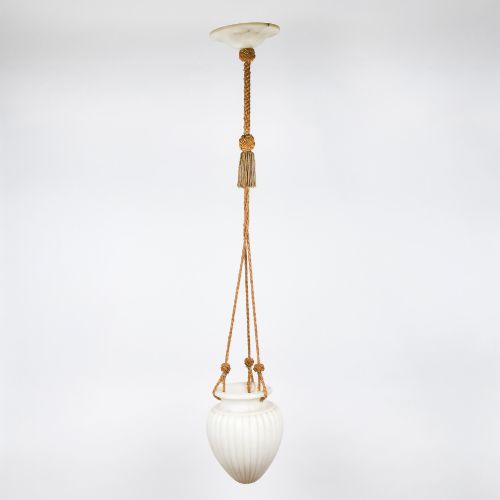
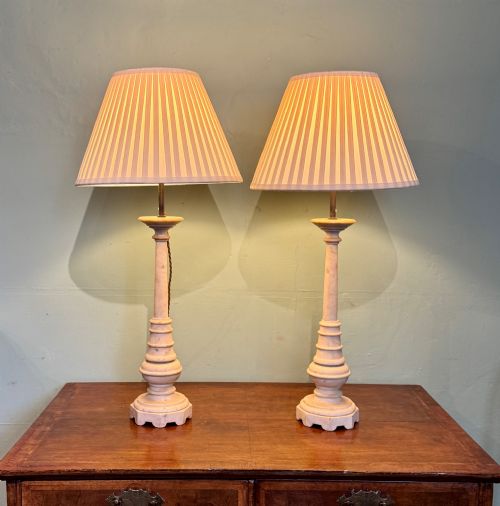
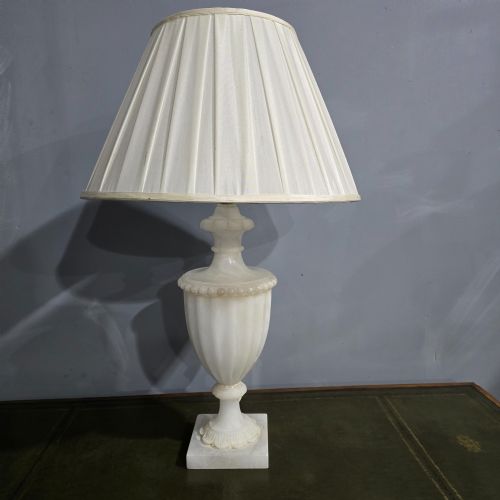
A carved stone lighting shade encompasses architectural and decorative fittings fashioned from minerals such as alabaster, marble, and onyx. When you search for a carved stone lighting shade, you encounter table lamps, hanging dish lights, ceiling lights, and pendant lights originating from the nineteenth and early twentieth centuries. These fixtures diffuse light through natural veining, creating a soft glow that metal or glass shades cannot replicate.
The versions you are most likely to meet on this page date from the nineteen-hundreds through the nineteen-thirties, reflecting Neoclassical, Classical Revival, and Art Deco design vocabularies. Many examples take the form of heavy table lamps or suspended bowls designed to light principal rooms. Italian and Swedish workshops dominate the output, favouring pure white alabaster and shaped marble forms.
How they were made
Makers shaped these fixtures by turning and carving solid blocks of alabaster, marble, and onyx on lathes or by hand. The reduction of dense stone requires immense skill to achieve the thin walls necessary for light to pass through the material.
Metal components such as brass fittings, chains, and braided fabric cords were integrated to suspend or support the heavy stone bowls and columns. Artisans balanced the substantial weight of the mineral shades with robust metal hardware engineered to bear the load safely.
Carved Stone Lighting Shade Retail Price Guide 2026
Typical asking prices for carved stone lighting shade among the pieces listed under this phrase on Sellingantiques today, from the lower quarter to the upper quarter. They describe what is for sale here now, not the wider market.
Early electricians must have possessed formidable biceps when hanging heavy alabaster dishes from plaster ceilings.
What varies in quality
Quality rests primarily in the translucency and purity of the mineral block, where finer pieces display an even, cloudless luminosity devoid of muddy inclusions. The depth and crispness of the carving further separate standard production from superior examples, particularly in Neoclassical foliage or Art Deco stepped profiles.
The harmony between the stone shade and its original metal mountings dictates the overall standard of a piece. Superior objects retain matching brass or bronze components that complement the natural grain and colouration of the turned stone.
The Carved Stone Lighting Shade Glossary
- Alabaster
- A fine-grained, soft stone, often white, that is translucent when carved thinly. It serves as the primary material for bowls and lamp bodies designed to diffuse light.
- Onyx
- A banded variety of chalcedony quartz valued for its layered patterns and polished finish. It appears in early twentieth-century table lamps.
- Neoclassical
- A style reviving classical Roman and Greek motifs, seen in urn-shaped lamp bases and formal architectural detailing. It dominated interior design across the nineteenth and early twentieth centuries.
- Art Deco
- A design style from the interwar period characterised by geometric symmetry, streamlined shapes, and stylised ornamentation. Ceiling lights and hanging dishes from this era frequently utilise shaped alabaster.
- Pendant light
- A solitary light fixture suspended from the ceiling by a cord, chain, or metal rod. These often feature bowl-shaped stone shades directed upwards or downwards.
Carved Stone Lighting Shade: Frequently Asked Questions
How do I clean a stone shade?
Dust the surface regularly with a soft, dry cloth to prevent grime accumulation in the carved recesses. Avoid water and chemical solvents, as porous minerals like alabaster absorb moisture easily.
For stubborn marks, consult a specialist restorer rather than applying household cleaning products. Alabaster and marble soften when exposed to moisture and acidic liquids.
Were these always electrified?
Many surviving pieces from the nineteenth century were originally designed for oil or gas before conversion to electricity later. Early twentieth-century production generally incorporated electrical wiring from the outset.
Rewiring older fixtures with modern braided fabric cord ensures safe operation while preserving historical appearance. Professional electrical testing is recommended for all vintage lighting.
How do I date a stone lamp?
Examine the wiring style, metal components, and manufacturing marks alongside the stylistic traits of the stone body. Neoclassical examples typically point to the nineteenth century, while geometric stepped profiles indicate the Art Deco period.
Comparing the turned silhouette to documented pieces from Italian and Swedish workshops helps narrow the decade of production.
Why do some shades glow brighter?
The thickness of the carved stone wall dictates how much light passes through the mineral. Master carvers reduced the mass until the shade achieved optimal translucency without compromising structural integrity.
Natural variations in the mineral deposit also determine opacity, with pure white alabaster offering superior light transmission compared to denser marble.