
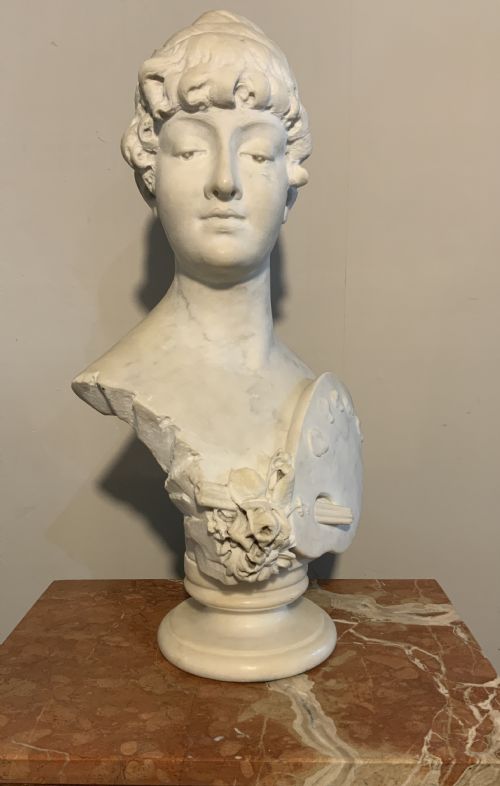

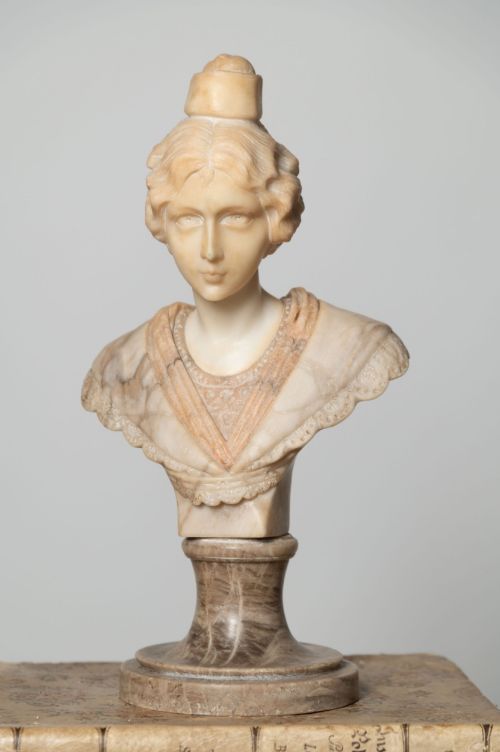
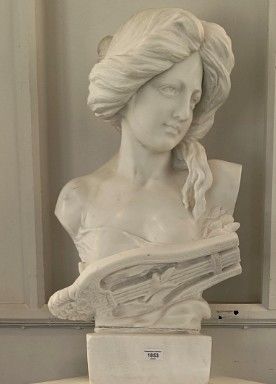
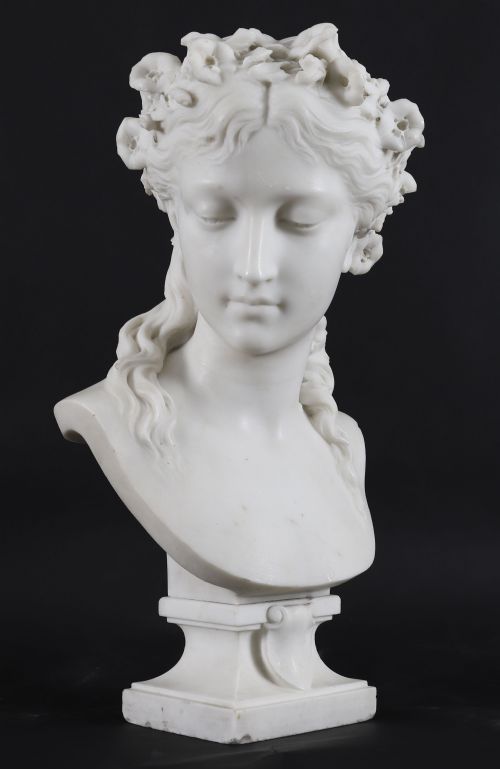
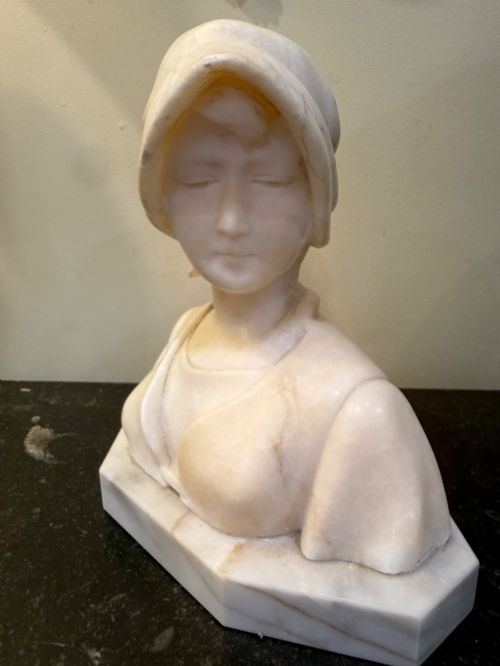
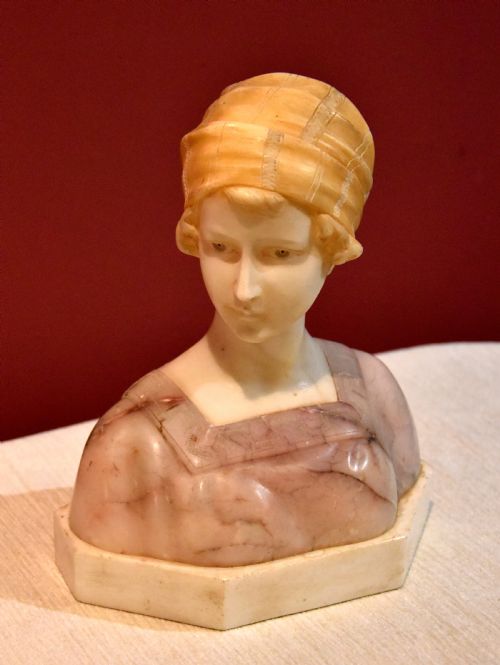
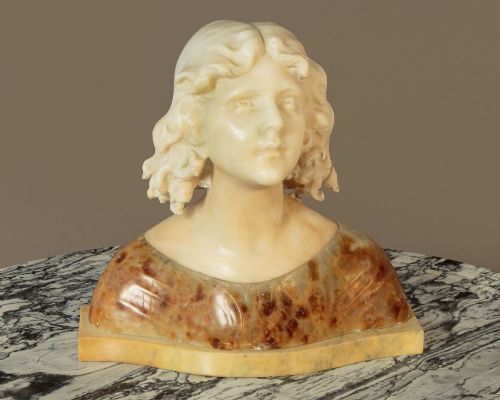
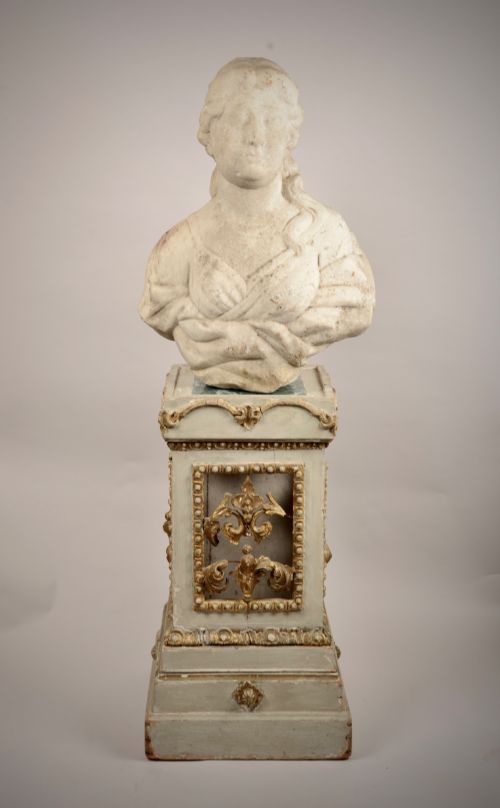


Carved Stone Female Head
These carved stone female head sculptures bring classical grace and refined portraiture into a room.
Carved Stone Female Head
A carved stone female head represents classical figures, mythical muses, or portrait subjects sculpted from durable materials. Buyers searching for a carved stone female head encounter pieces spanning the seventeenth century through the early twentieth century, with nineteenth-century examples appearing frequently.
The inventory ranges from grand Italian Baroque representations to French Neoclassical busts and Arts and Crafts alabaster studies. These sculptures typically depict young women, Grecian ladies, or classical goddesses mounted on integral plinths or bases.
Materials and construction methods
Sculptors utilised fine-grained stones such as Carrara marble, white marble, mixed marbles, and alabaster to achieve smooth facial contours and intricate drapery. Some works combine alabaster with contrasting marble elements or incorporate brass fittings and giltwood bases.
Artisans carved the stone by hand, employing chisels, rasps, and abrasive powders to polish the surfaces of the hair, skin, and garments. Certain works reflect classical traditions and derive inspiration from earlier European sculptors.
Periods represented reach from the seventeenth century through the Victorian era and into the early decades of the twentieth century.
Markers of sculptural quality
The fidelity of the facial expression and the natural drape of the hair and fabric distinguish finer portrait busts from simpler decorative carvings. Mastery in rendering the translucent quality of alabaster or the crisp detail of Carrara marble elevates a sculpture.
The inclusion of a recorded signature from a notable sculptor adds documented provenance and artistic authority to the work. The depth of the relief and the preservation of the polished stone surfaces further define the standard of execution.
Eugene Aizelin·Auguste Henri Carli·Auguste Moreau
The Carved Stone Female Head Glossary
- Carrara marble
- A type of white or blue-grey marble quarried in the city of Carrara in Tuscany, widely favored for classical sculpture. It provides a dense, consistent medium that holds fine chisel work.
- Alabaster
- A fine-grained, translucent stone that ranges from white to warm amber tones. Sculptors value it for its soft texture and the way light penetrates the surface.
- Neoclassical
- An artistic movement drawing inspiration from the art and culture of classical antiquity. Sculptures in this style emphasise proportion, restraint, and classical dress.
- Baroque
- A flamboyant artistic style originating in Italy that emphasises dynamic movement and emotional intensity. Works from this period display dramatic turns of the head and elaborate drapery.
Carved Stone Female Head: Frequently Asked Questions
What periods do these stone heads date from?
The pieces span from the seventeenth century through to the early twentieth century, with a strong representation of nineteenth-century European sculpture.
Examples range from seventeenth-century Italian Baroque fragments to Victorian Neoclassical portraits and turn-of-the-century alabaster studies.
Where were these sculptures made?
The majority originate from European workshops, with particular emphasis on Italian and French provenance.
Sculptors in these regions worked with native stones like Carrara marble and alabaster to create classical and portrait subjects.
How should I display a marble bust at home?
These sculptures require a sturdy, stable surface such as a heavy wooden console table, a dedicated column, or a robust mantelpiece.
Because stone is exceptionally heavy, ensure the placement supports the substantial weight of marble or alabaster safely.
Are these pieces signed by the artists?
Certain sculptures bear the carved signature or mark of the original nineteenth-century sculptor near the base or on the reverse.
Signed works connect the piece directly to known European studios and established makers of the period.