

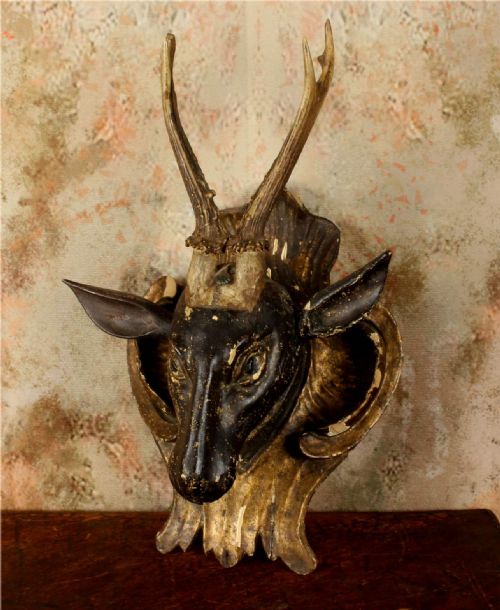


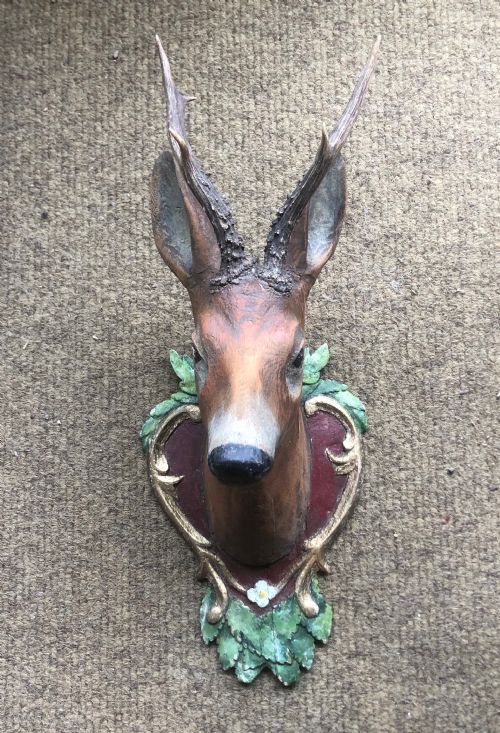
Carved Stag Mount
A carved stag mount brings the rough drama of the Scottish Highlands or Black Forest right into your hallway.
Carved Stag Mount
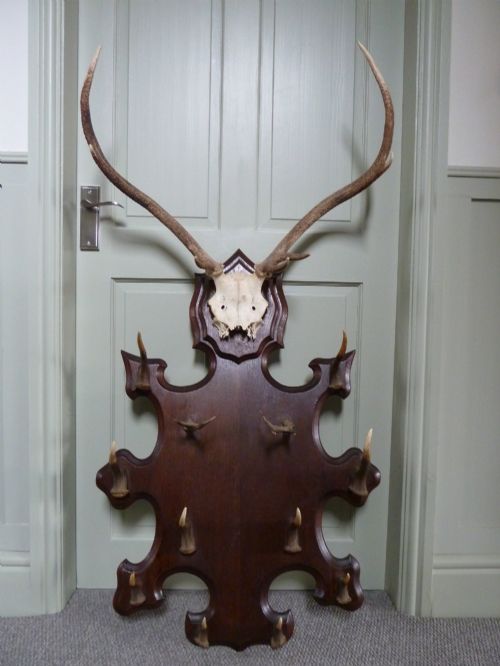
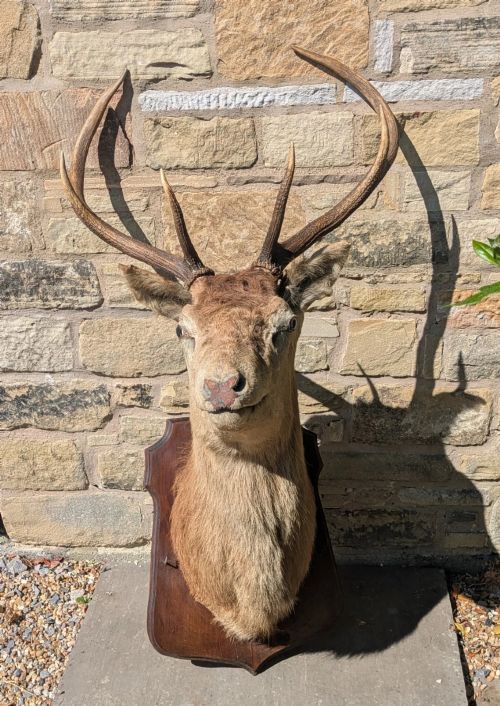
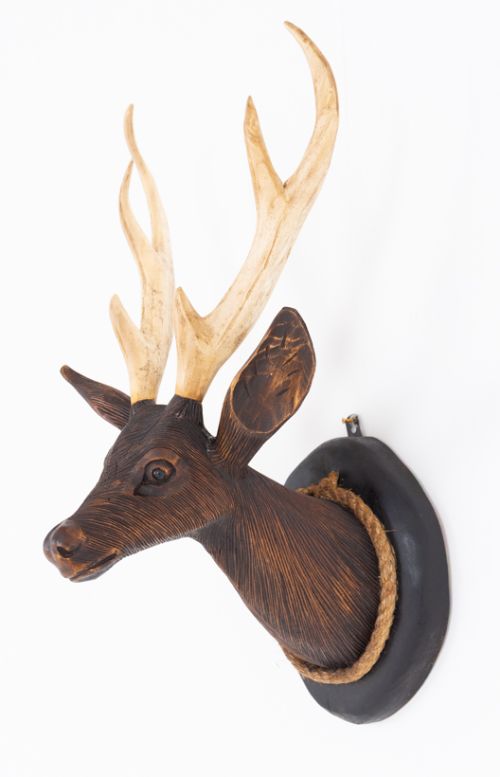
The selections here span the Victorian era, the nineteenth century, and early twentieth-century interpretations, showing how diverse these hunting trophies could be. You meet everything from natural taxidermy heads on oak shields to hand-carved folk art deer and sturdy horn hallstands.
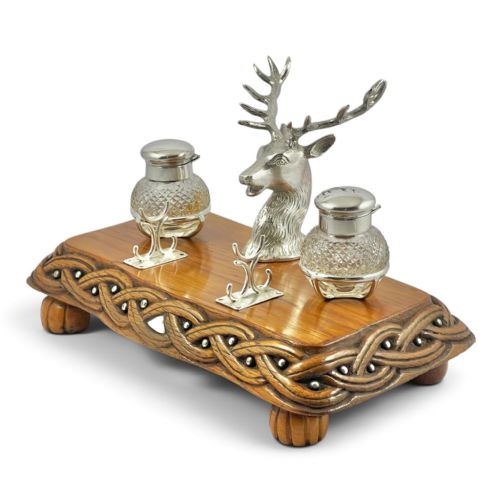
Most examples originate from British country houses, continental workshops, and folk traditions, utilising real bone, natural hide, and carved wood. They serve equally as coat racks, inkstands, and wall trophies, carrying the robust aesthetic of nineteenth-century sporting life.
How they were made
Artisans built these pieces using natural antlers and skulls mounted firmly onto shaped timber shields made of oak or other carved wood. The wood was frequently carved with foliate or Celtic revival motifs, creating a solid architectural backdrop for the raw bone.
Taxidermy mounts required careful preparation of the natural hide and bone, sometimes combined with paint or applied silver elements as seen in Scottish inkstands. Folk art carvers shaped entirely wooden deer heads from scratch, substituting carved wooden points for real antlers.
Carved Stag Mount Retail Price Guide 2026
Typical asking prices for carved stag mount among the pieces listed under this phrase on Sellingantiques today, from the lower quarter to the upper quarter. They describe what is for sale here now, not the wider market.
Some nineteenth-century stags grew so ambitious that their eleven-point antlers require entirely separate wall real estate just to keep the peace in your hallway.
What varies in quality
The distinction between ordinary and exceptional pieces lies in the crispness of the wood carving and the symmetry of the antlers. A piece with eleven distinct points mounted on a deeply carved oak shield commands greater presence than a simple functional peg.
Workmanship in the taxidermy and the integration of the mount determine the overall visual harmony. Superior examples display careful anatomical proportion and robust construction in the supporting shields and hallstands.
The Carved Stag Mount Glossary
- Black Forest
- A nineteenth-century style of wood carving originating in the German region, known for highly detailed representations of forest animals and foliage. These items often feature deeply carved oak leaves and naturalistic stag heads.
- Taxidermy Mount
- The preservation and display of animal anatomy, in this context specifically applied to deer heads and antlers. Such mounts were standard decorative fixtures in Victorian sporting and country house interiors.
- Hallstand
- A piece of hallway furniture combining coat hooks, umbrella holders, and often a mirror or central panel. In this context, they utilise stags' horns and antlers directly as functional pegs.
- Folk Art
- Objects created by self-taught or traditional craftsmen outside academic artistic traditions. These handmade wooden deer heads and antler trophies rely on local materials and vernacular styles.
Carved Stag Mount: Frequently Asked Questions
Where should I hang a stag mount?
These substantial wall sculptures demand a sturdy wall, typically in a hallway, study, or living room where their size commands the space. They work best hung at a height that allows the antlers to project freely into the room.
Historically, they anchored the decor of Victorian country houses and shooting lodges, pairing naturally with dark wood panelling or textured walls.
How do I care for antique antlers and wood?
Dust the carved wood and antlers regularly with a soft, dry brush to prevent the accumulation of dirt in the carved crevices. Keep the mount away from direct sunlight and strong heat sources to prevent the bone and natural hide from drying out.
Avoid using liquid cleaners on the taxidermy elements, treating the wood shields with appropriate traditional furniture wax only when necessary.
What is the difference between taxidermy and folk art deer mounts?
Taxidermy mounts incorporate real animal parts, utilising genuine skulls, natural hide, and actual antlers secured to wooden shields. They reflect nineteenth-century sporting culture and trophy preparation.
Folk art interpretations are entirely hand-carved from wood by traditional makers, substituting carved wooden antlers for natural bone while capturing the same rustic spirit.
How do I identify a Victorian piece?
Victorian examples frequently display characteristic craftsmanship such as heavy oak shields, deep foliate carvings, and specific mounting techniques associated with nineteenth-century taxidermy. The materials often include dark seasoned oak and natural bone that show appropriate age patination.
Stylistic cues like Black Forest or Celtic Revival ornamentation also point firmly to the nineteenth-century origins of these wall displays.