


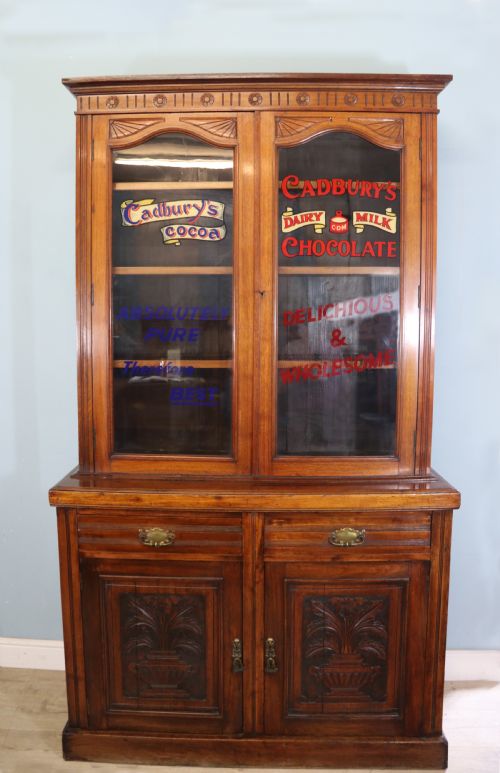


Carved Shop Display Cabinet
A carved shop display cabinet brings practical mercantile history straight into a home, offering glazed timber protection for small collections.
Carved Shop Display Cabinet
A carved shop display cabinet comprises functional retail furniture designed for merchants, spanning counter-top boxes, tall display units, and fitted shop counters. The examples found here range across the Victorian era, the Edwardian period, and the 1930s interwar commercial landscape.
The most common forms on this page include mahogany and oak counter-top cabinets, alongside specialised watchmaker cabinets and wall-hanging variants. Makers applied styles from simple commercial utility to Adam style and Neoclassical Revival ornamentation.
These pieces originated in commercial settings such as pharmacies, opticians, and general retail shops before transitioning into domestic settings for specialist collections. Their construction reflects a time when merchants required secure, glass-fronted presentation for valuable wares.
Materials and construction
Carpenters utilised dense hardwoods like mahogany, oak, and American walnut to build the primary carcass and framing of a carved shop display cabinet. These timbers provided the structural integrity necessary for daily commercial use in bustling retail environments.
Glazing forms the primary viewing panels, paired with brass hardware such as hinges, handles, and adjustable feet to ensure stability on uneven floors. Decorative flourishes occasionally include gold leaf application and carved detailing adhering to Adam style or Neoclassical Revival conventions.
Listings span the Victorian era through to 1930s interwar commercial pieces, utilising mahogany, oak, and Burr Walnut.
Markers of quality
Quality in a carved shop display cabinet rests on the selection of timber and the precision of the joinery, distinguishing utilitarian shop fixtures from finer retail showpieces. Dense mahogany or figured oak frames display superior timber selection compared to plain secondary woods.
The refinement of the carving and the presence of original brass hardware, functional drawers, or maker attribution elevate certain examples above standard commercial stock. Structural additions like adjustable feet or original hand sign-written elements also contribute to historical integrity.
Manoah Rhodes & Sons Ltd
The Carved Shop Display Cabinet Glossary
- Adam Style
- A neoclassical interior design and architecture style inspired by ancient Greece and Rome, characterised by elegant symmetry and delicate ornamentation. Cabinets from this lineage feature refined classical motifs.
- Burr Walnut
- A highly prized timber cut from walnut tree growths, known for its intricate, swirling grain patterns. It provides a rich and decorative surface on antique cabinetry.
- Chiffonier
- A compact sideboard or cabinet developed in the nineteenth century, often featuring shelving or enclosed storage beneath a display surface. Certain retail variants bridged domestic and commercial storage.
- Neoclassical Revival
- An architectural and decorative style drawing inspiration from classical antiquity, prominent during the nineteenth and early twentieth centuries. Pieces executed in this taste display formal symmetry and restrained classical detailing.
- Watchmaker’s Cabinet
- A specialised small-scale desktop or counter unit with multiple shallow drawers designed for horological tools and tiny precision components. These functional workshop pieces are sought after for small collections.
Carved Shop Display Cabinet: Frequently Asked Questions
What were these cabinets used for originally?
Merchants utilised these glazed units on shop counters and walls to display and protect small valuable items for customers.
Items like watches, apothecary goods, and delicate retail wares sat securely inside while remaining entirely visible.
How do I style a shop cabinet at home?
These cabinets suit tabletops, sideboards, or kitchen counters where small collections benefit from enclosed glass protection.
Grouping similar antique objects inside the glazing creates a focused focal point within a room.
How can I tell the period of a cabinet?
Dating relies on timber choices, brass hardware styling, and overall decorative motifs such as Adam style ornamentation.
Victorian and Edwardian pieces often exhibit heavier timber frames, whereas 1930s interwar commercial examples show distinct modernist shifts.
Are counter-top cabinets heavy?
Counter-top cabinets utilise dense hardwoods like solid oak or mahogany combined with glass panels, giving them considerable weight.
Placement requires a sturdy surface capable of supporting heavy timber and glass construction.