

Carved Shield Back
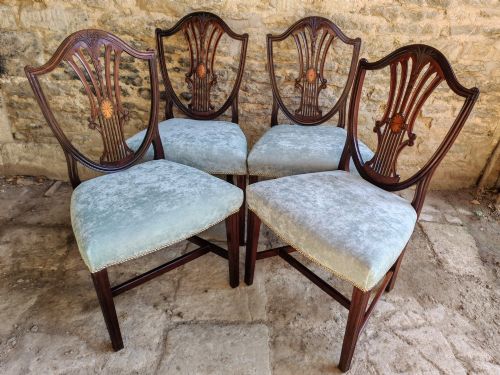
These carved shield back chairs bring proportion and balance to a room, carrying the distinct lineage of Georgian and Victorian design.
Carved Shield Back
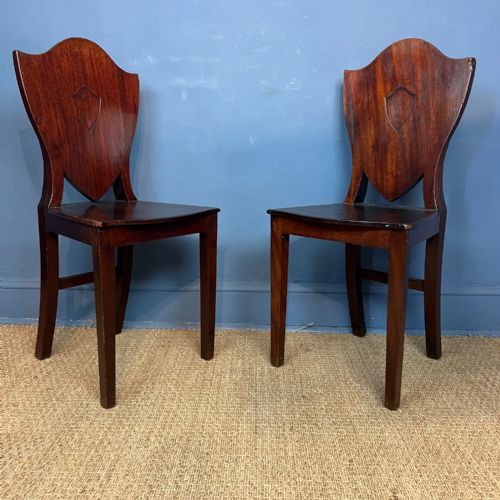
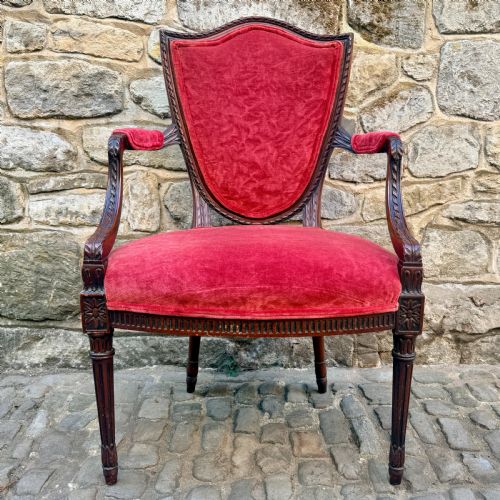
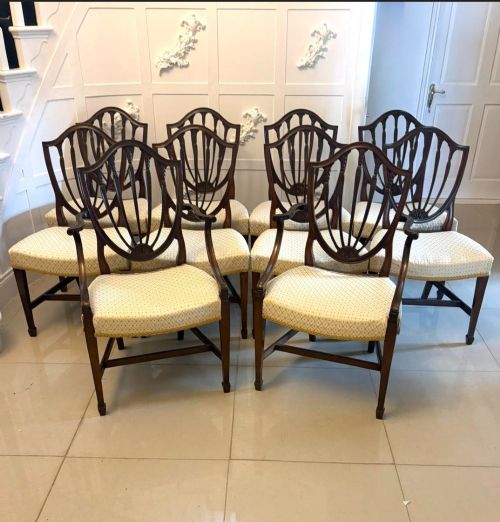
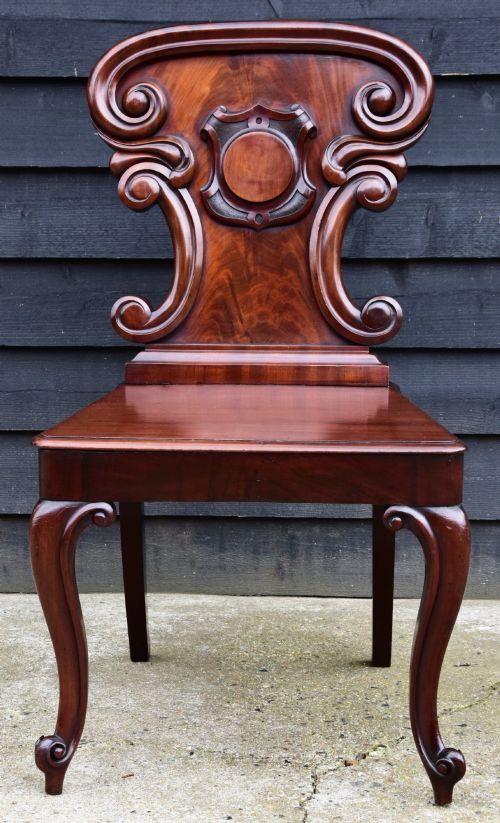
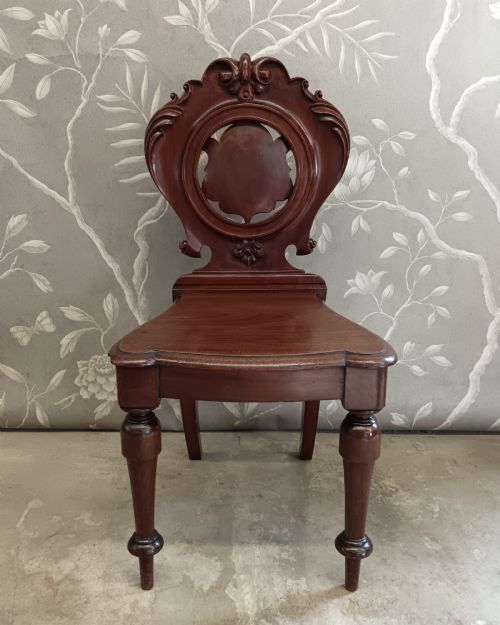
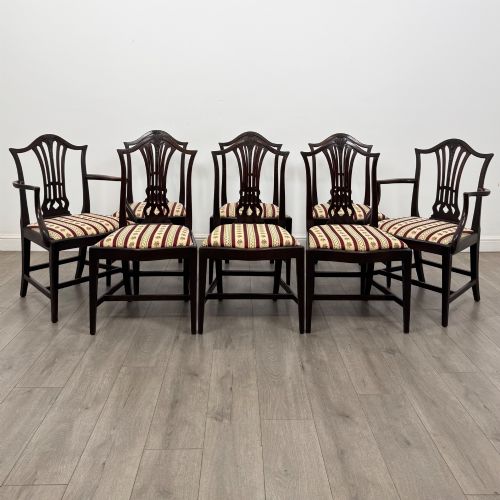
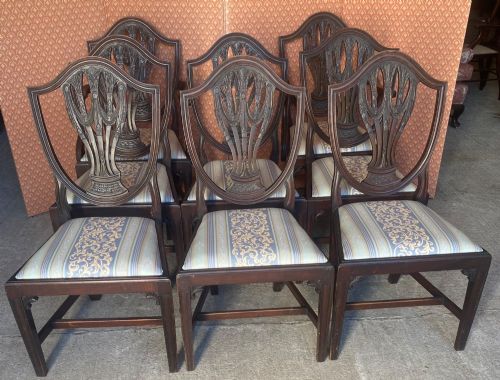
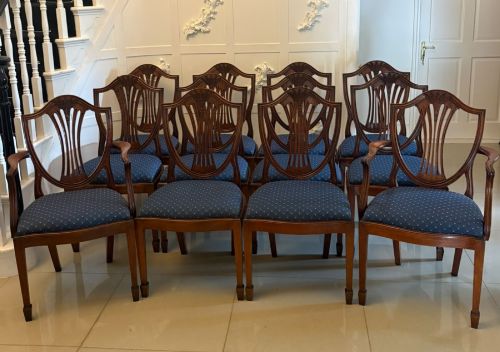
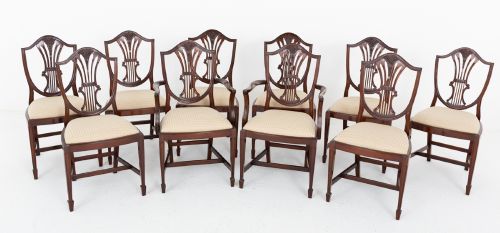
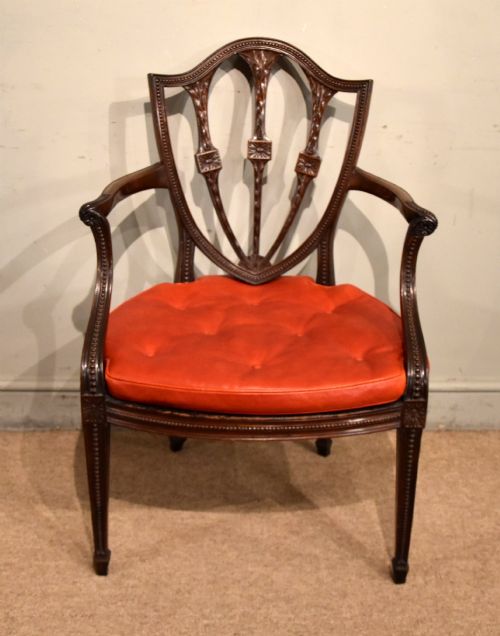
When you search for carved shield back, you encounter seating built primarily as dining chairs, hall chairs, and armchairs across the 18th, 19th, and early 20th centuries. The defining feature is the distinctive outline of the backrest, shaped to resemble a heraldic shield.
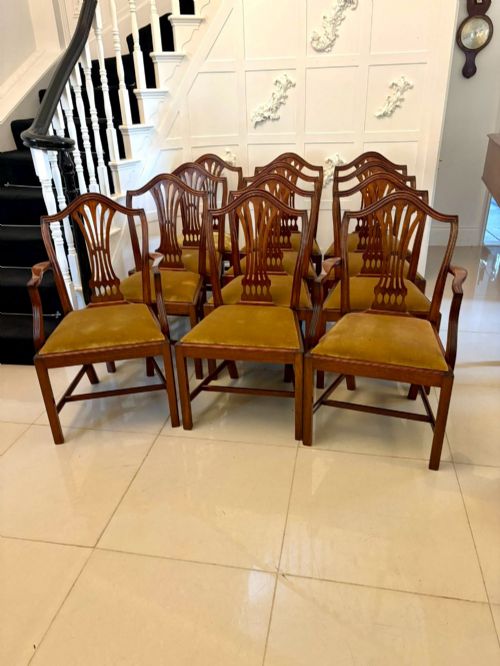
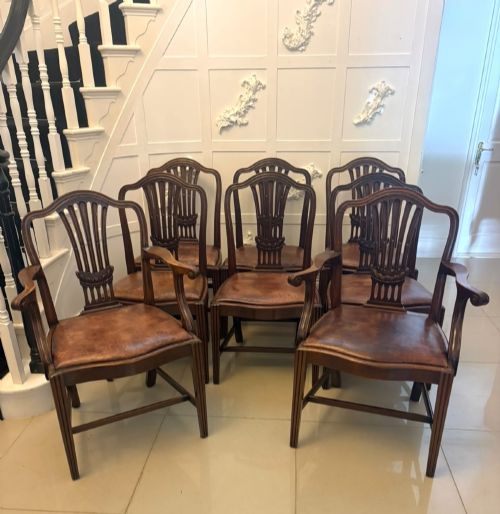
You are most likely to meet mahogany examples spanning the Georgian, Regency, and Victorian periods, alongside later Hepplewhite and Federal revivals. These pieces range from single reception seats to large sets of twelve or sixteen chairs complete with carvers.
The form developed from the lighter, more elegant dining furniture of the late 1700s, later inspiring revival makers in the Victorian and Edwardian eras. Their utility spans formal dining tables, hallways, and reception rooms.
How they were made
Cabinetmakers constructed these frames predominantly from solid mahogany, walnut, and oak, selecting dense hardwoods capable of supporting intricate pierced splats. The timber was often turned, carved by hand, and joined using traditional mortise and tenon methods.
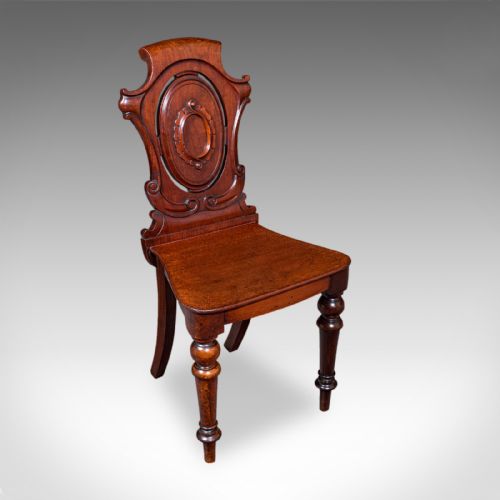
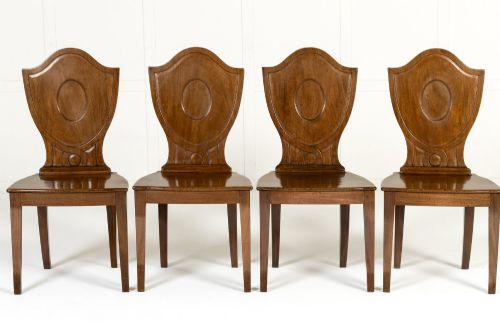
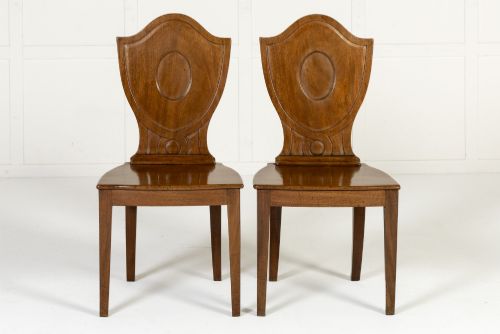
Upholstered variants incorporate drop-in pads or fixed seats finished in leather, velvet, or woven fabric over supportive webbing. Brass tacks frequently secure the perimeter of the upholstery, while wooden hall chairs showcase carved or painted shield motifs directly into the solid timber seat and back.
Carved Shield Back Retail Price Guide 2026
Typical asking prices for carved shield back among the pieces listed under this phrase on Sellingantiques today, from the lower quarter to the upper quarter. They describe what is for sale here now, not the wider market.
Listings feature shield back chairs across eight distinct decades, spanning solid oak hall variants and mahogany dining sets.
What varies in quality
The distinction between ordinary and superior examples lies in the crispness of the carving upon the shield splat and the selection of the timber grain. Finer chairs exhibit deep, well-defined piercing and relief work without mechanical smoothing.
Structural integrity also separates the output, as chairs retain more value when their joints remain tight and original timber blocks support the corners. Large sets matched across many pieces demonstrate greater consistency in proportion and colour.
Maple & Co
The Carved Shield Back Glossary
- Shield back
- A chair backrest shaped in the outline of a heraldic shield, popularised in the late 18th century. It frequently incorporates carved splats such as the Prince of Wales feathers or intersecting ribbons.
- Carver
- An armchair designed to match a set of smaller side chairs, traditionally placed at the heads of a dining table. They possess open arms supported by shaped uprights.
- Splat
- The vertical wooden strip down the centre of a chair back connecting the top rail to the seat. In these pieces, the splat curves inward to form the interior shape of the shield.
- Hepplewhite style
- A neoclassical design vocabulary originating in the Georgian period, characterised by light proportions, tapered legs, and shield backrests. Revival versions appeared throughout the Victorian and Edwardian eras.
- Hall chair
- A rigid wooden seat intended for entrance halls rather than dining, often featuring a solid carved timber seat and a painted or carved shield crest.
Carved Shield Back: Frequently Asked Questions
How do I tell an original Georgian shield back from a Victorian revival?
Georgian originals from the 18th century typically exhibit tighter grain patterns, hand-cut joinery, and lighter timber scantlings dictated by the availability of dense Cuban mahogany.
Victorian and Edwardian revivals from the 19th and early 20th centuries often feel heavier in the hand, utilise machine assistance in the hidden joints, and frequently appear in larger matching sets.
Were shield back chairs always used for dining?
While the larger sets served the dining table, individual examples and pairs functioned as hall chairs, reception seats, and desk chairs.
Solid wood variants without upholstery were placed in hallways for brief waiting, whereas upholstered models belonged in drawing rooms and studies.
What is the difference between a side chair and a carver in these sets?
Side chairs lack arms and were designed to line the sides of a dining table efficiently.
Carvers are armchairs built to the same stylistic template but widened to accommodate the host at the end of the table.
How should I care for the leather upholstery on these chairs?
Original or period leather requires gentle cleaning with appropriate saddle soaps and periodic conditioning to prevent cracking across the surface.
Avoid placing the chairs in direct sunlight or near heat sources that dry out the historic hide and timber.