




Carved Settle Chair
A carved settle chair combines the shelter of a high back with heavy timber construction, offering a substantial seat designed to block draughts in large rooms.
Carved Settle Chair
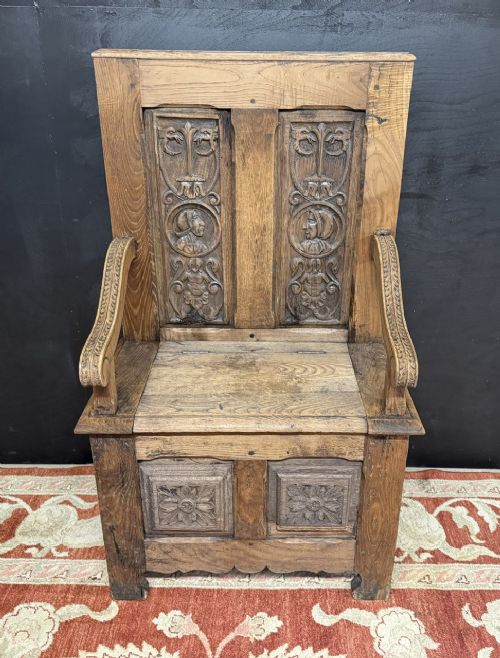
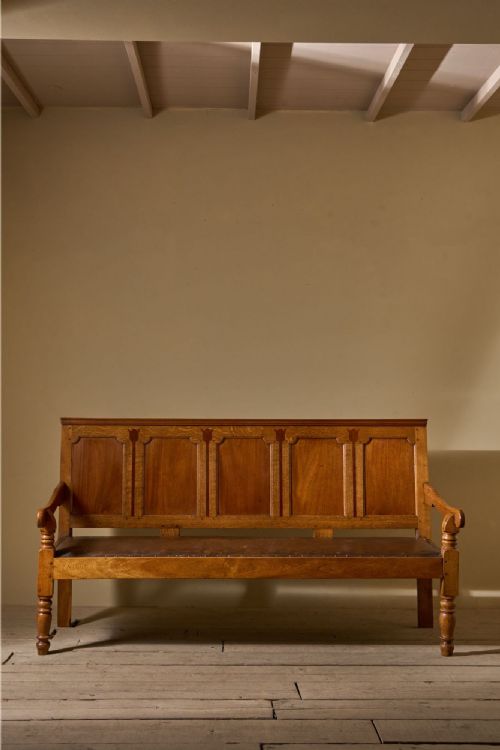
A carved settle chair appears across several historical periods, most frequently represented here by solid oak examples from the seventeenth, eighteenth, and nineteenth centuries. These pieces function as rigid benches with high backs, often incorporating arms and enclosed lower sections.
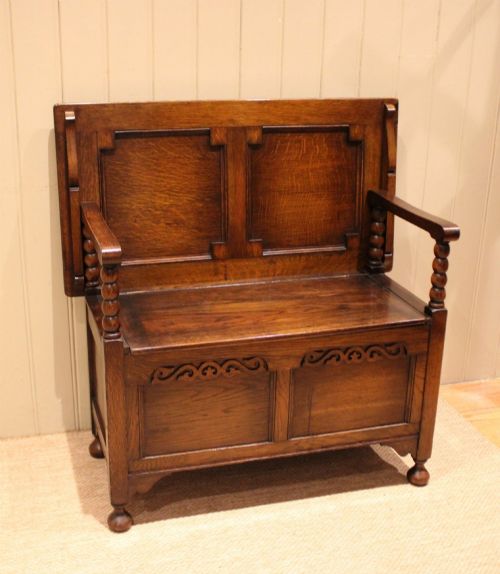
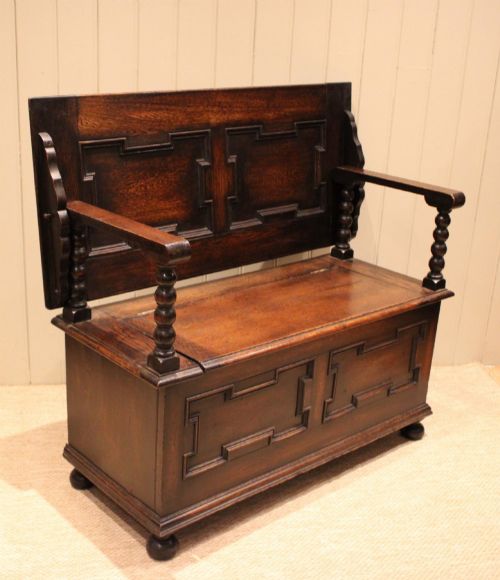
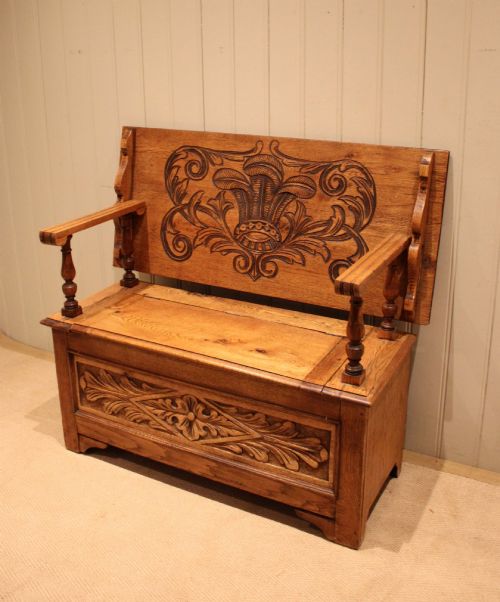
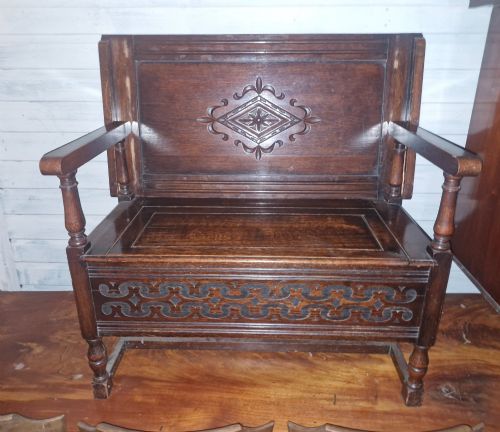
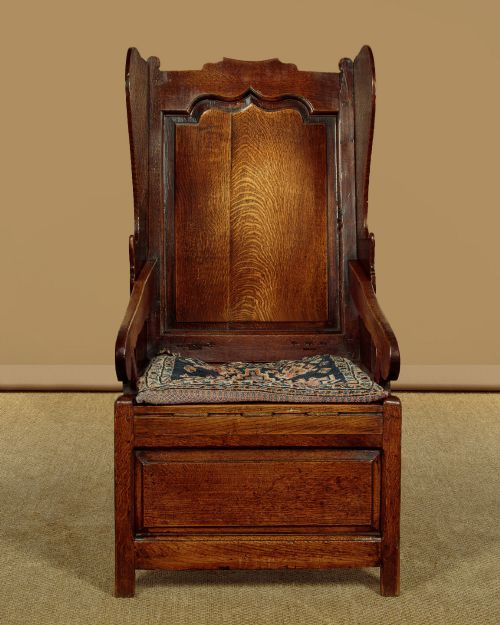
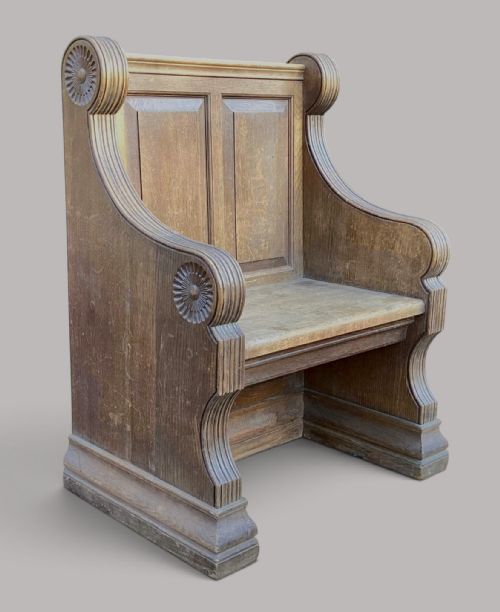
The selection on this page ranges from compact monk benches with folding tops to architectural hall seats and vernacular lambing chairs. Buyers will encounter heavy oak framing alongside alternative forms in mahogany, hardwood, and cinnabar lacquer.
Regional variations span British country pieces to Italian Lombardy benches and Chinese rosewood and hardwood settles. Many feature hinged seats providing concealed storage beneath the timber frame.
Materials and construction methods
Solid oak and dense hardwoods form the primary structural material for these pieces, shaped through traditional joinery including panel construction and pegged joints. Wood inlay, fabric, leather, and textile elements appear on select examples to accent the timber frames.
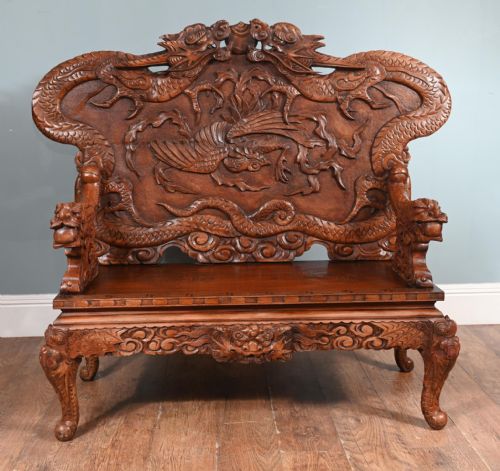
Carving techniques define the surface decoration, ranging from geometric strapwork and tulip motifs to elaborate dragon carvings and architectural mouldings. Artisans utilised hand tools to execute panelled backs and folding mechanisms on convertible monk benches.
Carved Settle Chair Retail Price Guide 2026
Typical asking prices for carved settle chair among the pieces listed under this phrase on Sellingantiques today, from the lower quarter to the upper quarter. They describe what is for sale here now, not the wider market.
The inventory includes convertible monk benches, enclosed armchairs, and regional lambing chairs with integrated storage.
Assessing quality in construction and surface
Quality rests in the integrity of the timber framing and the crispness of the hand carving, where deeper, more deliberate chisel work distinguishes superior pieces. The weight and selection of the solid oak or hardwood dictate the structural stability of the bench.
The complexity of the form influences value, particularly on convertible items where the mechanism operating the fold-over top or lift-up seat must function smoothly within the antique timber frame.
The Carved Settle Chair Glossary
- Settle
- A wooden bench with high backs, solid arms, and enclosed bases designed to keep out cold draughts. They often served multiple purposes in large communal spaces.
- Monks Bench
- A convertible piece of furniture featuring a hinged top that folds down to transform the high-backed seat into a table. This dual function proved useful in smaller domestic quarters.
- Lambing Chair
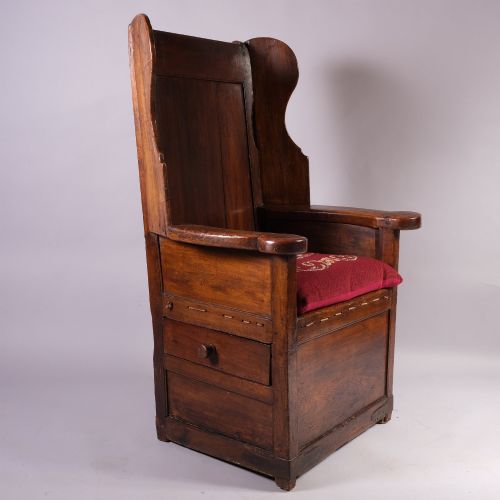
- An enclosed armchair traditionally featuring high wings and a hooded top to retain heat by the hearth. These vernacular seats frequently include under-seat storage compartments.
- Strapwork
- A carved decorative motif resembling flat bands or leather straps interlaced in geometric patterns. It appears frequently on seventeenth-century oak panels.
- Cinnabar Lacquer
- A technique involving the application of numerous layers of red lacquer onto a wooden core before carving intricate patterns into the buildup. This finish appears on imported oriental pieces.
Carved Settle Chair: Frequently Asked Questions
How do I use a monk bench?
The hinged top rotates or folds forward to rest upon the arms, converting the high-backed seat into a flat table surface. When returned to the upright position, the top forms the backrest of the bench.
Beneath the seat, a storage compartment opens for household items. This versatile design suits hallways and living spaces where multi-functional furniture is practical.
Where should I place a hall bench?
Hall benches and settles anchor entryways and corridors, providing an imposing architectural presence against bare walls. Their high backs offer visual weight while the lower compartments keep everyday items out of sight.
Ensure the room has sufficient floor space to accommodate the solid depth of the timber frame without crowding walkways. Position them away from direct heat sources to protect the antique wood.
How do I care for antique oak furniture?
Maintain the timber by applying traditional beeswax sparingly to nourish the dry surface and preserve the natural grain. Avoid chemical sprays and excessive moisture which can damage the polish and lift the wood.
Keep the piece at a stable distance from radiators and fireplaces to prevent the solid oak panels from shrinking or cracking over time.
How do I distinguish regional styles?
British country pieces display simple geometric panels and vernacular joinery like those found on Georgian and Jacobean examples. Continental pieces often incorporate bolder architectural details such as heavy mouldings or regional carvings.
Oriental examples introduce exotic hardwoods like rosewood alongside intricate figural motifs and lacquer finishes. Compare the framing methods and decorative vocabulary to identify the origin.