

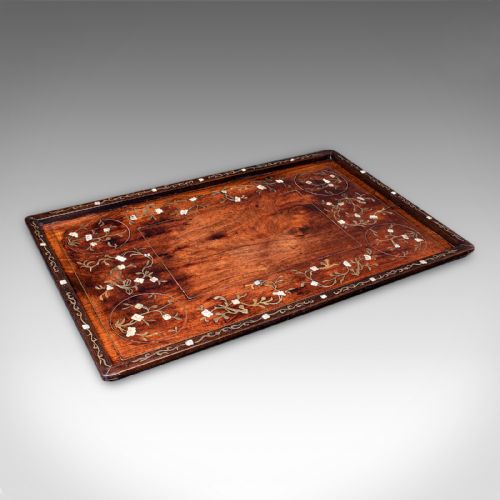
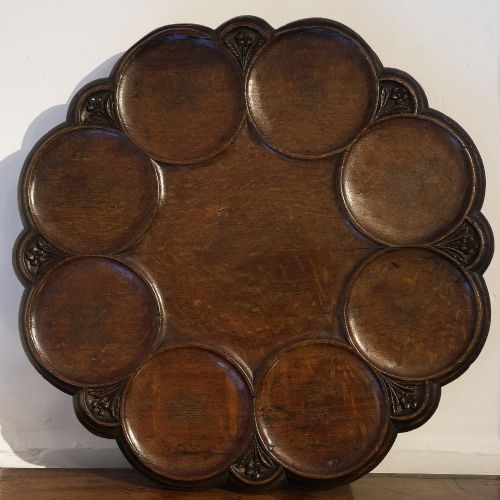

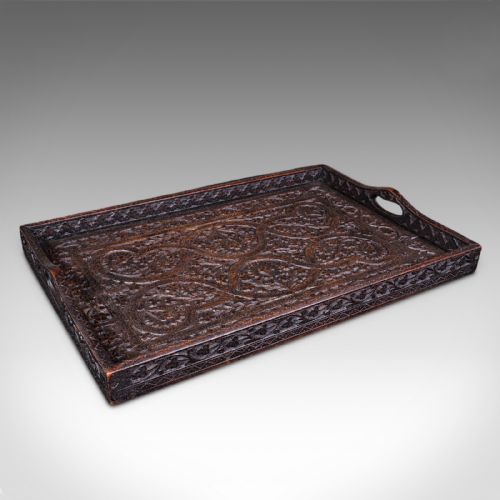


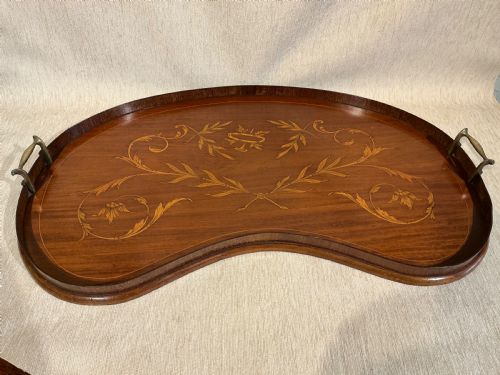


Carved Serving Platter
These carved serving platter examples bring tactile warmth to the table, offering practical utility and historic character for modern hosting.
Carved Serving Platter
A carved serving platter spans a rich assortment of historical forms, ranging from revolving lazy susans to galleried tea trays and deep meat chargers. When exploring a carved serving platter, buyers encounter diverse regional traditions across the Georgian, Victorian, and Edwardian eras.
The materials and aesthetic influences vary significantly, embracing English mahogany, Anglo-Indian teak, Kashmiri walnut, and Japanese Meiji craftsmanship. These pieces served practical functions in domestic dining, from bearing afternoon tea to presenting large joints of meat at the table.
Most entries belong to the nineteenth and early twentieth centuries, reflecting the high period of domestic hospitality and elaborate serving rituals. Each carved serving platter carries distinct markers of its origin, whether in the rustic simplicity of European treen or the intricate ornamentation of colonial workshops.
Materials and construction methods
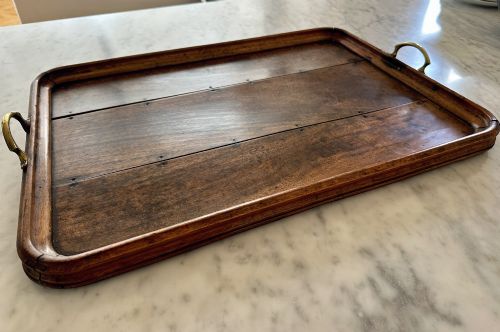
Wood remains the primary medium, utilising dense timbers like mahogany, walnut, teak, and oak that withstand the demands of heavy serving use. Artisans shaped these materials using hand tools, carving borders, handles, and recessed wells directly into the solid timber.
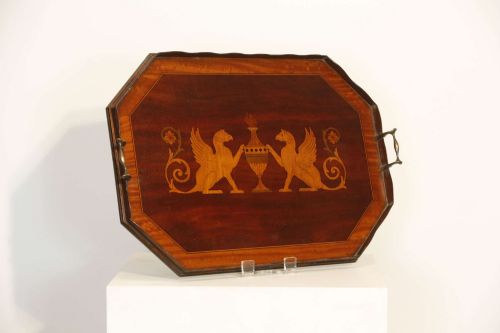
Inlaid details, bone embellishments, and brass fittings frequently accent the wooden surfaces, adding contrast and structural refinement to the design. Metal alternatives also appear, incorporating silver plate over base metal or solid brass to create reflective chargers and warming dishes.
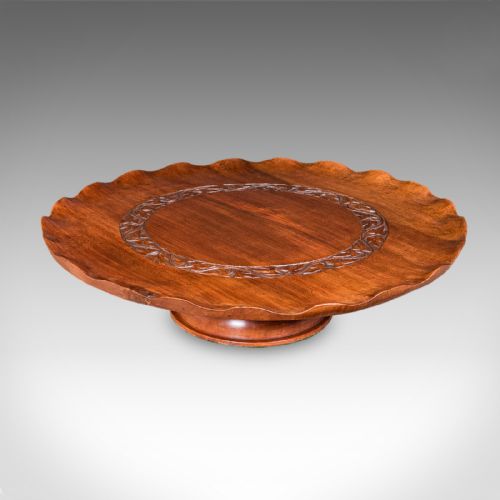
Rotating mechanisms rely on clever timber joints or early metal pivots, allowing lazy susans to turn smoothly during meals. Carving techniques range from shallow floral incising to deep, pierced galleries and scalloped edges fashioned by hand.
Carved Serving Platter Retail Price Guide 2026
Typical asking prices for carved serving platter among the pieces listed under this phrase on Sellingantiques today, from the lower quarter to the upper quarter. They describe what is for sale here now, not the wider market.
The listings feature woods such as mahogany, walnut, teak, oak, and birch, alongside brass and silver-plated metal.
Distinctions in execution and preservation
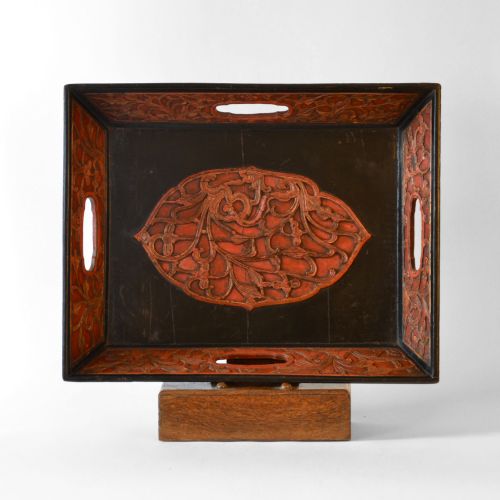
Quality rests primarily in the crispness of the hand-carved detail and the selection of the underlying timber. Superior examples exhibit deep, purposeful chisel work that retains sharp relief, whereas lesser pieces display flat or mechanical shallow scoring.
The integrity of the construction dictates longevity, particularly in items with moving parts like rotating trays or integrated warming reservoirs. Timber stability, minimal warping, and secure joints distinguish master craftsmanship from utilitarian workshop production.
The Carved Serving Platter Glossary
- Treen
- Small handmade wooden domestic objects and utensils. This category encompasses turned platters, bowls, and plates fashioned from domestic hardwoods.
- Lazy Susan
- A rotating circular tray placed on a table to assist in moving food. These devices utilise a central pivot mechanism beneath the wooden platform.
- Galleried
- Featuring a raised border or pierced railing around the edge of the tray. This architectural addition prevents items from sliding off during transit.
- Charger
- A large decorative plate used as a base during formal dining or displayed on walls. These items often feature elaborate surface engraving or metal plating.
- Pearlware
- A fine earthenware developed in the late eighteenth century with a bluish glaze. It often mimics Chinese porcelain in decoration and serving function.
Carved Serving Platter: Frequently Asked Questions
How do I care for wooden trays?
Wooden serving platters require gentle maintenance to preserve the natural timber and hand-carved details. Clean surfaces with a damp cloth rather than submerging them in water, and avoid harsh detergents that strip natural oils.
Applying occasional food-safe mineral oils helps maintain the lustre of mahogany, walnut, or teak. Keeping them away from direct heat sources and extreme humidity prevents the wood from warping or cracking over time.
How do I distinguish Victorian pieces?
Victorian serving items often reflect industrial expansion combined with revived historical styles, utilising denser woods and heavier brass or silver-plated additions. Look for deeper carving styles, scalloped edges, and regional influences such as Anglo-Indian teak or Kashmiri walnut.
Construction methods also provide clues, as nineteenth-century workshops balanced hand-carved elements with early mechanical turning techniques. Examining the underside and joint construction helps confirm the period of manufacture.
Can I use antique platters daily?
Many of these sturdy wooden and metal items remain fully functional for modern entertaining and daily use. Solid timber platters handle dry foods, bread, and fruit exceptionally well without sustaining damage.
For items with delicate inlay, silver plating, or integrated warming reservoirs, more mindful handling is advisable. Regular use actually helps maintain the moisture balance in older timbers, provided cleaning methods remain gentle.